
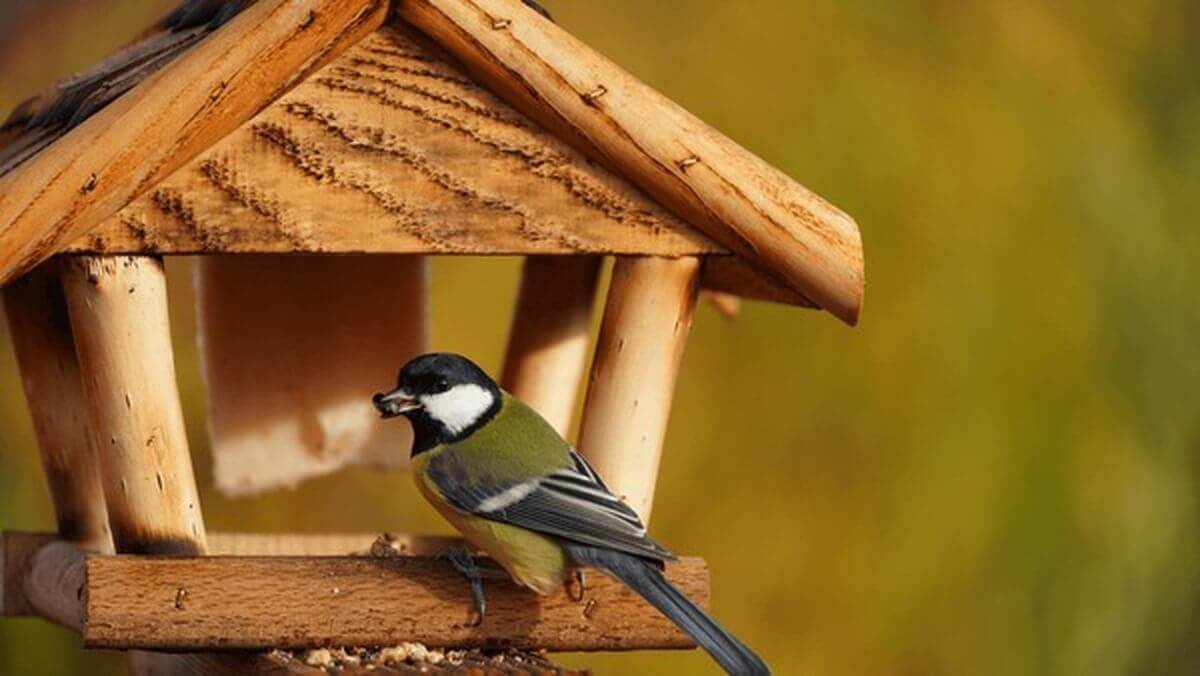
House finches are one of the easiest backyard birds to attract — which also means getting a feeder that actually works for them, and keeps them healthy, matters more than people expect. Here’s what to look for, and one hygiene detail that’s more important with this species than almost any other feeder bird.
What House Finches Actually Eat
House finches are primarily seed-eaters, and their feeder preferences follow from that. Black oil sunflower seed is the single most reliable draw — high in fat, easy for a small finch’s beak to crack, and popular across nearly every seed-eating backyard bird, which is part of why house finches often show up at a feeder that wasn’t even set up with them specifically in mind. Nyjer (thistle) seed is their other favorite, and a feeder stocked with nyjer tends to pull in finches specifically, since larger or less seed-specialized birds generally leave it alone.
Tube Feeders: The Most Reliable Choice
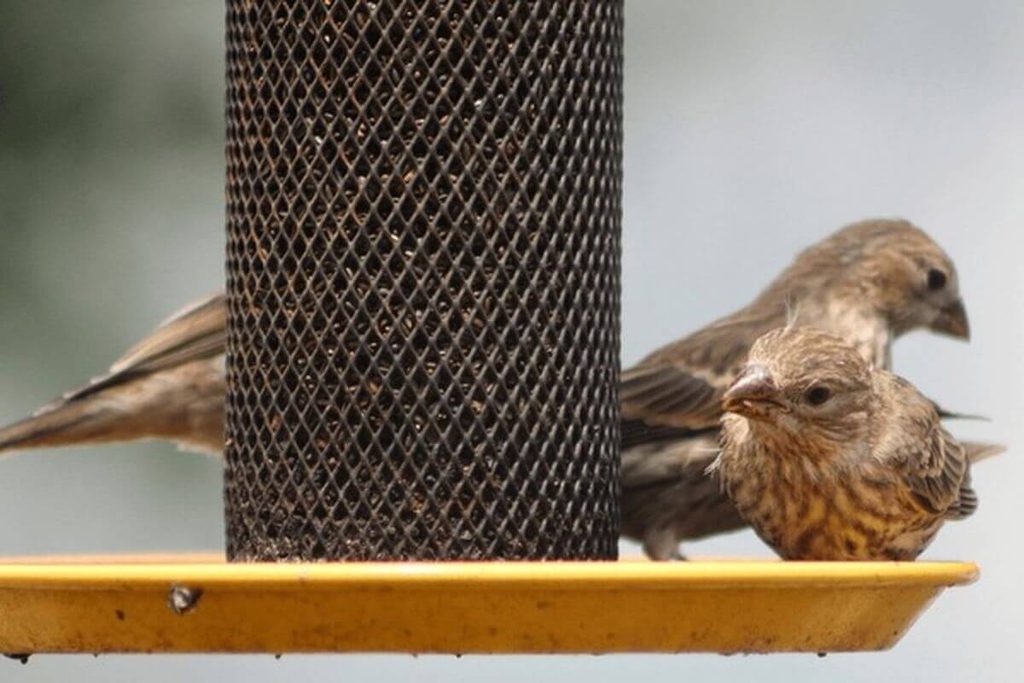
A tube feeder — a cylindrical feeder with multiple small perches and feeding ports along its length — is generally the best match for house finches. Their small size and perching style suit the narrow perches well, and a tube feeder holds a useful amount of seed without the mess a platform feeder can create. Look for one with metal (not just plastic) feeding ports if squirrels are a concern in your yard, since finches themselves won’t damage a feeder, but squirrels chewing through ports to get at seed is a common complaint with lower-quality tube feeders.
Mesh/Sock Feeders for Nyjer Seed
If you want to specifically target finches over other birds, a mesh or “sock” feeder filled with nyjer seed is the more targeted option. The fine mesh lets finches cling and pick at the tiny seeds through the material itself, which larger birds with less dexterous feeding styles generally can’t manage as efficiently — so a nyjer sock tends to naturally filter out some of the more aggressive, larger competitors you might be trying to avoid at a main feeder.
Why Feeder Hygiene Matters More for House Finches
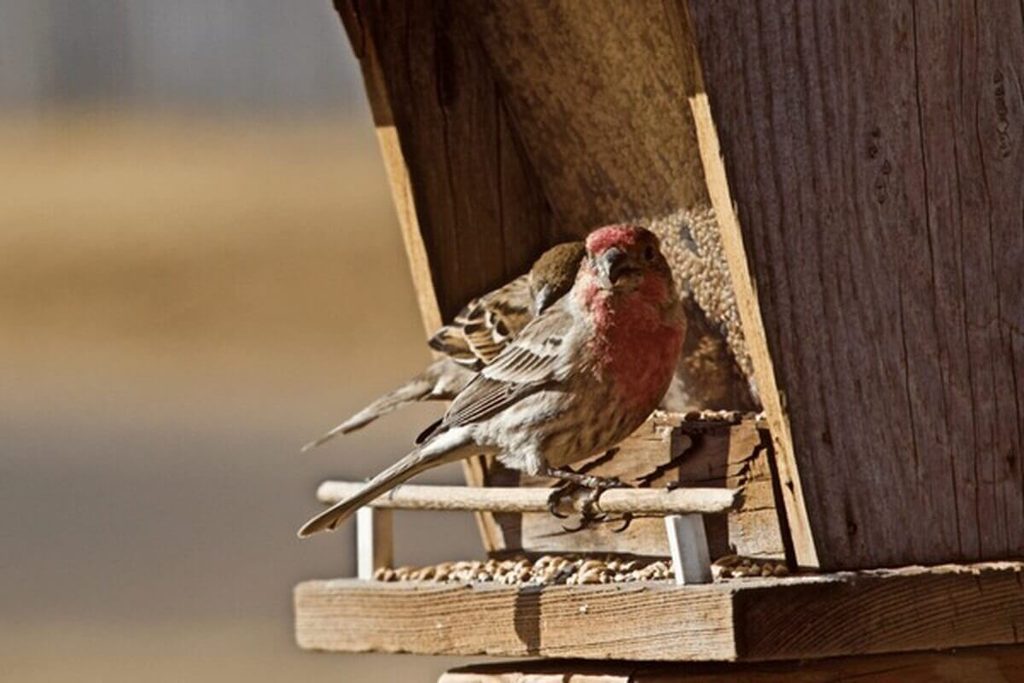
This is the detail most buying guides skip, and it matters specifically for this species: house finches are the bird most associated with mycoplasmal conjunctivitis, often just called “house finch eye disease” — a bacterial infection that causes swollen, crusty eyes and can leave birds unable to see well enough to feed or spot predators. It spreads efficiently at feeders, where many birds’ faces repeatedly contact the same surfaces.
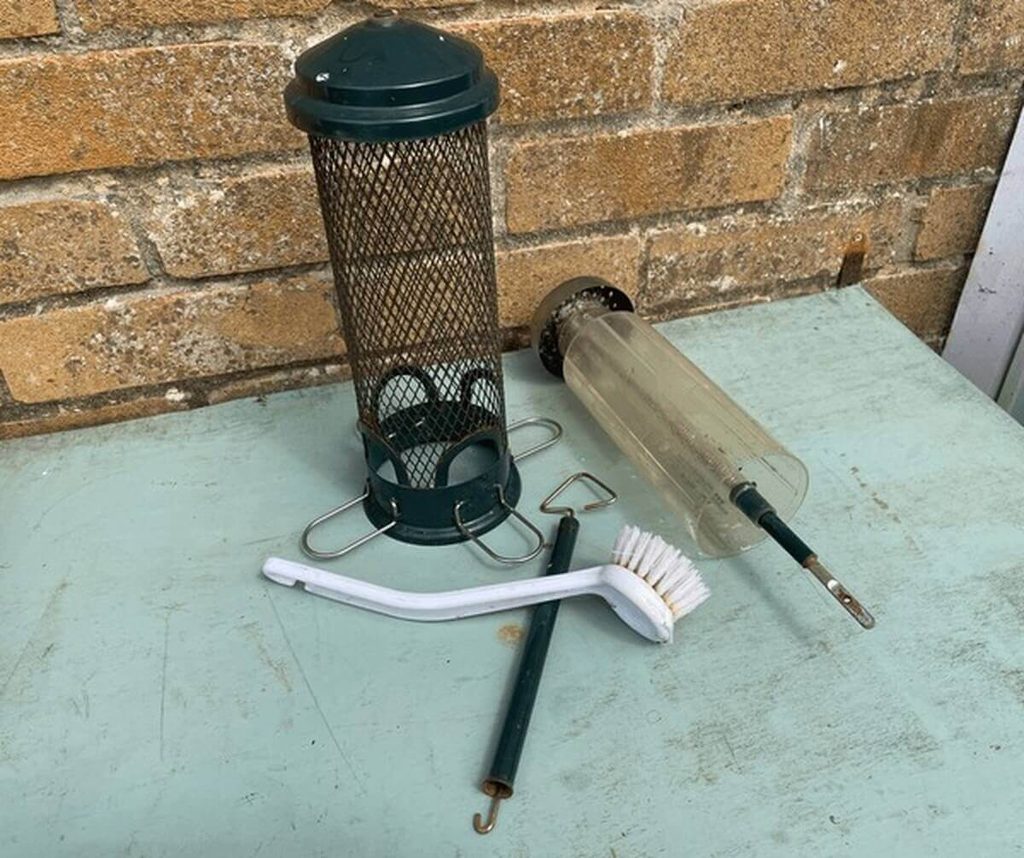
Because house finches are highly social and tend to feed in flocks, a feeder that attracts a lot of them is also a feeder where this disease can spread fast if it’s not cleaned regularly. A feeder with a simple design that’s easy to fully disassemble and clean — rather than one with narrow crevices that are hard to reach — is a genuinely practical feature to prioritize, not just a nice-to-have. Regular cleaning with a dilute bleach solution (about 1 part bleach to 9 parts water), rinsed and fully dried before refilling, is the standard recommendation, roughly every 1-2 weeks or sooner if you notice sick-looking birds nearby.
What to Avoid
A couple of common feeder features actually work against house finches rather than for them. Very large feeding ports or platform-style open trays tend to let bigger, more aggressive birds dominate the space and seed, crowding out finches rather than sharing it. Feeders with hard-to-clean internal seams or tight corners are worth skipping given the disease concern above — simplicity of design is a genuine advantage here, not just a convenience feature.
The Bottom Line
A metal-ported tube feeder stocked with black oil sunflower seed, or a mesh sock feeder with nyjer, are both solid, well-matched choices for house finches. Whichever type you choose, prioritize one that’s quick and easy to take apart and clean — for this particular species, feeder hygiene isn’t optional extra care, it’s close to as important as the seed you put in it.