
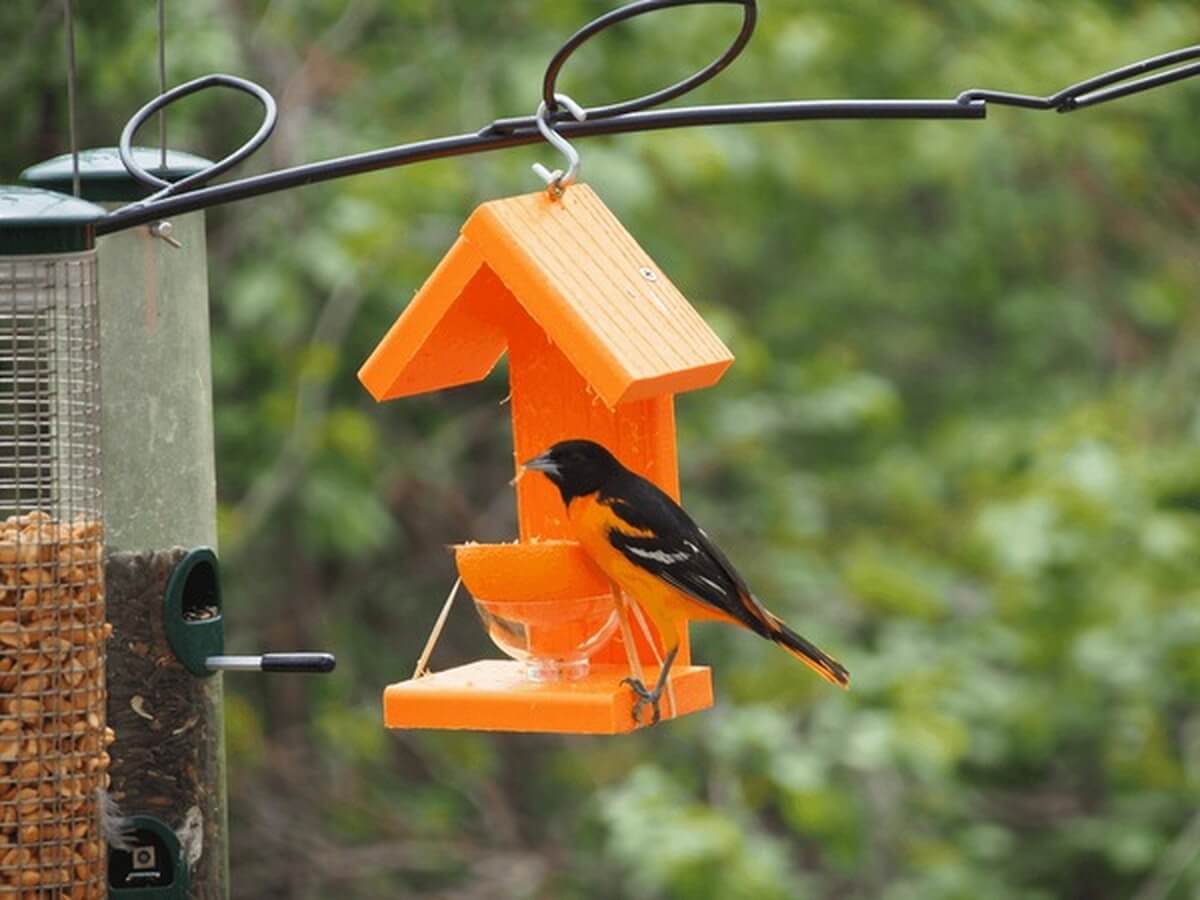
Orioles are one of the more rewarding backyard birds to attract — bright orange, vocal, and genuinely striking against green leaves — but a feeder built for other birds usually won’t do the job. Here’s what actually matters when choosing one.
Why a Regular Bird Feeder Won’t Attract Orioles
Orioles don’t eat seed the way most backyard birds do, so a standard seed feeder is essentially invisible to them. Their diet leans heavily on nectar, fruit, and insects — which means attracting them means offering one of those specifically, in a feeder shaped and sized for a bird considerably larger than a hummingbird but still built around liquid or soft food rather than seed.
Color Matters More Than You’d Expect
This is the detail most people miss: orioles are strongly drawn to orange, not red. That’s the opposite of hummingbirds, which famously prefer red — so a feeder marketed generically as a “nectar feeder” in red may pull in hummingbirds while getting ignored by orioles nearby. A dedicated oriole feeder is almost always orange for exactly this reason, and it’s worth treating that color choice as a functional feature, not just branding.
The Three Main Feeder Types
Nectar feeders work similarly to a hummingbird feeder but are built at a larger scale — wider feeding ports sized for an oriole’s bill, and perches sturdy enough to support a bird roughly the size of a robin rather than something built for a hummingbird’s weight. Look for one with a built-in ant moat (a small water-filled barrier above the nectar reservoir) since ants are drawn to the same sugar water and can quickly overrun a feeder without one.
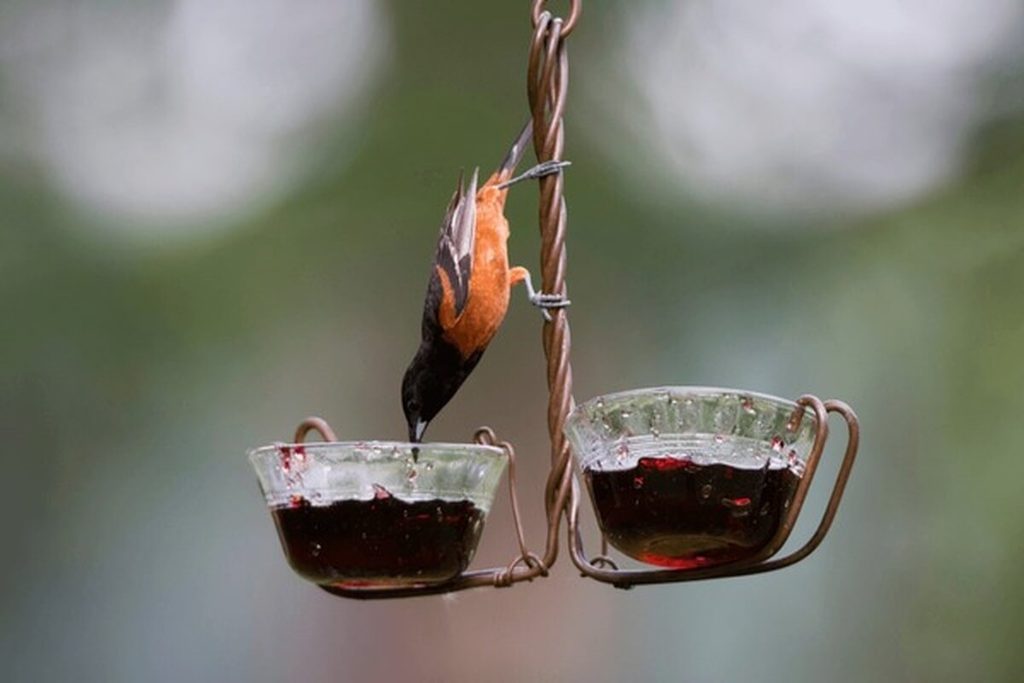
Jelly feeders are small dish or cup-style feeders designed to hold grape jelly, which orioles are famously fond of. These are usually simple and inexpensive, but check that the dish is shallow and easy to clean — jelly left out too long attracts wasps and can spoil, and a feeder with deep grooves or hard-to-reach corners makes regular cleaning more of a chore than it needs to be.
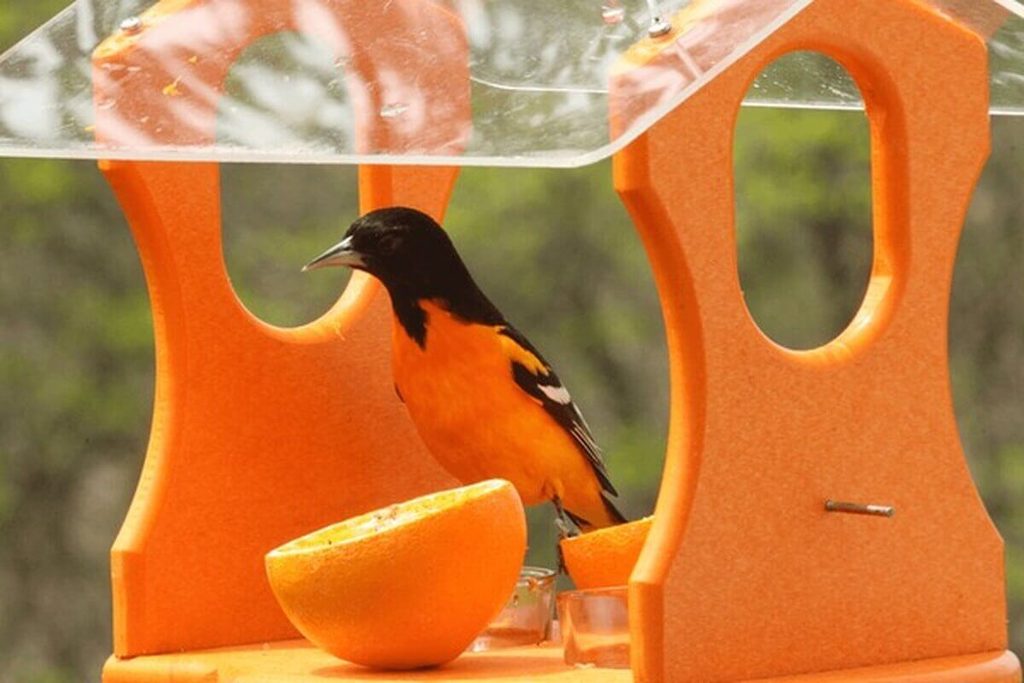
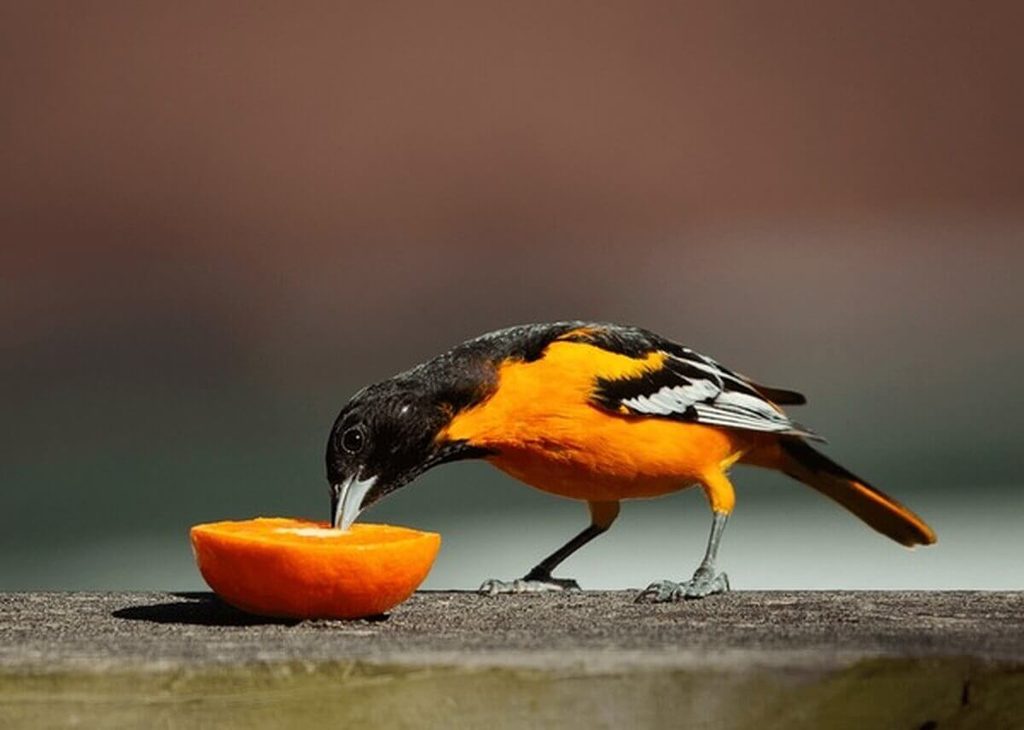
Fruit feeders typically have a spike or small platform designed to hold half an orange, skewered cut-side-up. Orioles will feed directly on the fruit, and this is often the simplest, lowest-maintenance option of the three — no nectar mixing, no jelly refills, just fresh fruit replaced every day or two.
Combination Feeders
Many feeders built specifically for orioles combine two or three of these in one unit — a central nectar reservoir with small jelly cups and orange-half spikes built into the same base. These tend to be the most popular choice for people serious about attracting orioles, since offering a choice of food types covers more ground than committing to just one, and it’s common for orioles to favor different foods at different points in the season.
Timing: When to Put a Feeder Out
Orioles are migratory across most of the U.S., typically arriving in spring and staying through the breeding season before heading south again in late summer or fall. Putting a feeder out too late means missing the window when they’re actively scouting new territory — having nectar or fruit available by early-to-mid spring, before you’ve actually spotted any orioles yet, gives you the best chance of catching their attention as they pass through or settle in for the season.
What to Avoid
Skip any nectar mix with red dye — it’s unnecessary for orioles (remember, they’re drawn to the feeder’s color, not the liquid’s color) and there’s no benefit to adding dye to the food itself. Also be cautious with feeders that have narrow, hard-to-reach parts; between nectar, jelly, and fruit, oriole feeders accumulate residue faster than a typical seed feeder, and regular cleaning matters just as much here as it does for a hummingbird feeder.
The Bottom Line
An orange-colored feeder — whether nectar, jelly, fruit, or a combination of the three — is the most reliable way to get orioles to notice your yard. Start with whichever type is easiest for you to maintain consistently, since a feeder that’s simple enough to refill and clean regularly will outperform a more elaborate one that gets neglected.