
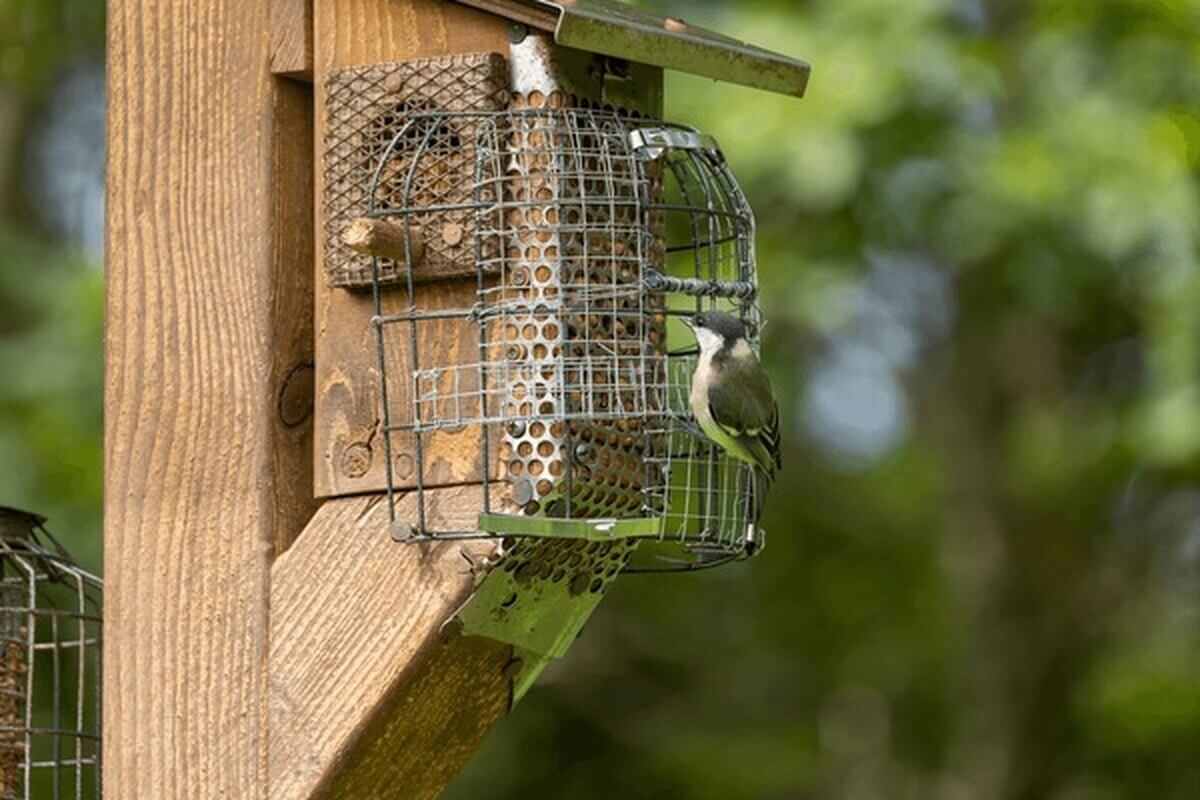
If you search for a Kingsyard squirrel-proof feeder, you’ll see a dozen products that look alike and work differently. Before you compare prices, work out which design you’re actually looking at.
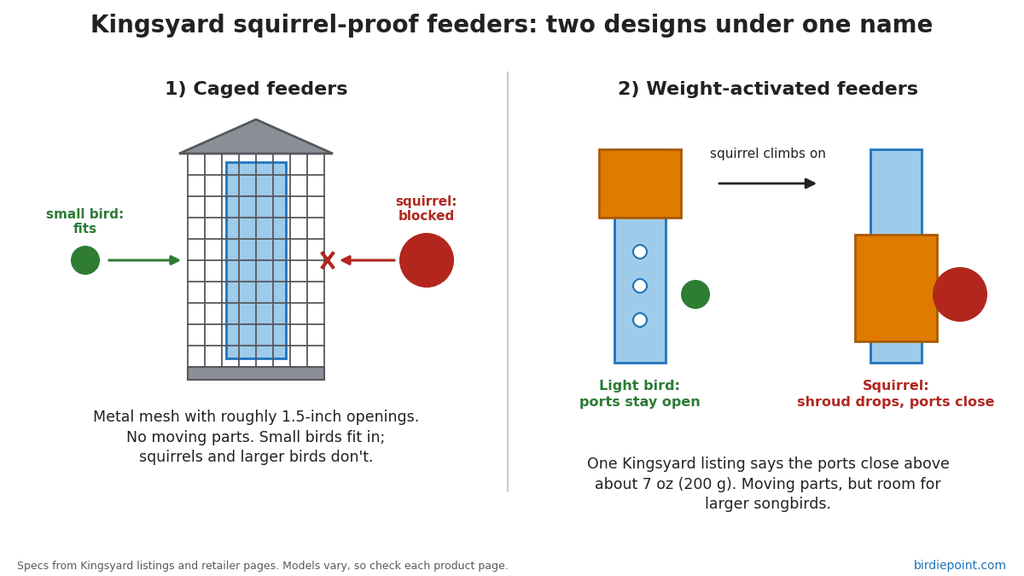
Two designs under one name
Caged feeders wrap the seed in metal mesh. Listings give openings of roughly 1.4 to 1.6 inches, and the brand’s pages say 1.5. There are no moving parts, which is the appeal. The catch is that the same openings keep out larger birds too.
Weight-activated feeders use perches that sense weight. One Kingsyard listing says the ports close when more than 200 grams (about 7 ounces) is detected. Songbirds are far below that (a cardinal is around 1.5 ounces), and a squirrel is well above. The upside is room for bigger songbirds. The downside is moving parts, which are one more thing that can wear or stick.
Which type fits which birds
| Type | How it keeps squirrels out | Fits | Watch out for |
|---|---|---|---|
| Caged tube or nyjer feeder | Metal mesh around the tube | Small birds: finches, chickadees, goldfinches (per listings) | Larger birds are shut out too |
| Caged suet feeder | Mesh with 1.5-inch openings around the cake; some models hang upside down | Woodpeckers and other suet eaters that fit through the openings | Check the opening size against the birds you get |
| Caged platform feeder | Metal cage over the tray, 1.5-inch openings on the brand page | Finches, chickadees, sparrows | Cardinals: one listing table names them, one reviewer says they can’t fit |
| Caged bluebird feeder | Cage around a small dish, about 1 lb capacity per the listing | Bluebirds, for mealworms | A small capacity |
| Weight-activated tube feeder | Ports close above about 7 oz | Small to mid-size songbirds | Moving parts, and the trigger is the maker’s figure |
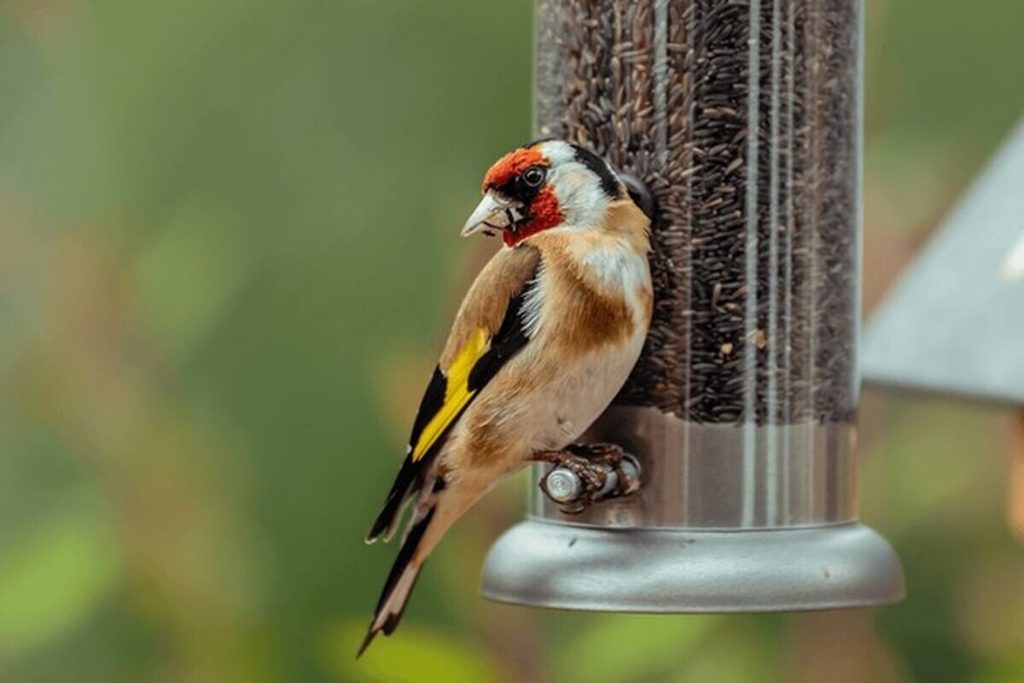
If cardinals are your target, read our guide to squirrel-proof feeders for cardinals before you buy a caged model. Reports on cardinal fit are mixed. A garden blogger found cardinal-sized birds weren’t a problem on a caged tube, while a reviewer on a Kingsyard product page said cardinals can’t fit the platform model. Check the model’s listed species and the cage opening.
About the “100% squirrel-proof” claim
Kingsyard’s own blog says its cage feeders stopped squirrels every time over 30 days of testing. That’s the seller testing its own products, not an independent result.
A reviewer on one Kingsyard product page says the feeder deterred squirrels for a few weeks, then the squirrel got in. Another reports that starlings hanging on the cage could reach seed through the mesh, so they kept the seed level low. Both are single reports, but they fit common sense. A cage is only as good as how well it’s hung and how full it is.
So treat “squirrel-proof” as “highly squirrel-resistant.” Placement still matters: hang it well away from fences, branches and roof edges. Our pole guide explains the heights and distances.
What reviewers report
- Seed stays put. Reviewers describe less seed loss to squirrels.
- Small birds use them. A garden blogger who was sent a Kingsyard feeder reported chickadees, titmice, goldfinches, house finches and wrens visiting. Because the feeder was supplied by the brand, weigh that review accordingly.
- It’s not unbeatable. See above.
- Fit varies by model. Check the species listing and the opening size.
Price and warranty
Listings seen in search results ran from about $26 to about $44, which is well below premium spinning or weight-sensitive feeders. Prices change, so check the current one. Kingsyard’s product pages advertise a lifetime warranty. Read what it covers and how to claim before you rely on it.
Who it suits, and who might want something else
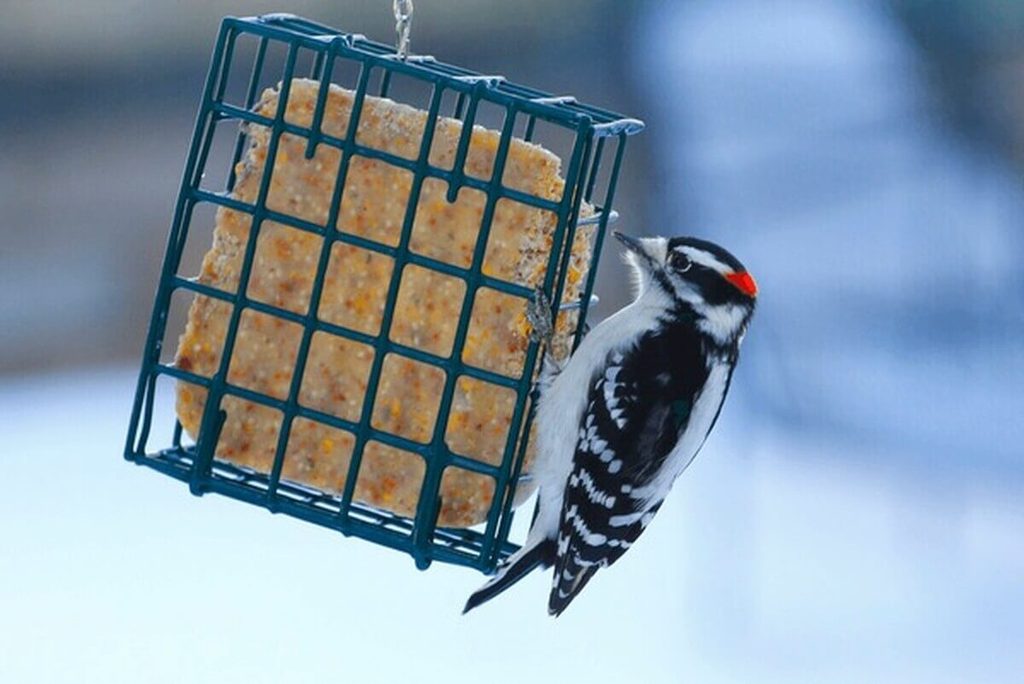
It suits you if squirrels are stealing your seed, you mainly want small songbirds, and you like a design with no moving parts. A caged suet feeder also keeps squirrels off the cake, and our woodpecker guide covers who comes to suet.
Look elsewhere if you mainly want cardinals or other larger songbirds, or if you want a feeder with a seat wide enough for them. Weight-activated or spinning designs may suit you better. Our Droll Yankee guide covers one option.
Before you buy
- Match the opening to your birds. Roughly 1.5 inches keeps out anything bigger than small songbirds.
- If it’s weight-activated, check the trigger weight and that small birds can still feed.
- Check the model, not just the brand. The cage, the capacity and the target species differ from product to product.
- Plan the spot. Squirrels will find a launch point if there is one.
- Read the warranty terms. And plan to clean the feeder regularly.
FAQ
Is a Kingsyard feeder really squirrel-proof? The brand says so, and its own testing agrees, but that’s the seller’s claim. At least one reviewer reports a squirrel getting in after a few weeks. Treat it as highly squirrel-resistant, and hang it well.
Will cardinals fit in a caged Kingsyard feeder? It depends on the model. One listing table names cardinals, a blogger reports cardinal-sized birds were fine on a caged tube, and a reviewer says they can’t fit the platform model. Check the cage opening and the listed species.
How does the weight-activated feeder work? The perch senses weight. One listing says that above about 7 ounces (200 grams), a shroud closes the ports. Small birds are far lighter, so they can keep feeding.
Does a cage keep out larger birds too? Yes. Openings of roughly 1.5 inches keep out squirrels and also most birds bigger than small songbirds.
Do Kingsyard feeders have a warranty? The brand’s product pages advertise a lifetime warranty. Read the terms for what’s covered and how to claim.
The bottom line
Kingsyard is a budget-friendly way to keep squirrels off a feeder, if you pick the right design for the birds you want and hang it well. Choose the model, not just the brand, and treat “100% squirrel-proof” as marketing rather than a promise.