

Peacocks can fly, but only for short distances. They usually fly to escape danger or reach roosting spots.
Peacocks, known for their vibrant plumage, are primarily ground-dwelling birds. Despite their large and heavy tail feathers, they possess the ability to fly short distances. Their flight is usually a quick dash to escape predators or to roost in trees for safety.
These bursts of flight are facilitated by their strong wing muscles, allowing them to lift their heavy bodies off the ground. Peacocks typically use their short flights to reach higher ground or safe spots. While they are not adept at long-distance flying, their brief flights are crucial for their survival in the wild.
Introduction To Peacocks
Peacocks are one of the most stunning birds on Earth. Their vibrant feathers and majestic tails captivate everyone. The beauty of peacocks is well known globally.
Peacock Species
There are three main species of peacocks:
- Indian Peafowl: Known for their bright blue and green feathers.
- Green Peafowl: Found in Southeast Asia with striking green plumage.
- Congo Peafowl: Native to Africa, less colorful than the other species.
Cultural Significance
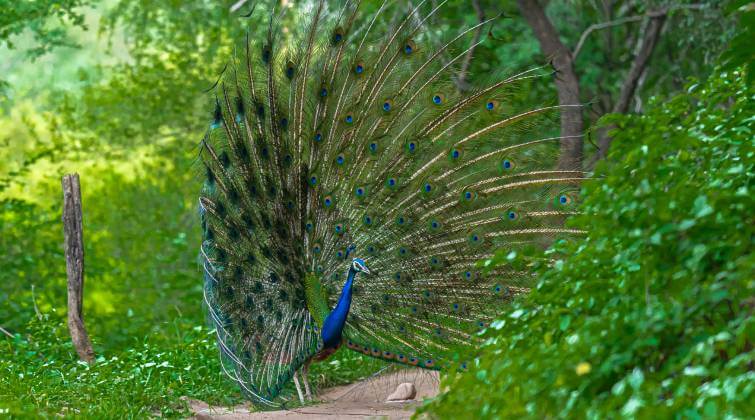
Peacocks hold significant value in various cultures. In India, the peacock is the national bird and symbolizes beauty and grace. In ancient Greece, peacocks were associated with the goddess Hera.
Peacocks also appear in many artworks, symbolizing immortality and renewal. Their feathers are often used in decorations and fashion, showcasing their timeless appeal.
Credit: www.ranthamborenationalpark.com
Physical Characteristics
The peacock is a fascinating bird with unique physical characteristics. These traits contribute to its ability to fly, albeit not very far. Understanding these characteristics provides insight into the peacock’s abilities.
Feather Structure
The peacock’s feathers are its most striking feature. They are vibrant and colorful. The feathers are long and have intricate patterns. The tail feathers, known as the train, are especially large. These feathers are used in mating displays. Despite their size, the feathers are lightweight. This helps the peacock maintain balance while flying short distances.
Body Weight
The peacock has a relatively heavy body. Male peacocks weigh between 8 to 13 pounds. Female peacocks, or peahens, are lighter. They weigh between 6 to 9 pounds. The heavy body makes long flights difficult. Peacocks rely on short bursts of flight to escape predators. They can fly up to trees or rooftops quickly.
Flight Mechanics
Peacocks are known for their dazzling feathers, but can they fly? While they aren’t strong fliers, peacocks can indeed take to the air for short distances. Understanding flight mechanics helps explain how these colorful birds manage to lift off.
Wing Anatomy
The wing anatomy of a peacock is unique. Their wings are broad and rounded. This shape is great for short, quick flights. The wings are made up of primary and secondary feathers. Primary feathers help with thrust. Secondary feathers are for lift. The colorful train of feathers is not part of the wing. It does add weight, making flight harder.
| Feather Type | Function |
|---|---|
| Primary Feathers | Provide thrust |
| Secondary Feathers | Provide lift |
Flight Muscles
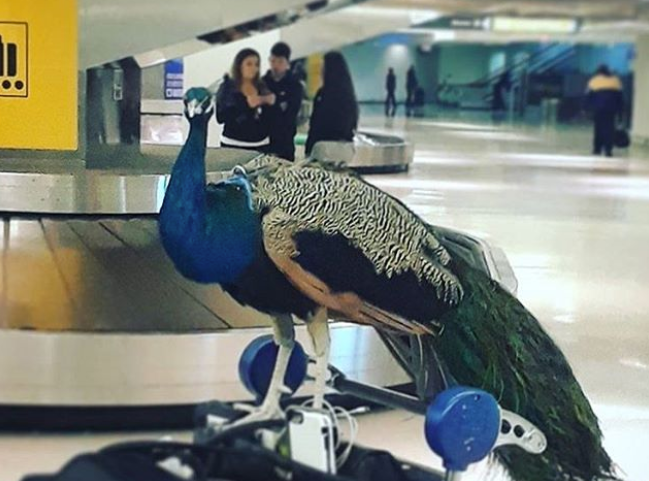
Peacocks have strong flight muscles. These muscles are essential for taking off. The pectoralis major is the main flight muscle. It helps with the downstroke of the wing. The supracoracoideus muscle helps with the upstroke. Both muscles work together for flight. They are attached to the bird’s keeled sternum.
- Pectoralis Major: Powers the downstroke.
- Supracoracoideus: Powers the upstroke.
These muscles are well-developed but not as strong as in other birds. This is why peacocks can’t fly long distances.
Credit: whyy.org
Flight Capabilities
Peacocks are known for their colorful feathers. But can they fly? Let’s explore their flight capabilities.
Short Distances
Peacocks can fly short distances. They do not fly like eagles or hawks. Their flights are brief and low.
Peacocks usually fly to escape danger or reach a perch. They glide more than they flap their wings. This helps them save energy.
Key Points:
- Peacocks fly short distances.
- Flights are brief and low.
- They glide more than flap.
Takeoff And Landing
Peacocks have strong legs to help them take off quickly. They use their legs and wings together.
Takeoff is usually from the ground or a low branch. They push off with their legs and flap their wings hard.
Landing is precise and controlled. They spread their wings to slow down. Then they land softly on a branch or the ground.
Key Points:
- Strong legs for quick takeoff.
- Use legs and wings together.
- Precise and controlled landing.
Comparative Analysis
Peacocks are known for their vibrant feathers and stunning displays. But can peacocks fly? This section dives into a comparative analysis to answer this intriguing question.
Other Birds
Many birds have the ability to fly, but their capabilities differ.
- Eagles: Soar high and cover long distances.
- Sparrows: Small, agile, and quick in the air.
- Penguins: Swim excellently but cannot fly.
Peacocks can fly, but only short distances. They use their flight to escape predators or reach roosting spots.
Flightless Birds
Some birds have evolved to be flightless. Here are a few examples:
| Bird | Characteristic |
|---|---|
| Ostrich | Largest bird, runs fast but cannot fly. |
| Emu | Second-largest bird, also flightless. |
| Kiwi | Small, nocturnal, and flightless. |
Unlike these birds, peacocks can take off and land. Their flight is short and purposeful, usually to escape danger.
Myths And Misconceptions
Peacocks are known for their beauty and colorful feathers. Many myths surround these majestic birds. Some people believe peacocks cannot fly. Others think they only glide. Let’s dive into common beliefs and scientific facts.
Common Beliefs
Many believe peacocks are too heavy to fly. Their large tails seem a hindrance. Some think peacocks only spread their feathers to attract mates. Others say peacocks can only make short, clumsy flights. These beliefs are widespread but often incorrect.
Scientific Facts
Science tells us peacocks can fly. They use their strong wings to lift their heavy bodies. Peacocks can fly short distances to escape predators. They usually fly to high branches or rooftops for safety. Their tail feathers do not stop them from flying.
| Myth | Fact |
|---|---|
| Peacocks cannot fly. | Peacocks can fly short distances. |
| Peacocks only glide. | Peacocks use their wings to fly. |
| Peacock tails stop them from flying. | Tails do not hinder their flight. |
Understanding these facts helps us appreciate peacocks more. They are not just beautiful but also capable birds. Next time you see a peacock, remember these fascinating truths.
Peacock Behavior
Peacocks are fascinating creatures with unique behaviors. These behaviors help them survive in the wild. Understanding these behaviors can answer the question: Can the peacock fly?
Roosting Habits
Peacocks prefer to roost in high places. They often choose tall trees to sleep in at night. This keeps them safe from ground predators.
During the day, they stay on the ground. They search for food and interact with other peacocks. But as night falls, they fly up to their chosen roosting spot.
Roosting in high places shows that peacocks can fly short distances. This ability helps them escape danger and find safety in the trees.
Escape Mechanisms
Peacocks have several ways to escape from predators. Their colorful feathers can startle attackers. They can also make loud calls to warn other peacocks of danger.
When threatened, peacocks use their strong legs to run fast. If running isn’t enough, they will fly short distances to reach safety. These short flights are usually to nearby trees or high places.
Flying helps peacocks avoid ground-based threats. It also allows them to move quickly to safe spots.
Credit: www.quora.com
Conservation Efforts
The majestic peacock, known for its vibrant feathers, faces many threats. Conservation efforts help in protecting these beautiful birds. These efforts focus on habitat preservation and captive breeding.
Habitat Preservation
Habitat preservation is crucial for peacock conservation. Peacocks thrive in forests, grasslands, and farmland areas. Protecting these areas ensures their survival.
Efforts to preserve habitats include:
- Creating protected areas
- Enforcing anti-poaching laws
- Educating local communities about peacock conservation
Local communities play a key role. They can help monitor and protect peacock habitats.
Captive Breeding
Captive breeding is another vital conservation strategy. It involves breeding peacocks in controlled environments. This helps increase their population numbers.
Key benefits of captive breeding include:
- Ensuring genetic diversity
- Providing peacocks for reintroduction into the wild
- Studying peacock behavior and health
Breeding centers also educate the public. They raise awareness about the importance of peacock conservation.
Both habitat preservation and captive breeding are essential. Together, they help secure a future for peacocks.
Frequently Asked Questions
Why Is Peacock Not Able To Fly?
Peacocks can’t fly long distances due to their large size and heavy tail feathers. They can only manage short flights.
Is It Rare To See A Peacock Fly?
Yes, it’s rare to see a peacock fly. Peacocks can fly but usually prefer to walk or run. They fly short distances to escape predators or reach roosting spots.
Is Peacock A Bird That Cannot Fly?
No, peacocks can fly. They usually fly short distances to escape predators or reach tree branches.
How High Can Peacock Jump?
Peacocks can jump up to 8 feet high. They use their strong legs and short flights to reach higher places.
Conclusion
Peacocks possess the ability to fly, but only short distances. Their flights are brief and rarely exceed 100 meters. These majestic birds prefer to stay grounded, using their vibrant feathers to attract mates. While not strong fliers, their beauty and grace captivate many admirers worldwide.