
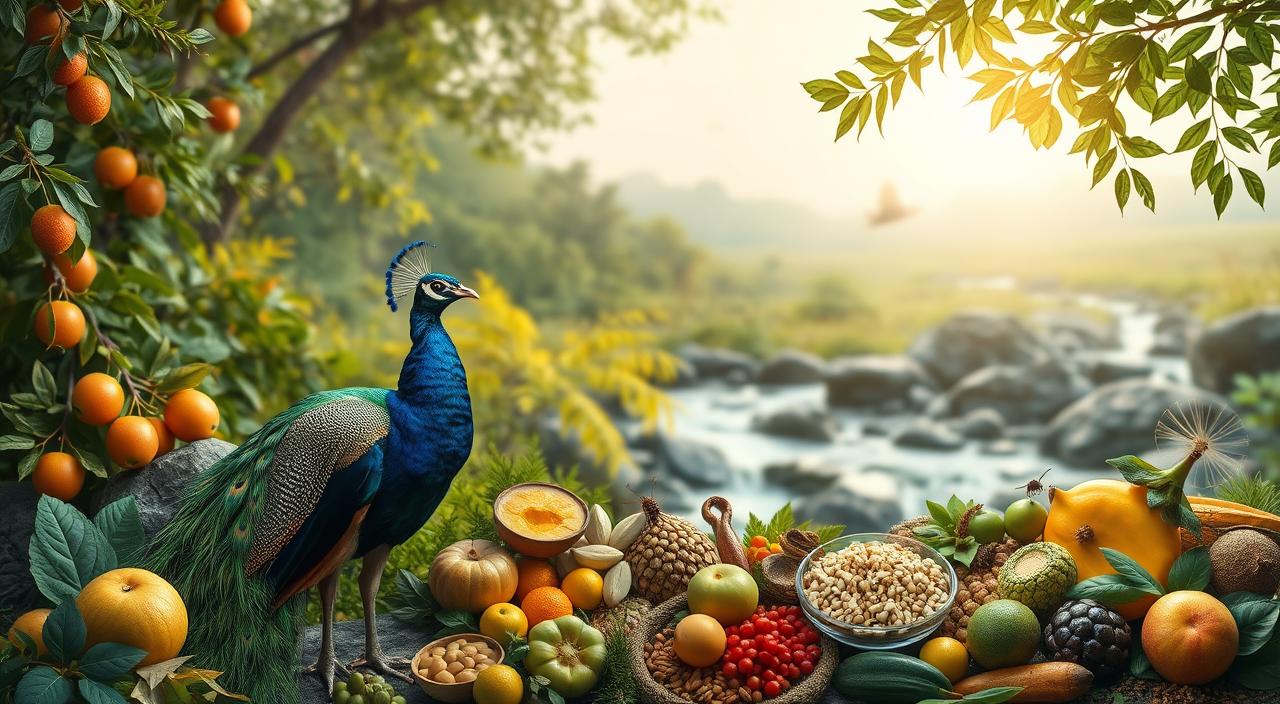
Peacocks, a symbol of natural majesty and beauty, boast an intricate diet that fuels their stunning plumage. Across the three species, from the lavish Indian Peacock to the endangered Green Peacock, and onto the secretive Congo Peacock, each bird showcases a diet uniquely tailored to its environment. A peacock’s diet, rich in diversity, includes grains, seeds, fruits, insects, and small creatures, essential for maintaining vibrant feathers and robust health. Understanding what does peacock eat not only illuminates their role in the ecosystem but also their nutritional needs, reflecting the opportunistic and adaptable nature of their feeding habits.
As daytime foragers, peacocks exhibit a natural finesse in seeking out varied food sources, an omnivorous palette that ranges from worms and reptiles to an assortment of plant matter. Incorporating such elements into their peacock diet assures a high protein intake, crucial for their extravagant feather display. The iridescent hues of their feathers, a spectacle of color, are attributed to the carotenoids consumed through their diet, affirming the significance of peacock nutrition for both their health and aesthetic appeal. By appreciating a peacock’s complex diet, we gain insight into the harmony between these birds and their habitats.
Understanding the Natural Habitat of Peacocks
Peacocks, with their extravagant plumage and regal bearing, are native to a diverse range of ecosystems across Asia. These environments profoundly influence their diet and lifestyle, impacting everything from the food they eat to their mating behaviors.
Key Ecosystems Where Peacocks Thrive
From the lush rainforests of Sri Lanka to the vibrant forests of Burma, peacocks are adapted to a wide array of habitats including savannahs, grasslands, and mountainous terrains. The distribution of the species extends to various regions in India, Pakistan, Java, Ceylon, and Malaya. These ecosystems provide not only the shelter but also the diverse dietary options that peacocks need to thrive. Foraging among the underbrush or in the open fields, they tap into a rich vein of food resources.
Role of Habitat in Diet Choices
The natural habitats of peacocks greatly influence their peacock feeding habits and peacock foraging behavior. In areas rich in flora and fauna, peacocks have access to a varied diet including insects, amphibians, and plant parts like flower petals and seed heads. This variety is crucial not only for their nutrition but also for the complex mating rituals they are known for, where males showcase their vibrant feathers to attract mates. The availability of ample food sources supports their health and contributes to the impressive displays used during mating seasons.
Understanding the link between habitat and diet is essential for conservation efforts, especially for species like the green peacock, which has seen its numbers decline due to habitat destruction and overhunting. By protecting these natural environments, conservationists can help maintain the balance necessary for peacocks to participate in natural behaviors such as foraging, which are essential for their survival.
Ultimately, the peacock’s habitat shapes its way of life in profound ways, from its survival strategies to its reproductive success. Preservation of these habitats is not just about saving spaces but about maintaining the complex web of life that thrives within them.
Primary Food Sources for Peacocks
Delving into the dietary preferences of peacocks reveals a sophisticated palette that blends both plant and animal-based foods. This diverse diet plays a crucial role in maintaining their vivid plumage and overall health. Understanding what constitutes a peacock meal is essential for anyone interested in the care and conservation of these magnificent birds.
Grains and Seeds: Staple Foods
Grains and seeds form the cornerstone of the peacock diet. In the wild or well-managed captivity scenarios, peacocks often consume a variety of grains such as corn and wheat, along with seeds from multiple fruits and wild grasses. These components are integral for providing the carbohydrates and fats necessary for energy. Particularly, the seeds from fruits like watermelon and cantaloupe are favored, primarily for their high nutrient content.
Here’s a breakdown of common grains and seeds in a peacock meal:
- Corn and wheat: High in carbohydrates, these grains are a staple.
- Watermelon and cantaloupe seeds: Rich in fats and oils, essential for feather health.
- Wild grass seeds: Offer a natural balance of nutrients consumed in their natural habitat.
Insects and Small Creatures
Protein is a pivotal part of the peacock diet, primarily derived from various insects and small animals. Regularly consumed insects include ants, beetles, crickets, and other small arthropods which are abundant in their natural environments. These not only provide essential protein but also contribute to the peacock’s intake of fats and other minor nutrients essential for robust health.
In addition to insects, peacocks occasionally consume small reptiles and amphibians, such as frogs and lizards, especially in more natural or wild settings where these protein-rich creatures are available. This aspect of their diet is crucial for their growth and the maintenance of their ornate feathers.
This comprehensive feeding behavior underscores the importance of a varied peacock meal in both natural and controlled environments, ensuring that these birds receive a balanced diet for optimal health and display.
It’s also important to note that while peacocks can adapt to different food sources based on availability, their diet should ideally mimic the rich variety of their natural habitat to prevent nutritional deficiencies and promote longevity.
Fruits and Vegetables in a Peacock’s Diet
Understanding the dietary habits of peacocks reveals the significance of fruits and vegetables in their diet. Peacocks display a pronounced preference for an array of fruits, particularly during the fall when these food sources are abundantly available. Not just any fruit finds favor; these birds are particularly fond of berries, which align with the natural offerings of their habitat during this season.
Aside from fruits, vegetables play a crucial role in the diet of a peacock. They tend to opt for a variety of greens and other vegetables that are safe and nutritious. Among these, items from the cabbage family are quite popular, alongside an assortment of other garden vegetables such as pepper leaves, which contribute significantly to their overall health and wellbeing.
Rounded understanding of these dietary preferences is essential for keeping these majestic birds healthy and vibrant, especially in managed care settings. Here’s a look at some of the specific fruits and vegetables favored by peacocks:
| Fruit/Vegetable | Benefits |
|---|---|
| Berries (Raspberries, Grapes) | Rich in antioxidants, vitamins, and provide hydration. |
| Peppers | High in Vitamin C, bolsters immune system. |
| Garden peas and beans | Provide proteins and fiber, promoting digestive health. |
| Lettuce, Kale | Low calorie, high in fiber and essential minerals. |
| Cabbage | Loaded with vitamins K and C, aids in inflammation reduction. |
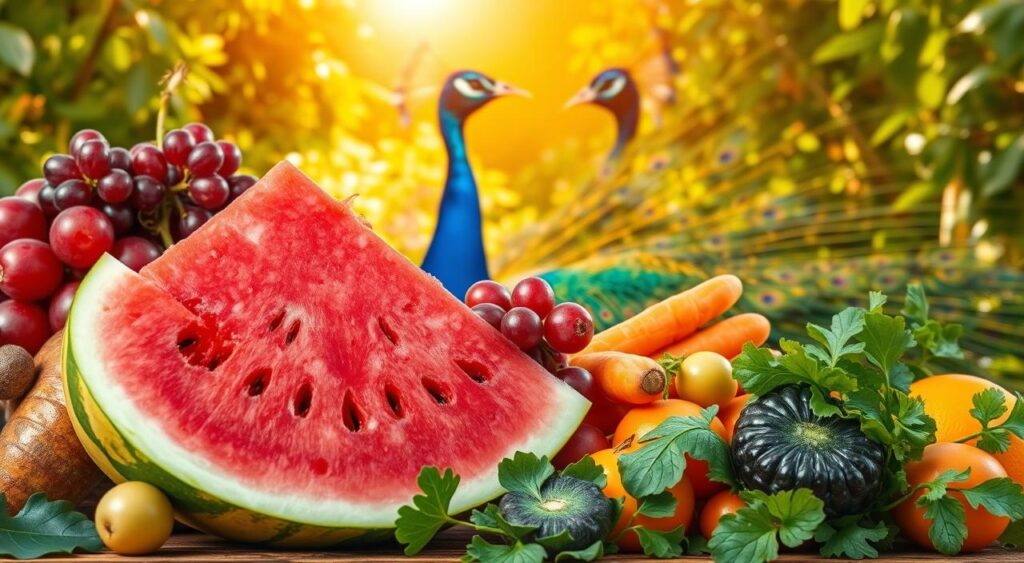
This insight into peacock food not only enriches our understanding but also underscores the importance of dietary diversity to maintain the health of peacocks, whether in the wild or in captivity. It reflects the necessity of integrating a balanced mix of these nutritious elements to foster their well-being, thereby contributing to their longevity and vibrant plumage.
Nutritional Needs of Peacocks
Peacocks are an ornamental bird species admired for their vivid plumage and graceful presence. However, sustaining their vibrant appearance and overall health requires a diet that fulfills their unique nutritional demands. Peacock nutrition is an essential aspect that influences not just their coloration but their physical and reproductive health.
The protein component of a peacock’s diet is paramount, primarily because these birds require an excellent protein intake to support feather growth and regeneration. Protein for peacocks typically comes from their omnivorous diet, including insects, small reptiles, and varied plant sources such as seeds and berries. In captivity, protein-rich dog food is often used to supplement their diet, mimicking the dense nutritional profile they would naturally acquire from animal-based sources.
Additionally, peacocks require a range of vitamins and minerals to maintain their health. Essential nutrients include calcium and phosphorus for bone health, as well as vitamins A, E, and B complex, which are vital for vision, skin health, and overall cellular function. The vibrant colors of a peacock’s feathers are heavily reliant on dietary carotenoids, which they typically obtain from natural sources. A lack in these can lead to pigmentation issues, manifesting in dulled feather hues.
| Nutrient | Source | Importance |
|---|---|---|
| Protein | Insects, small animals, dog food | Feather growth, muscle repair |
| Carotenoids | Leaves, grasses, seeds | Bright plumage coloration |
| Vitamins A, E | Plant-based foods, supplemented feeds | Skin and vision health |
| Calcium, Phosphorus | Dicalcium Phosphate in feeds, natural seeds | Bone strength and growth |
| B Complex Vitamins | Manufactured feed, natural grains | Energy and metabolism |
The diverse dietary habits of peacocks highlight their adaptability in various environments, from lush forests to managed care settings. Although peafowl can endure less optimal nutrient intakes for short periods, consistent, balanced diets are necessary to prevent long-term health issues. Therefore, understanding and implementing balanced peacock nutrition is crucial for their care.
Foraging Behaviors of Peacocks
Peacocks exhibit fascinating foraging behavior that plays a vital role in their survival and vibrant health. Delving into the peacock feeding habits, these birds are ground foragers, primarily using their keen senses of sight and sound to locate food. Their diet consists of a mix of seeds, grains, insects, and small vertebrates, highlighting their adaptability to various food sources available in their habitat.
Techniques Used to Find Food
Peacocks utilize a range of techniques to find their food. During the foraging process, these birds can often be seen scratching the soil to uncover hidden food sources like seeds and crawling insects. They are known to use their strong beaks to dig into the ground or dismantle rotten wood pieces to access bugs and small creatures hiding beneath. Their foraging patterns are not just a testament to their survival instincts but also reveal the complexity of their eating behaviors influencing overall peacock foraging behavior.
Seasonal Food Availability
Seasonal changes significantly dictate the availability of different food sources, affecting the peacock feeding habits. In the warmer months of spring and summer, peacocks take advantage of the proliferation of insects and the blooming of a variety of plants. During these seasons, their diet is rich in protein and fresh greens, which supports not only their energy needs but also the luminance and growth of their feathers. As the climate cools in the fall, they shift toward more berries and fruits, which are plentiful, before turning to grains and nuts in the winter months when other food sources can be scarce.
Understanding these aspects of peacock foraging behavior provides not only fascinating insights into their daily lives but also underscores the importance of habitat conservation to maintain the natural cycles of these majestic birds. Whether they are hunting small snakes or foraging for grains, peacocks demonstrate remarkable versatility in their diet, integral for their survival across different seasons.
The Impact of Captivity on a Peacock’s Diet
Understanding the dietary needs of peacocks, particularly the variations in what does peacock eat when in captivity versus in the wild, is crucial for their health and longevity. Domesticated peacocks cannot forage as their wild counterparts do, which significantly alters their natural eating habits and necessitates a specially formulated peacock diet in captivity.
Differences in Diet Between Wild and Captive Peacocks
Wild peacocks enjoy a diverse diet, primarily consisting of plant matter, insects, and small reptiles. This variety not only fulfills their nutritional needs but also engages their natural foraging instincts. In contrast, captive peacocks often lack the space and natural resources to engage in such behaviors, leading to a more controlled and sometimes less varied diet.
Recommended Diet for Captive Peacocks
For peacocks in captivity, it’s recommended to emulate the natural dietary patterns observed in the wild to the extent possible. A balanced diet for captive peacocks typically includes commercial game bird feed supplemented with a variety of fresh produce and protein sources. This blend helps meet the nutritional needs similar to those provided by their natural diet.
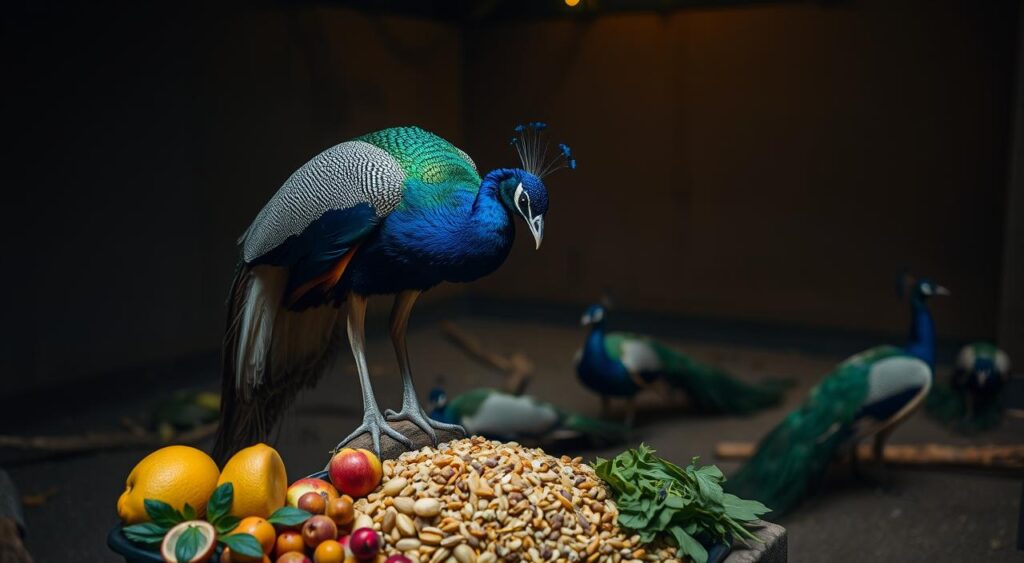
The table below shows a suggested feeding regimen that integrates both commercial food products and natural food items to ensure that the peacock diet in captivity is as balanced and natural as possible:
| Food Type | Amount | Frequency |
|---|---|---|
| Commercial Peacock Feed | 70% | Daily |
| Fresh Fruits (e.g., Berries, Apples) | 15% | 2-3 times a week |
| Vegetables (e.g., Spinach, Carrots) | 10% | 2-3 times a week |
| Protein Sources (e.g., Mealworms, Crickets) | 5% | 1-2 times a week |
This dietary approach helps in mimicking the natural variety of what does peacock eat in the wild, thus promoting a healthier lifestyle even in a captive setting. Regular monitoring and adjustments based on individual health needs and seasonal changes are essential to maintain the well-being of captive peacocks.
Environmental Influences on Peacock Feeding Habits
The diverse diet of peacocks is significantly influenced by the environments they inhabit. These majestic birds showcase remarkable adaptability in their feeding habits, which vary considerably across different ecological settings, from lush rural farms to bustling urban landscapes.
Effects of Climate on Food Sources
In regions with colder climates, such as parts of Canada, peacocks have demonstrated resilience by adapting their foraging strategies and dietary intake. Despite the harsh conditions, they manage to maintain a nutritious peacock meal regime, often supplemented by caretakers in rural areas. The available peacock food variation adapts seasonally, with greater reliance on high-protein supplements during colder months to compensate for the scarcity of natural food sources like insects and fresh greens.
Urban vs. Rural Diet Variations
Urban peacocks often encounter different dietary challenges compared to their rural counterparts. The scarcity of natural habitats in cities compels these birds to adapt to a more opportunistic feeding strategy. This adaptation is crucial for maintaining their health and vibrant plumage due to varied peacock food variations available in urban settings. It’s not uncommon to find urban peacocks consuming a wider range of processed foods, which might not always meet their nutritional needs as effectively as their natural diet does.
| Diet Component | Rural Setting | Urban Setting | Diet Adaptation |
|---|---|---|---|
| Seeds and Grains | Available from foraging in open fields and natural vegetation. | Less accessible, often replaced by bird feeder supplies or discarded human food. | More reliance on artificial feeding sources. |
| Insects and Small Vertebrates | Abundant, including locusts, small rodents, and insects. | Reduced availability, small insects available but less diverse. | In urban settings, protein intake often supplemented by pet food or specially prepared feeds. |
| Fruits and Vegetables | Naturally available, includes a variety of fresh fruits like berries and wild vegetables. | Sporadic, mostly from residential gardens or discarded produce. | May include more fermented or processed fruits and vegetables. |
This exploration into the peacock’s ability to adjust to various environmental factors reaffirms the importance of conscientious feeding practices. Regardless of whether residing in an urban or rural setting, ensuring that these colorful creatures receive a balanced and nutritious diet is key to their health and longevity.
Common Misconceptions About Peacock Diet
Despite their vibrant splendor and royal demeanor, there are several prevailing myths about peacock diet that differ significantly from reality. Understanding what does peacock eat, versus the common myths about peacock diet, can help in providing these magnificent birds with a healthier lifestyle, whether in captivity or the wild.
Myths Surrounding Peacock Eating Habits
One of the most common misconceptions is that peacocks are purely plant-eaters, subsisting only on grains, fruits, and leaves. While it’s true that these items constitute a significant part of their diet, peacocks are actually omnivorous. They can consume small mammals, and contrary to popular belief, they are capable of eating rats and even snakes. This fact dispels the myth that peacocks are meek and strictly vegetarian.
Another prevalent myth is that peacocks consume raw eggs. This behavior is highly unusual and not a standard dietary practice for peafowls. It’s believed that such behavior, when observed, may be linked to specific environmental stressors or nutritional deficiencies rather than natural dietary preferences.
Facts vs. Fiction: What to Believe
When it comes to understanding the dietary needs of peacocks, it’s crucial to base our care practices on verified information. For example, while many believe that peacocks can eat just about anything, their bodies are best supported by a balanced diet consisting of seeds, fruits, and protein sources like insects and small vertebrates. This dietary diversity is critical for their health, especially in captivity where natural food sources might be limited.
Additionally, peacocks are ground-feeders by nature, and they forage the land for their food. They are not predatory birds but opportunistic feeders who will make the most of what is available in their environment. Ensuring that they have access to a variety of food sources can prevent nutritional deficiencies and support their vibrant plumage and overall health.
By dispelling the myths about peacock diet and understanding the broad range of what does peacock eat, we can better appreciate and care for these extraordinary birds in both domestic and wild settings.
Care Tips for Feeding Pet Peacocks
Ensuring the well-being of pet peacocks involves comprehensive knowledge of peacock nutrition and feeding habits. It is vital for pet owners to provide a diet that promotes optimal health and mirrors their natural environment’s offerings. Peacock food should comprise a well-balanced mix of nutrients, featuring grains such as whole soaked or fermented corn, wheat, and oats. The developmental stage of the bird is crucial in determining the diet; for example, peacock chicks require a heated environment initially and a protein-rich diet. Young chicks thrive on a Game Bird feed crumble with a 25 to 30% protein content, critical for their growth in the first few months of life.
While formulating a balanced diet, it’s also essential to recognize the foods to avoid. Peacocks’ high-protein requirements don’t translate to freewheeling consumption of cat food, which could result in overfeeding and nutrient imbalance. Moreover, care should be taken to provide proper space – at least 80 square feet per bird – to forestall stress that can lead to disease. Awareness of diseases prevalent in peacocks, such as those caused by parasites, is imperative. Regular deworming schedules alongside providing adequate vaccination will go a long way in maintaining the health of pet peacocks.
Additionally, peacocks exhibit demanding spatial and environmental needs. To accommodate their activity, a minimum pen height of 8 feet is recommended, alongside ample space for flying and exhibiting their impressive tail fans. The peacock feeding habits should be monitored to ensure they are not showing aggression or disturbing other poultry species. Owners are advised to maintain a dedicated and safe environment for these birds, matching the space to their social and physiological requirements. By adhering to these care tips, caregivers can create a conducive environment for their pet peacocks to live a healthy, content life.