
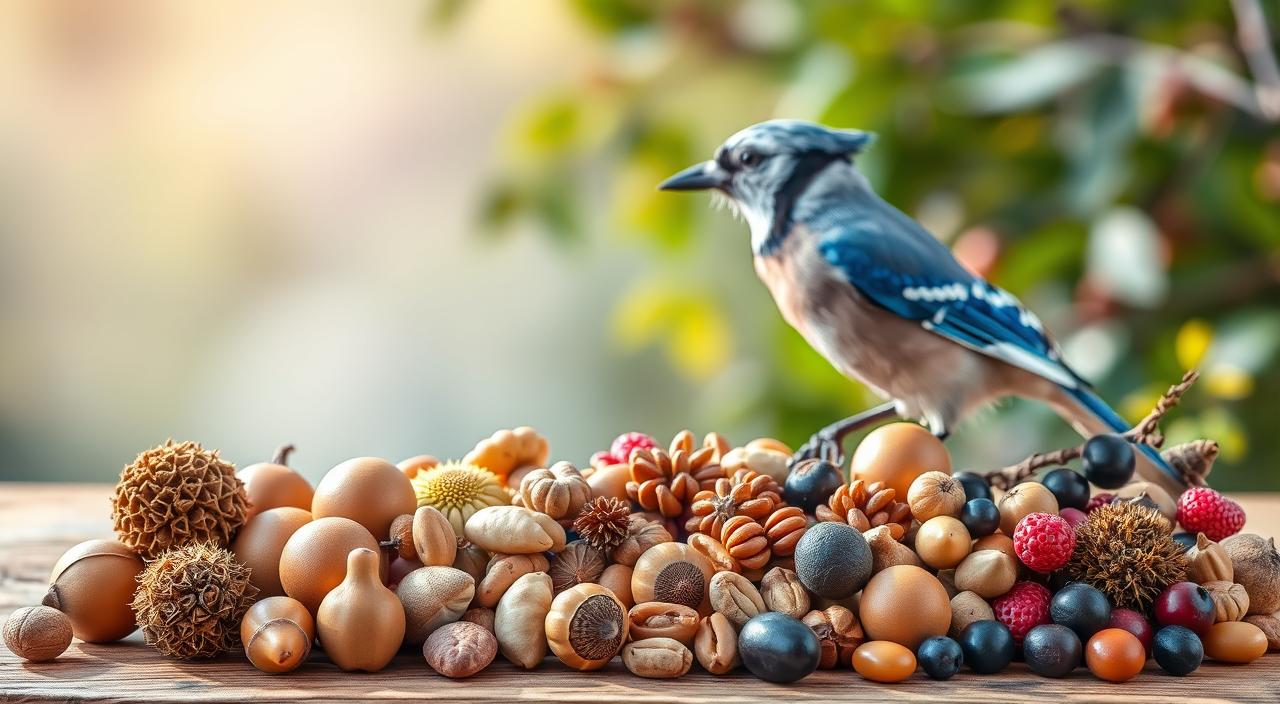
The splendor of blue jays is more than feather-deep; their complex diets showcase a rich tapestry of tastes and habits. Delving into the question, “what does blue jays eat?” reveals that these resourceful birds have a penchant for an omnivorous menu. Research highlights that insects and nuts form the core of the blue jays food preferences, while a fascinating study uncovered that less than 1% indulge in eggs or birds. Admired for their intelligence, these avians astutely employ tray and hopper feeders but show no fondness for their hanging counterparts. In nature’s restaurant, they favor a hearty serving of acorns, hazelnuts, and hickory nuts, accounting for up to 40% of their consumption.
Intriguingly, peanuts don’t just offer a protein and fat-rich snack; they also provide a classroom setting for social learning among these feathered foragers. Blue jays watch and learn from each other to master the art of cracking open peanut shells. Their impressive throat pouch serves as temporary storage, allowing them to cache surplus seeds and nuts for future meals. This practice not only secures sustenance for the jays but occasionally sows the seeds for tomorrow’s forests.
While they navigate their habitats with apparent ease, blue jays in Florida often face feeder competition from other wildlife, highlighting their adaptability in the presence of dominant neighbors. Still, during migration along the Great Lakes and Atlantic coasts, thousands of these birds exemplify the strength and resilience inherent in their species—qualities that have sustained them for decades, with the oldest banded individual reaching nearly 27 years of age. A portrait of the blue jay’s diet is thus one of diversity, intelligence, and the subtle interplay of nature’s resources.
Overview of Blue Jay Diet
The blue jays diet is intriguingly diverse and adjusted according to seasonal availability, exemplifying their adaptable blue jays feeding habits. Primarily omnivorous, these birds enjoy a blend of vegetable matter and protein sources, encompassing seeds, nuts, insects, and occasionally small vertebrates and bird eggs. Understanding the specifics of their diet is essential for bird enthusiasts looking to attract blue jays or merely observe them in their natural habitats.
Particularly during the colder months, over 40% of the blue jays diet consists of acorns, hazelnuts, and other wild nuts, indicating their dependency on high-energy food sources that are abundant in forests. Blue jays can store food like seeds and peanuts in their expandable throat pouches, allowing them to save excess food for later consumption. This caching behavior not only helps the blue jays survive during scarce periods but also plays a crucial role in forest ecology by contributing to the growth of new trees from uneaten caches.
Studies also show that blue jays possess remarkable visual acuity, enabling them to efficiently find and differentiate food types, which is vital in their survival and blue jays feeding habits. Their ability to quickly adapt to various food sources highlights their flexible foraging behavior, which helps them thrive in diverse ecological conditions—from woodlands to urban areas.
Here’s an overview of key statistics reflecting the blue jays’ dietary preferences:
| Food Type | Percentage | Additional Notes |
|---|---|---|
| Nuts (e.g., Acorns, Hazelnuts) | 40% | Mainly consumed in winter |
| Protein sources (e.g., Insects) | Various | Including larvae, caterpillars, small vertebrates |
| Industrial food (e.g., Peanuts) | – | Rapidly attracts blue jays to feeders |
The blue jays’ capacity to switch between different food sources readily demonstrates an evolutionary adaptation that sustains their population across North America. By varying their diet based on what the environment offers, blue jays exhibit a fascinating example of natural resource optimization.
Seeds: A Staple Food Source
In the varied diet of the blue jay, seeds play a pivotal role, satisfying both their immediate and long-term nutritional needs. Understanding the favorite foods of blue jays and their blue jays nutritional needs offers insights into their behavior and survival strategies.
Types of Seeds Consumed
Blue jays have a particular affinity for high-quality, nutrient-rich seeds, such as sunflower seeds, which are not only a favorite but also vital for their diet. They prefer these seeds because they are large, high in fat, and can be easily stored and retrieved later. Blue jays also consume other seeds such as corn and small grain varieties, which provide necessary energy reserves.
Foraging Behavior
When it comes to foraging, blue jays are exceedingly smart and strategic. They exhibit a keen choice in selecting viable, undamaged seeds, which are better for storage and future germination. This foraging behavior is not just about feeding themselves; it also contributes to the environment. By caching seeds, such as acorns and nuts, in various locations, they play a crucial role in tree propagation. Their advanced spatial memory aids them in relocating their caches, ensuring a food supply during scarce periods.
The foraging and caching behavior of blue jays significantly impacts their surroundings, helping in the natural dispersal of seeds which fosters forest regeneration and growth. This behavior, combined with their dietary preferences, positions blue jays as integral players in their ecosystems, directly linking their blue jays nutritional needs to their environmental impact.
Nuts: A Nutritious Treat
Among the myriad of offerings in the blue jays natural diet, nuts stand out as both a preferred and nutritious food source. Integral to the blue jays foraging behavior, nuts not only offer essential nutrients but also engage these intelligent birds in complex behaviors critical for their survival.
Favorite Nut Varieties
Blue jays show a particular fondness for a variety of nuts, with acorns, hazelnuts, and hickory nuts topping their list. Remarkably adept at shell removal, they manage to crack nuts open, which is not only a testament to their intelligence but also a crucial skill for accessing the nutritional rewards these nuts offer. Observations reveal that peanuts, though not native, have become a significant part of their diet, providing necessary fats and proteins that are vital during colder months.
The Role of Nuts in Their Diet
Nuts contribute significantly, at times comprising over 40% of a blue jay’s diet. This high reliance on nuts is complemented by their behavior of caching these resources for later use. Studies have shown that blue jays are meticulous in hiding nuts across various locations, which not only ensures a food supply during scarce periods but also aids in forest regeneration through sprouting of unclaimed nuts. Their ability to use their expandable throat pouch to store nuts temporarily allows them to transport these items effectively, further illustrating the sophisticated nature of blue jays foraging behavior.
Fruits and Berries
Exploring the sweeter facets of blue jays feeding habits, it’s intriguing to note how vital fruits and berries become in their diet, especially during certain seasons. These goodies not only offer a break from their usual fare but also supply substantial nutritional benefits that are crucial for blue jays’ overall health and vitality.
Seasonally, fruits and berries provide a unique opportunity to observe the adaptability and blue jays food preferences. During spring and summer, their consumption of these sweet treats increases, providing essential vitamins and sugars that are welcome during breeding seasons when energy demands are high.
Seasonal Availability
Blue jays have a knack for making the most out of seasonal abundance. When fruits and berries are plentiful, blue jays will often cache these foods, similar to their habits with acorns and nuts. This not only ensures that they have a reserved food source for leaner times but also plays a significant role in seed dispersion, contributing to the ecological dynamics of their habitats.
Popular Fruit Choices
Among the variety of fruits and berries included in the blue jays feeding habits, there are clear favorites. Cherries, grapes, and various types of berries top their preference list. These fruits, easily found in both wild settings and suburban gardens, are particularly popular due to their accessibility and nutrient content.
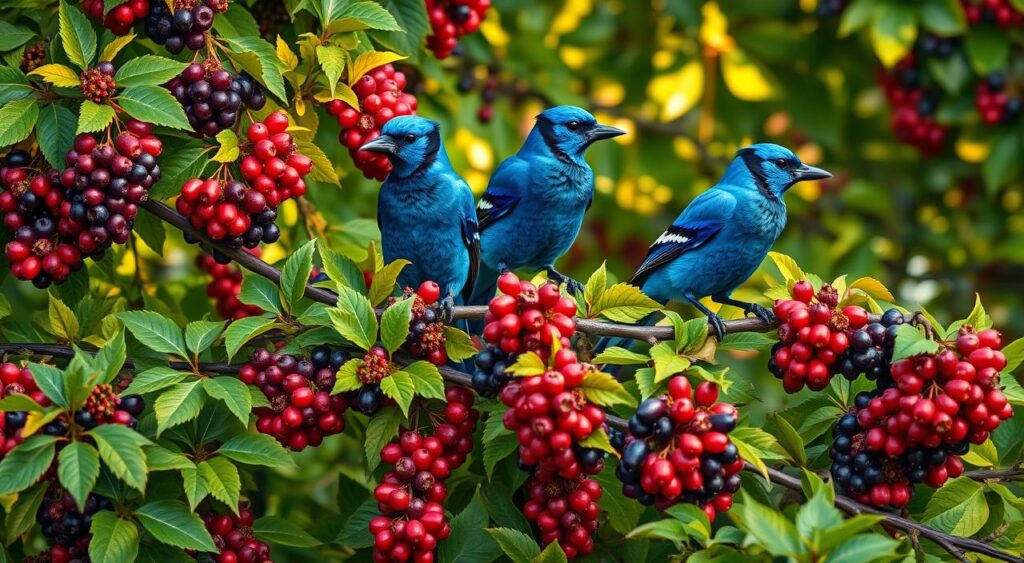
Understanding these preferences helps bird watchers and nature enthusiasts provide suitable food sources in their backyards, especially in bird feeders tailored to attract blue jays. Not only does this support the dietary needs of these colorful birds, but it also offers a chance to observe them up close, engaging in their natural blue jays feeding habits.
In summary, fruits and berries are more than just a supplementary part of the blue jays diet; they’re a seasonal feast that supports their nutritional needs and playful indulgence. Observing these feeding behaviors provides a window into the complex and adaptive world of blue jays, making it a fascinating study for both ornithologists and casual bird watchers alike.
Insects and Spiders
For blue jays, the inclusion of insects and spiders within their broader blue jays diet is not only a matter of preference but a crucial dietary requirement that supports their health throughout various life stages. While about 75% of a blue jay’s diet is sourced from plant materials, animal matter such as insects and spiders comprises a significant portion of the remaining diet, particularly beneficial for nestlings.
Blue jays food preferences change with the seasons, often incorporating larger quantities of insects and spiders during the crucial nesting periods when the demand for protein significantly increases. This natural protein-rich diet helps in the healthy development of their young.
Understanding the specific nutrients obtained from different insects can highlight the adaptability and needs of blue jays. For instance, the anatomy of caterpillars and beetles offers rich proteins and essential fats, which are vital during the breeding season and cold winter months.
Common Insect Prey
The dietary intake of insects by blue jays includes a variety of species:
- Caterpillars and larvae – crucial for nestlings.
- Beetles – consumed throughout the year.
- Grasshoppers and crickets – especially in summer.
- Spiders – included in the diet for their protein during spring and summer.
Importance of Protein
Protein is fundamental for the growth, repair, and overall health of blue jays. Insects like beetles and caterpillars not only provide this essential nutrient but also offer a variety of other benefits such as fats and minerals which are critical during the winter and breeding seasons. Thus, spiders and insects form an indispensable part of blue jays’ food preferences, impacting everything from their reproductive success to their ability to thrive in diverse environmental conditions.
| Insect Type | Percentage in Diet | Seasonal Preference |
|---|---|---|
| Caterpillars | 22% | Spring/Summer |
| Beetles | 18% | All seasons |
| Grasshoppers | 20% in summer | Summer |
| Spiders | 10% | Spring/Summer |
This comprehensive view of the insect and spider intake illustrates how significant these creatures are in the blue jays‘ diet, ensuring they meet their nutritional needs effectively.
Small Vertebrates
While blue jays predominantly consume nuts, seeds, and insects, their diet also encompasses smaller vertebrates, which highlights their versatile feeding strategies essential for meeting their nutritional needs. This aspect of the blue jays natural diet reflects their adaptability and prowess as opportunistic feeders in diverse ecosystems.
Within this diet category, blue jays have been known to occasionally prey on frogs, baby birds, and small rodents. Such prey is typically taken to supplement their nutritional intake during times when other food sources are scarce. It underscores the importance of understanding the full spectrum of the blue jays nutritional needs, especially when considering their role in natural food chains.
- Frogs
- Baby birds
- Small rodents
Feeding Habits
Blue jays exhibit a remarkable level of ingenuity and adaptability in their feeding habits. They are not only capable of hunting small vertebrates, but they also engage in the practice of caching food, which involves storing food items such as seeds and nuts for later consumption. This behavior is particularly beneficial during winter months when food is scarce.
The consumption of vertebrates, although minor, plays a crucial role in the blue jays’ diet, satisfying specific blue jays nutritional needs that might not be met by plant-based foods alone. Moreover, these birds have been observed using unique tactics such as mimicking the calls of hawks to scatter other birds and steal their food, demonstrating their complex interaction with the environment.
Bird Feeders and Blue Jays
Blue jays, with their distinctive blue plumage and intelligent gaze, are a common sight in many backyards, delighting bird watchers with their blue jays feeding habits. These vibrant birds are known for their blue jays foraging behavior, which includes a strong preference for peanuts, making them frequent visitors to bird feeders that offer these treats.
Enhancing your backyard to accommodate the feeding habits of blue jays can lead to a lively outdoor space filled with their colorful presence throughout the year. This guide focuses on what to offer and the most effective feeders to use, ensuring that these charismatic birds are regular guests.
What to Offer in Your Backyard
To cater to the varied diet of blue jays, it’s beneficial to provide a mix of foods. Given their partiality to peanuts, these should be a staple in your feeder. Blue jays are also fond of acorns, sunflower seeds, and occasionally, suet, especially during the colder months when extra fat is needed. These offerings not only meet their nutritional needs but also encourage their natural foraging behavior.
Additionally, since blue jays are known to cache food, particularly nuts, they’re likely to take several peanuts or acorns at a time and stash them away for later consumption. This caching is a fascinating aspect of blue jays foraging behavior, revealing their role in spreading seeds, which potentially grow into new plants, thus contributing to forest regeneration.
Popular Blue Jay Feeder Options
Choosing the right type of feeder can make a significant difference in attracting blue jays. Experts suggest using tray feeders or hopper feeders as they allow easy access for the birds to the food. These feeders support their natural behavior of picking and choosing nuts, seeds, and other food items, mimicking their wild foraging scenarios.
- Tray feeders are excellent for spreading a variety of seeds and nuts, allowing blue jays to easily select their preferred items.
- Hopper feeders work well by offering a large storage capacity, which is ideal given the hearty appetite of blue jays and their tendency to visit feeders frequently throughout the day.
For those looking to provide a water source, a broad, shallow birdbath can be attractive to blue jays, especially if it’s kept clean and filled with fresh water.
In conclusion, by understanding blue jays feeding habits and offering the right type of food and feeder, your backyard can become a preferred destination for these beautiful birds. Observing their foraging behavior not only adds to the pleasure of bird watching but helps support the local bird population.
Foraging Strategies in the Wild
The blue jays’ foraging strategies in the wild are a testament to their adaptability and intelligence, quintessential for their survival especially during the harsh winter months. These birds exhibit a remarkable capacity for locating and storing food, which significantly influences their survival and reproduction rates. Across their habitat, blue jays adapt their feeding practices according to available resources, showcasing varied foraging techniques and dietary preferences.
Blue jays primarily rely on a diverse array of food sources, including acorns, nuts, seeds, insects, and occasionally small vertebrates and bird eggs. This variety forms an integral part of the blue jays natural diet, ensuring they receive the necessary nutrients to withstand different environmental conditions. One notable behavior, caching, where blue jays store food items like acorns in various locations, plays a crucial role during food scarcity in winter.
Their strategic foraging techniques are closely tied to their blue jays feeding habits which often involve observing and learning from each other. This social learning is vital for younger jays, helping them understand and adapt to the complexities of food gathering. Moreover, in their natural habitats, these birds are known to migrate and forage in flocks, especially in areas with dense oak, beech, and hickory woodlands, leveraging collective intelligence to effectively locate and utilize food sources.
During the colder months, foraging becomes a critical survival tactic. Blue jays exhibit a change in their feeding habits to adapt to the scarcity of food. For instance, they are seen more frequently at bird feeders, seeking out peanuts and sunflower seeds, which are high-energy foods ideal for winter survival. Their presence in residential areas during winter also highlights their ability to adapt to urban environments where natural foods are less accessible.

| Statistic | Detail |
|---|---|
| Winter Travel | 11% of northeastern blue jays travel to southeastern states |
| Winter Acclimatization | 89% remain in their breeding territories |
| Food Transport | Can carry food up to 4 km for caching |
| Survival Rate in Extreme Cold | About 50% do not survive at -30°C |
Ultimately, the adaptive foraging strategies and feeding habits of blue jays allow them to thrive even under varying environmental pressures. Whether it’s their ability to cache food over vast distances or their strategic use of community feeding tactics, blue jays’ resilience in the wild is a remarkable display of survival and intelligence.
Geographic Variations in Diet
The geographic distribution of blue jays significantly influences their dietary habits, reflecting diverse blue jays food preferences based on regional availability and habitat differences. For instance, in densely forested areas, these birds tend to consume a higher proportion of nuts and seeds, benefiting from the abundant natural resources. Conversely, urban blue jays might adapt to include more anthropogenic food sources in their diet due to the scarcity of typical wild food.
Regional Diet Differences
In different regions, the local flora and fauna shape the blue jays foraging behavior. For example, Florida scrub jays, a close relative to the blue jay known for similar habits, show notable variation in their diet and behavior due to their restricted habitat range and specialization. Habitat loss and fragmentation have led these birds to adapt to whatever food sources are available, which is a testament to their flexibility and resilience in varying ecological contexts.
Effects of Habitat on Feeding
The availability of certain food types directly corresponds with the habitat’s characteristics. Where there are rich nut-bearing forests, blue jays will forage for these high-energy sources. In areas where such resources are sparse due to urban development or agricultural expansion, blue jays may rely more heavily on insects or smaller vertebrates, which requires a shift in foraging strategy.
Understanding these geographic dietary variations is crucial not only for bird enthusiasts but also for conservationists looking to support blue jay populations through habitat preservation and restoration efforts. This adaptive foraging behavior underlines the importance of maintaining diverse and healthy ecosystems to support the varied diets of wildlife, including the adaptable blue jay.
Blue Jays in Urban Environments
As the urban landscape expands, the adaptable blue jay finds new opportunities for survival. These vibrant birds adjust their blue jays natural diet and blue jays feeding habits to thrive in cities and suburban areas, showcasing remarkable versatility and opportunism.
The shift to urban living leads blue jays to exploit food provided directly by humans or found through foraging in human refuse. This includes a mix of seeds, nuts, and commercially available bird food, though their diet diversifies depending on the offerings available in different locales.
Blue jays in urban settings exhibit complex interactions with humans, influencing both their feeding strategies and dietary choices. Below are key aspects of how these interactions shape the blue jays’ urban diet:
Diet Changes in Cities
- In comparison to their wild counterparts, urban blue jays are more likely to consume human-provided foods, leading to an increased intake of processed seeds and bread pieces.
- Frequent visits to bird feeders also highlight a shift towards more predictable and readily available food sources in urban areas.
- Foraging in trash bins or agricultural leftovers allows them to access unconventional food items not typically part of the blue jays natural diet in wilder, unsettled regions.
Interactions with Humans
- Interaction with humans often results in blue jays becoming accustomed to human presence, reducing their natural cautiousness and enabling closer observations by bird watchers and researchers.
- Feeding by humans can sometimes lead to dependent behaviors, where blue jays might wait for food rather than forage, especially during colder months when natural food sources are scarce.
- These interactions sometimes also lead to negative behaviors such as aggression towards other birds at feeders or bold attempts to snatch food near human activities.
Overall, the presence of blue jays in urban areas highlights their ability to adapt their feeding habits and diet based on the changing environment. By understanding these changes, city dwellers can better accommodate the dietary needs of these colorful birds, supporting their health and sustainability in urban settings.
Conservation and Diet Preservation
The delicate balance of the blue jay’s ecosystem is continuously threatened by habitat loss, significantly impacting their ability to meet blue jays nutritional needs. Protecting the rich biodiversity that supports the blue jays natural diet is essential not only for their survival but for the health of our environment at large.
The Impact of Habitat Loss
Habitat loss is a pressing concern, as it directly diminishes the variety of natural food sources available to blue jays. With trees and foliage being cleared, the natural supplies of acorns, nuts, and insects that are crucial components of their diet become scarce. This reduction in food variety risks not just the health of individual birds but also the breeding success of entire populations.
How to Support Blue Jay Diet Diversification
There are effective strategies everyone can implement to support diet diversification for blue jays. Planting native species in our gardens and community spaces attracts more insects and provides natural food sources, sustaining blue jays throughout the seasons. Additionally, responsible bird feeding practices by offering a variety of feeds can complement their nutritional intake, especially in urban settings where natural foods might be less available. Through collective effort in maintaining and restoring natural habitats, we actively contribute to the holistic conservation of blue jays—ensuring they thrive in our shared ecosystem.
While challenges persist due to urban development and other environmental pressures, understanding and participating in conservation efforts can significantly mitigate these impacts. Adapting our landscapes and local environments to better support the blue jays natural diet not only aids in their preservation but also enhances the ecological balance, promoting a healthier, more diverse wildlife community.
By focusing on these conservation strategies, we uphold the essential conditions blue jays require to fulfill their nutritional needs, consequently bolstering their populations against further decline. This proactive approach is crucial for sustaining the vibrant life cycles of blue jays and ensuring their iconic calls continue to resonate across North America’s skies.
Conclusion: Understanding Blue Jay Nutrition
The omnivorous nature of blue jays showcases their versatile diet, incorporating a balanced blend of nuts, seeds, insects, fruits, and small vertebrates. By studying what blue jays eat, we gain insight into their nutritional requirements and adaptability to seasonal changes. Their food preferences hinge on the availability of resources, leading them to enjoy a diet rich in essential fats and proteins from nuts and seeds, particularly in the fall and winter, while the spring and summer months see an uptick in their consumption of protein-packed insects and nutrient-dense fruits.
Blue jays feeding habits are not only important for their survival but also for the ecosystems they inhabit. Notably, their role in seed dispersal aids in the flourishing of local flora, underpinning the intricate connections within our natural landscapes. As environmental shifts and human encroachment pose challenges to their food supply, it is pivotal to maintain a variety of food sources. Especially during harsh winters, where up to 50% of blue jays may struggle to survive, providing high-fat foods like peanuts and suet can make a significant difference.
Acknowledging the integral place blue jays hold in the environment, our efforts to support them have profound impacts. By creating blue jay-friendly spaces that offer diverse dietary options such as sunflower seeds, cracked corn, and mealworms, we contribute to their conservation and well-being. With the geographical distribution of blue jays spanning from southern Canada to the Gulf of Mexico, their presence is a marker of a healthy, balanced ecosystem. Therefore, fostering an understanding and respect for the blue jays‘ food preferences and feeding habits is paramount for their continued prosperity in both wild and urban landscapes.