
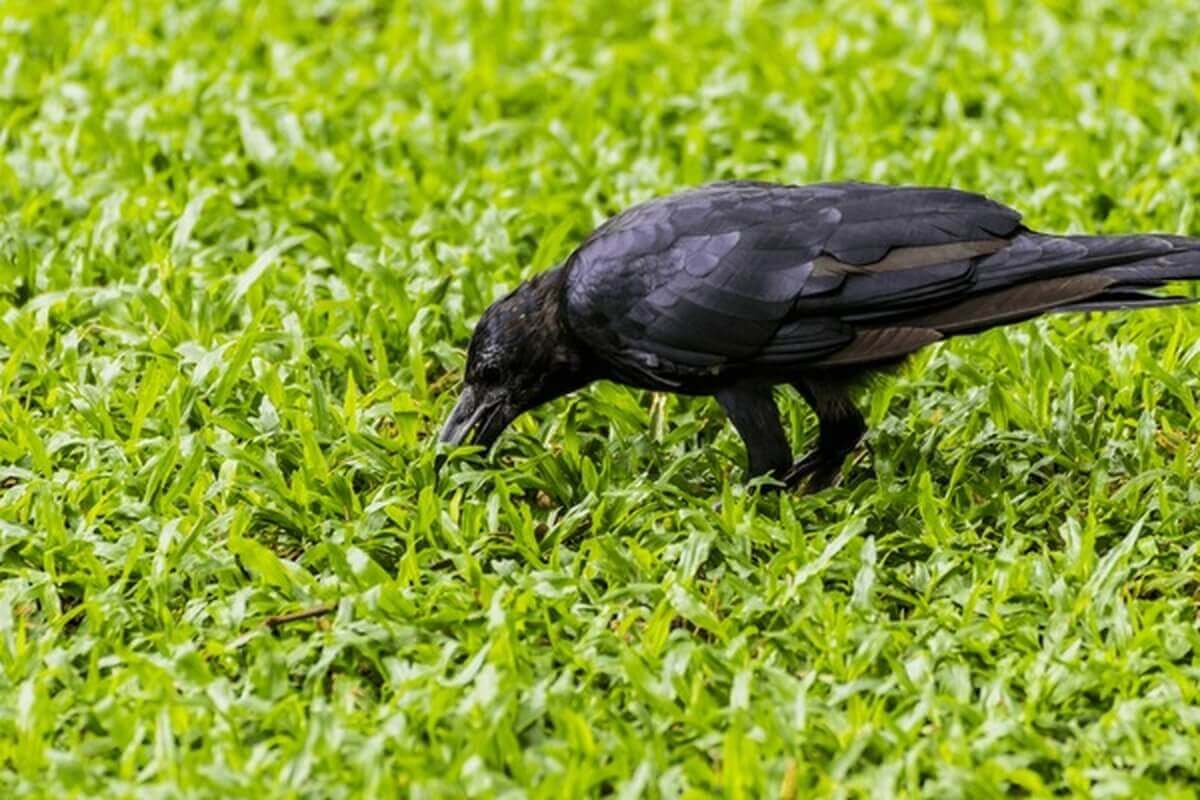
If there’s one word that sums up a crow’s diet, it’s “everything.” Crows are among the most dietarily flexible birds in North America, and that flexibility — more than intelligence alone, though they have plenty of that too — is a huge part of why they thrive in almost every environment humans have built.
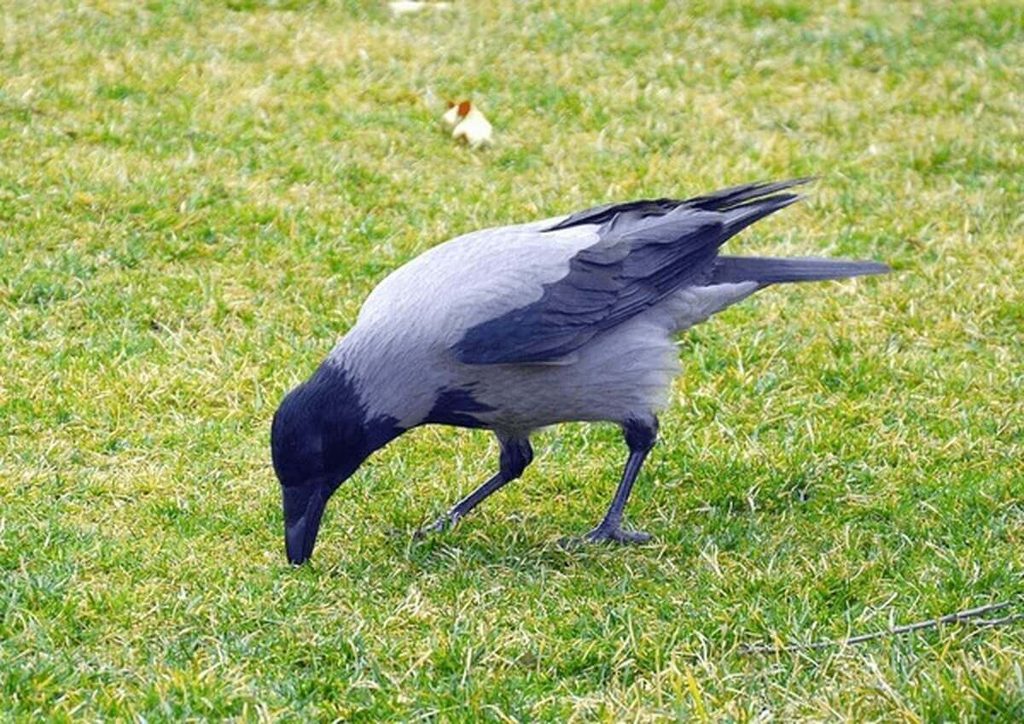
The Short Answer
Crows are true omnivores with one of the broadest diets of any North American bird. Insects, small animals, eggs, carrion, seeds, fruit, and human food waste are all regularly on the menu, and which of these dominates at any given time depends more on what’s easiest to find than any strong species-wide preference.
Insects and Invertebrates: The Everyday Staple
For most crows in most seasons, insects and other invertebrates make up a large, steady share of the diet — grubs, beetles, grasshoppers, earthworms, and similar prey found by walking and probing on open ground. This is part of why crows are so often seen methodically walking across lawns and fields rather than just perching and watching: a lot of their food is found by active ground-foraging rather than aerial hunting.
Do Crows Eat Bird Eggs?
Yes, and this is one of the more well-documented — and, among backyard birders, controversial — parts of a crow’s diet. Crows are opportunistic nest predators, and they’ll take eggs or nestlings from other birds’ nests when the opportunity arises, particularly during spring nesting season when eggs and vulnerable young are widely available across a crow’s territory. This behavior has earned crows a mixed reputation among people who also enjoy watching songbirds, since a crow raiding a robin’s nest is a visible, sometimes upsetting event to witness.
That said, it’s worth keeping in perspective: research on crow diets generally finds that eggs and nestlings make up a relatively modest fraction of overall crow diet compared to insects, carrion, and plant matter — it’s a real and notable behavior, but not the dominant food source it’s sometimes assumed to be based on how memorable it is to observe.
Do Crows Eat Fish?
Yes, opportunistically. Crows aren’t built for fishing the way a heron or osprey is, but they’re perfectly willing to grab dead or dying fish from shallow water, shorelines, or exposed at low tide, and in coastal areas, this can become a fairly regular part of the diet. Some crow populations near water have even been documented dropping shellfish from height onto hard surfaces to crack them open — a foraging technique that shows the same behavioral flexibility crows apply to nearly every food source they encounter.
Carrion: A Major and Reliable Food Source
Roadkill and other carrion are a significant, dependable part of a crow’s diet, and this is one of the more visible things people notice about crow behavior — a crow (or a group of them) working over roadkill on the shoulder of a highway is a common sight almost everywhere crows are found. This scavenging role gives crows a genuinely useful ecological function, helping clean up carrion in both rural and urban environments, similar in effect (if not in specialization) to vultures.
Seeds, Grain, and Fruit
Plant matter makes up a real portion of the diet too, especially seasonally. Crows will eat agricultural grain — corn is a particularly well-known target, enough that crows have a long-standing (if somewhat overstated) reputation as a nuisance to farmers — along with fruit, berries, and seeds when available. In fall, as insect availability declines, many crow populations shift more heavily toward plant-based food, taking advantage of ripening fruit and harvested or leftover grain.
Do Crows Eat Human Food?
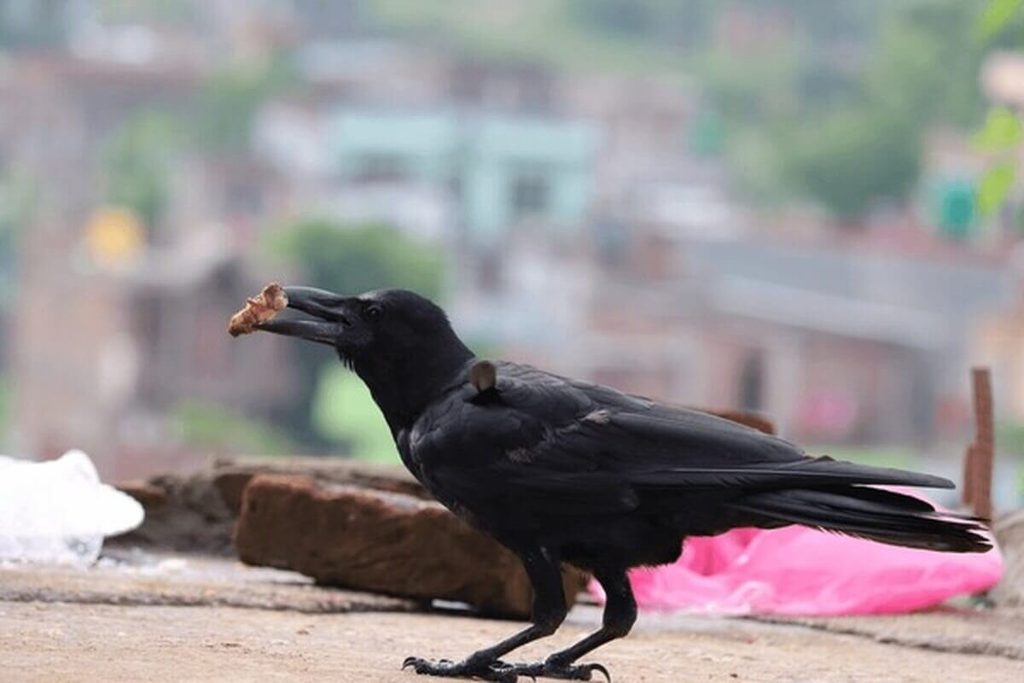
Yes, readily — crows are famously willing to eat discarded human food, from fast-food scraps to garbage left in open bins, and this adaptability is a major reason crow populations have thrived in urban and suburban environments where natural food sources are more limited. Crows are also known to cache food for later — hiding surplus food items in multiple locations and remembering where they stashed them, a behavior that requires notable spatial memory and is well-documented in crow cognition research.
How Smart Foraging Plays Into Crow Diet
Crows are widely recognized as one of the most intelligent bird groups, and this intelligence shows up directly in their feeding behavior. Crows have been documented using tools to extract insects from crevices, dropping hard-shelled food from height onto roads (sometimes specifically at crosswalks, timing the drop to when traffic will run over the shell and then waiting for a safe pedestrian signal to retrieve the food), and even engaging in apparent social learning, where one crow’s discovery of a good food source spreads through a local population faster than would be expected from individual trial and error alone.
Seasonal Diet Shifts
Crow diet, like most omnivorous birds, shifts across the year based on availability. Spring brings a rise in nest predation opportunities (eggs and nestlings) alongside emerging insects. Summer sees heavy insect foraging alongside opportunistic feeding on whatever’s locally abundant. Fall shifts toward fruit, seeds, and agricultural grain as these become seasonally available and insect numbers drop. Winter leans hardest on carrion and human food sources, since natural food is scarcest during this period — part of why urban crow populations, with reliable year-round access to human food waste, often do notably well compared to more rural populations more dependent on natural, seasonal food availability.
Do Crows Hunt Live Prey?
Occasionally, though it’s a smaller part of the diet than scavenging and foraging. Crows will take small live prey — nestlings, small rodents, insects, and occasionally small reptiles or amphibians — when the opportunity is easy and low-risk, but they’re not built as dedicated hunters the way a hawk is, and they generally favor lower-effort food sources (carrion, foraging, scavenging) over active predation whenever a reasonable alternative exists.
Crow Roosting and Group Feeding Behavior
Crows are highly social, and this extends into feeding behavior — large communal roosts, sometimes numbering in the thousands during fall and winter, often coincide with group foraging in nearby areas during the day, since a large group has a better collective chance of locating rich food sources (like a large carrion find or an accessible dumpster) and defending access to it from competitors. This social feeding strategy is part of why crows are frequently seen in groups rather than as solitary foragers, especially outside of the breeding season.
A Few Myths Worth Addressing
Myth: Crows are mainly a threat to songbird populations through nest raiding. Overstated — while crows do take eggs and nestlings, research generally shows this is a modest part of overall crow diet, and songbird population declines are typically driven far more by habitat loss than crow predation specifically.
Myth: Crows only eat carrion, like tiny vultures. Not accurate — carrion is one significant food source among many; crows are true dietary generalists, not scavenging specialists.
Myth: Crows are a major agricultural pest. Partially overstated — crows do eat grain and can cause localized crop damage, but they also eat large numbers of crop-damaging insects, and their net agricultural impact is more mixed than the “crop pest” reputation suggests.
The Bottom Line
Crows eat almost anything they can find — insects, carrion, eggs, fish, grain, fruit, and human food waste, shifting emphasis by season and opportunity rather than sticking to any one preferred food. That dietary flexibility, paired with genuine problem-solving intelligence, is the core reason crows have become one of the most successful and adaptable birds across nearly every environment they’re found in.