
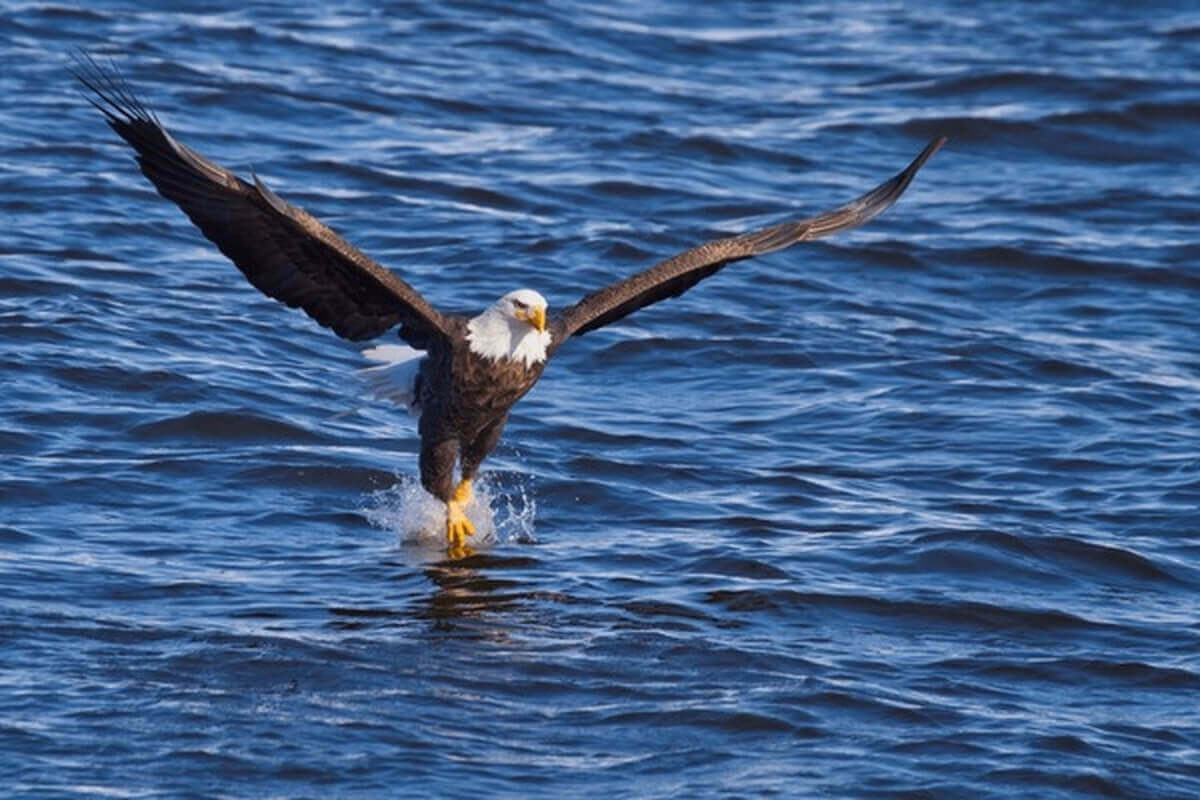
The image of an eagle plucking a fish clean out of a river is accurate, but it’s only part of the story. Eagles are opportunistic, often surprisingly lazy hunters willing to steal, scavenge, or improvise — which is a big part of why they’ve thrived across such a wide range of environments.
The Short Answer
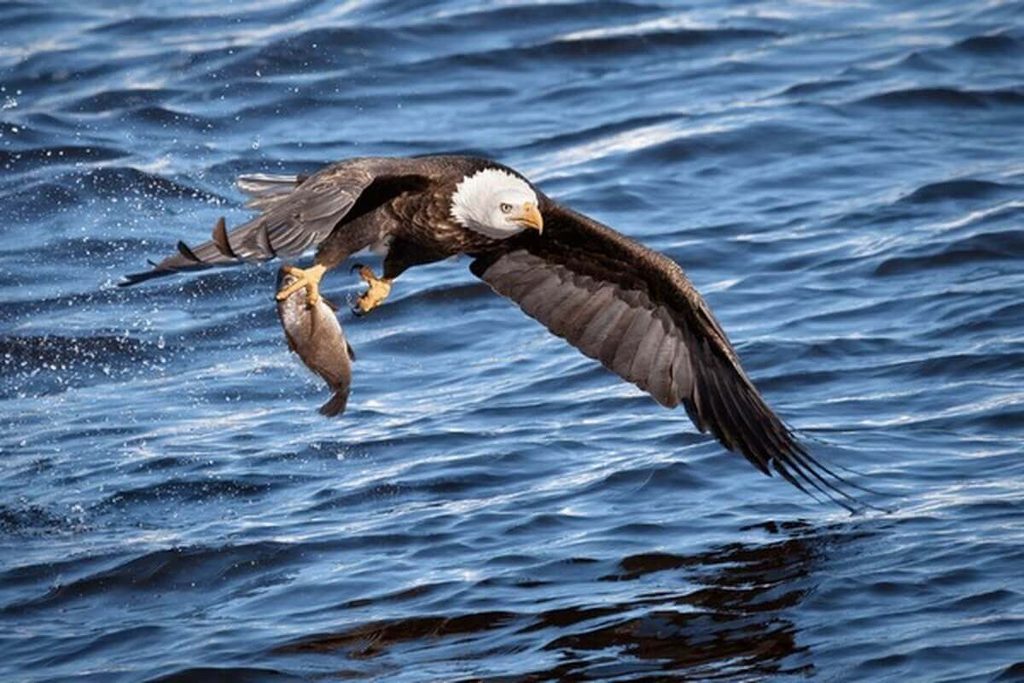
Fish makes up the largest single share of most eagles’ diet — bald eagles especially, which are closely tied to lakes, rivers, and coastlines for exactly this reason. But eagles are true generalists beyond that, regularly eating waterfowl and other birds, small to medium mammals, and a substantial amount of carrion, along with opportunistically stealing food from other birds rather than catching it themselves.
Do Eagles Eat Fish?
Yes — for bald eagles in particular, fish is the primary food source, and their entire body plan reflects it: sharp, curved talons for gripping slippery prey, and rough spicules (small spiny projections) on the underside of their feet that improve grip on wet fish. Eagles hunt fish by flying low over water and snatching prey from at or just below the surface with their talons, rather than diving fully underwater the way an osprey sometimes does.
Salmon runs are a well-known example of this diet in action — in regions where salmon migrate upstream to spawn, large numbers of eagles will congregate along rivers specifically to take advantage of the seasonal abundance, sometimes gathering in numbers rarely seen at any other time of year.
Do Eagles Eat Other Birds?
Yes, regularly. Waterfowl — ducks, geese, and similar birds found near the same lakes and rivers eagles already frequent — are a significant part of the diet for many eagle populations, especially in areas or seasons where fish are less available. Eagles typically target birds that are already vulnerable: injured, sick, molting (and temporarily unable to fly well), or young and inexperienced, since a healthy adult waterfowl in good condition is a genuinely difficult catch even for a bird as powerful as an eagle.
Do Eagles Eat Mammals?
Yes — smaller and medium-sized mammals, including rabbits, squirrels, and occasionally larger prey depending on the eagle species and region, make up a real portion of the diet. Golden eagles in particular are known for taking larger mammalian prey than bald eagles typically do, including young deer or pronghorn in some regions, reflecting a somewhat different ecological niche between the two most common eagle species in North America.
Carrion: A Bigger Part of the Diet Than People Expect
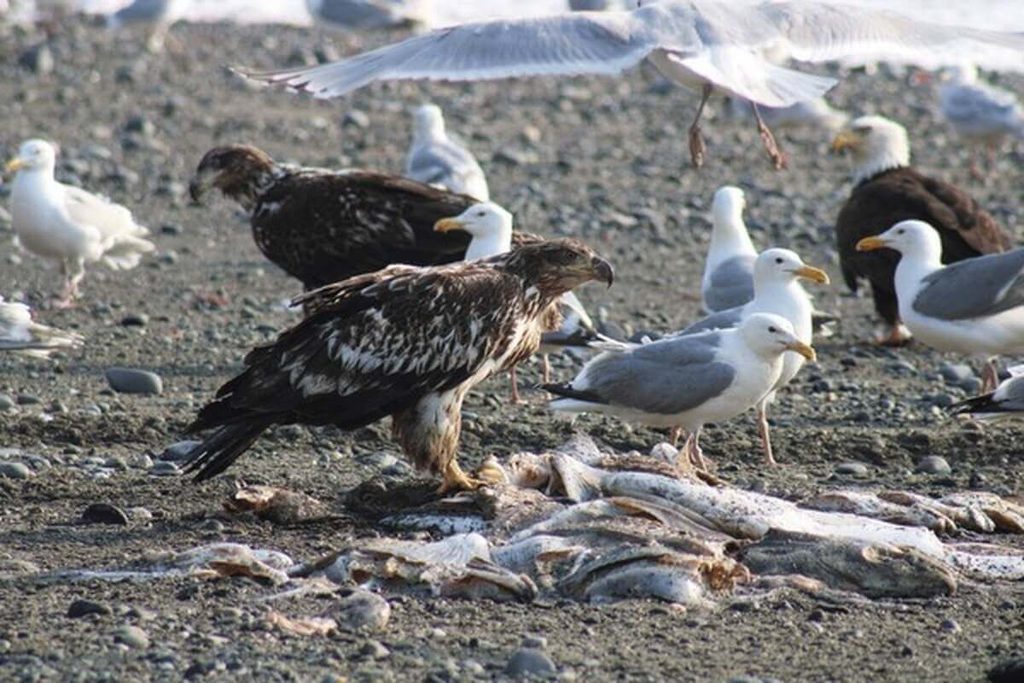
Eagles are often surprisingly willing scavengers, and carrion — already-dead animals, including roadkill and fish that have died naturally — makes up a notable share of their diet, especially in winter when live prey is harder to find and the energy cost of hunting is higher relative to the reward. This scavenging tendency sometimes surprises people who picture eagles purely as majestic hunters, but from the eagle’s perspective, a free meal that requires no chase is simply the most efficient option available, and eagles are consistently efficiency-driven in their feeding choices.
Kleptoparasitism: When Eagles Steal Their Food
One of the more well-documented eagle behaviors is kleptoparasitism — stealing food from other birds rather than catching it themselves. Eagles will harass ospreys that have just caught a fish, forcing them to drop it mid-flight so the eagle can swoop in and grab the falling prey before it hits the water. This behavior is common enough that it’s a well-known dynamic between the two species in shared habitat, and it’s part of the reason eagles have a reputation (fair or not) as somewhat opportunistic bullies of the raptor world — famously, this exact behavior is part of why Benjamin Franklin reportedly favored the wild turkey over the bald eagle as a national symbol, viewing the eagle’s thieving habits unfavorably.
Golden Eagles vs. Bald Eagles: Different Diets, Different Niches
While both are commonly called “eagles” in North America, golden eagles and bald eagles have meaningfully different diets shaped by different habitats and hunting styles. Bald eagles stay close to water and lean heavily on fish and waterfowl, while golden eagles are more associated with open country — grasslands, deserts, mountains — and rely more on terrestrial mammals like rabbits, ground squirrels, and occasionally larger prey, hunted through fast, powerful aerial pursuit rather than perching near water waiting for fish.
How Diet Changes by Season
In many regions, eagle diet shifts noticeably across the year. Spring and summer, when eagles are raising chicks, demand a steady, high-calorie food supply, and fish (when available) is often the most efficient way to meet that demand. Fall brings seasonal abundance events like salmon runs in specific regions, drawing eagles to concentrate temporarily where food is easiest to get. Winter is the leanest period in colder climates — with lakes and rivers sometimes frozen and fish harder to access, eagles lean more heavily on carrion and available mammals, and in some populations, this drives seasonal movement toward open water or areas with reliable winter food sources.
Do Young Eagles Eat Differently Than Adults?
Young, inexperienced eagles are generally less efficient hunters than adults, since hunting skill improves significantly with practice over the first several years of life. This means juvenile eagles often rely more heavily on scavenging and stealing food (from other eagles or other bird species) than actively hunting live prey, simply because it requires less refined skill — a pattern that shifts gradually as a young eagle matures and develops the hunting proficiency of an adult.
Ecological Role
As apex or near-apex predators in many ecosystems, eagles play a role in regulating prey populations, particularly fish and waterfowl in aquatic ecosystems, while their scavenging habits also contribute to cleaning up carrion, similar to (if less specialized than) vultures. Their historical population decline due to pesticide contamination (notably DDT, which thinned eggshells) and subsequent recovery is one of the most well-documented conservation success stories in North American wildlife management, closely tied to changes in the food chain and diet that affected eagles at the top of it.
A Few Myths Worth Addressing
Myth: Eagles only eat fish. Not accurate — fish is often the largest single category, but a genuinely diverse diet including birds, mammals, and carrion is normal and well-documented across eagle species.
Myth: Eagles always kill their own food. Not true — kleptoparasitism (stealing from other birds) and scavenging carrion are both significant, regular parts of eagle feeding behavior, not rare exceptions.
Myth: All eagles eat the same things. False — golden eagles and bald eagles, the two most common species in North America, have meaningfully different diets driven by different habitats and hunting adaptations.
The Bottom Line
Eagles are powerful, adaptable feeders whose diet centers on fish (for bald eagles) or mammals (more so for golden eagles), supplemented heavily by other birds, carrion, and — when the opportunity presents itself — food stolen outright from other predators. That flexibility, more than raw hunting power alone, is a big part of what’s made eagles such a successful and enduring presence across such a wide range of North American habitats.