
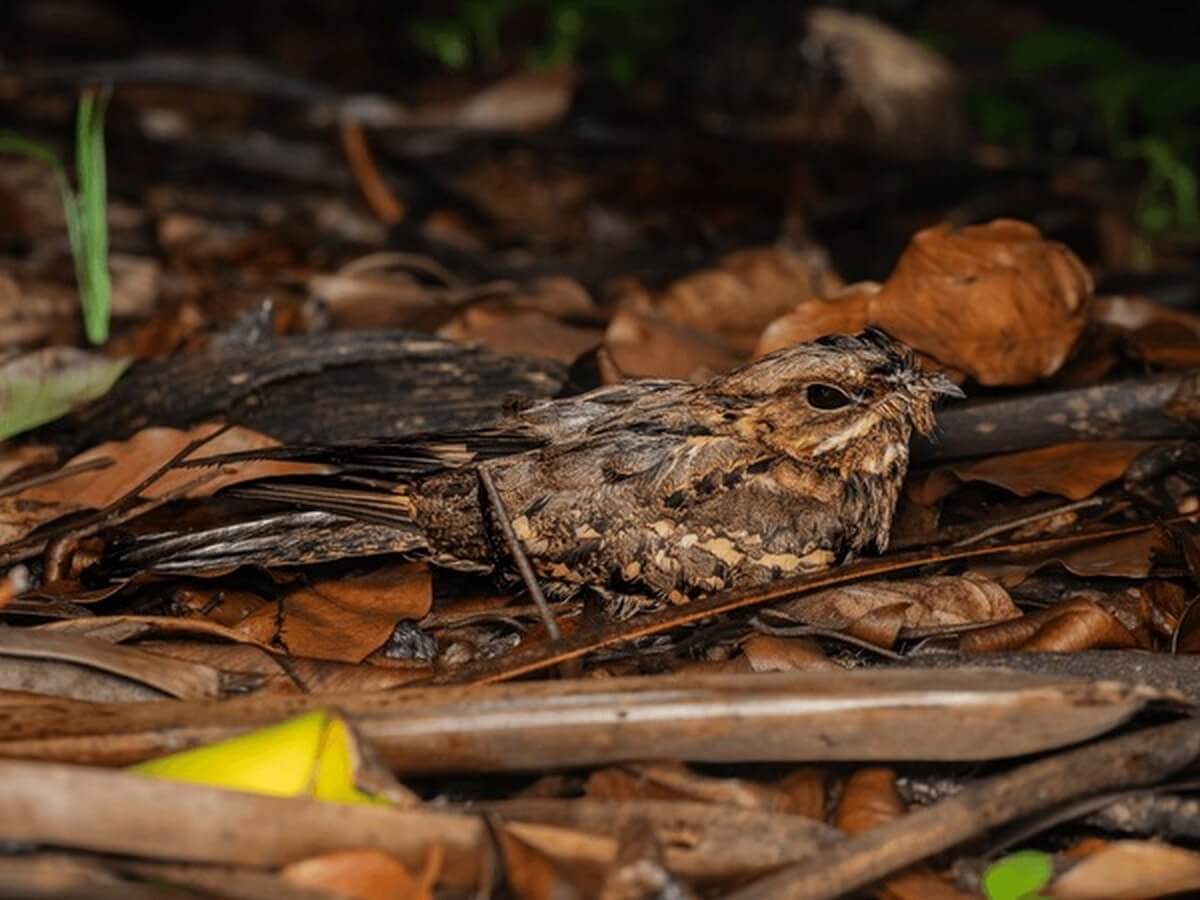
If you’ve ever heard a repetitive, almost hypnotic “whip-poor-WILL, whip-poor-WILL” echoing through the woods at dusk, you’ve heard one of the most distinctive — and most rarely seen — sounds in North American birding. Whippoorwills are heard far more often than they’re spotted, and that’s by design.
What Bird Sounds Like a Whippoorwill?
A few nocturnal birds get confused with whippoorwills, mostly because they share the same dusk-and-dawn calling habits and overlapping habitat. The Chuck-will’s-widow, a close relative found more in the southeastern U.S., has a similar rolling, repetitive call, just lower-pitched and with a different rhythm — its name is itself an imitation of its call, the same way “whip-poor-will” is. The Common Nighthawk, also related, has a much shorter, buzzier “peent” call rather than the whippoorwill’s repeated three-part phrase, and is more often seen than heard, foraging visibly over open areas at dusk rather than calling from cover.
Owls are sometimes mistaken for whippoorwills too, simply because both call at night, but an owl’s hoot is structurally nothing like a whippoorwill’s fast, repetitive chant — once you’ve heard a whippoorwill clearly, the two aren’t easily confused again.
Why Whippoorwills Are So Hard to See
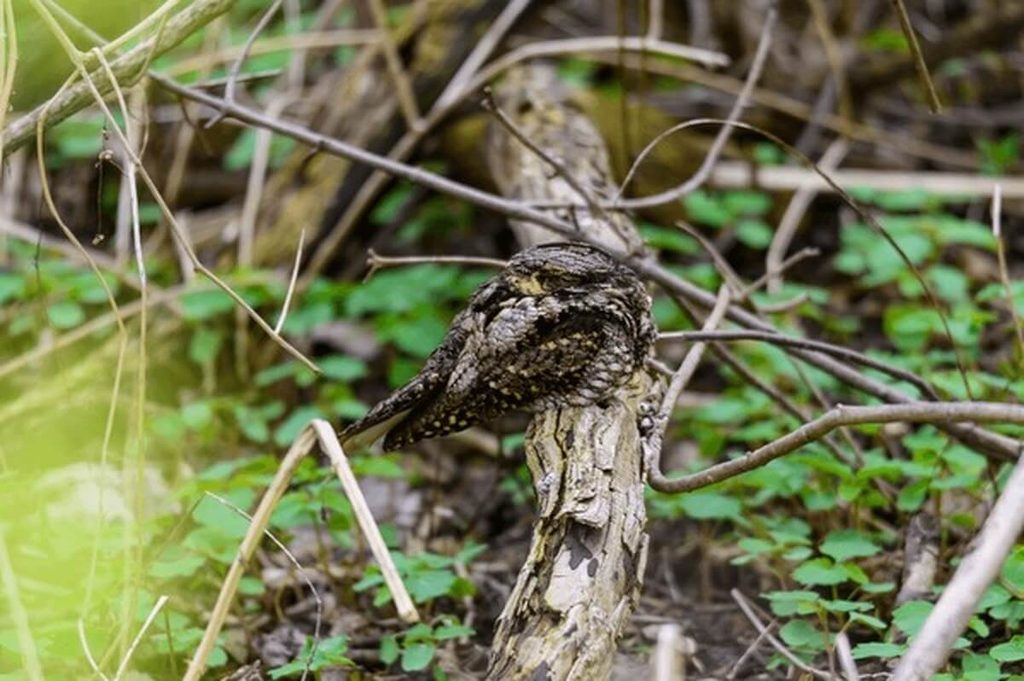
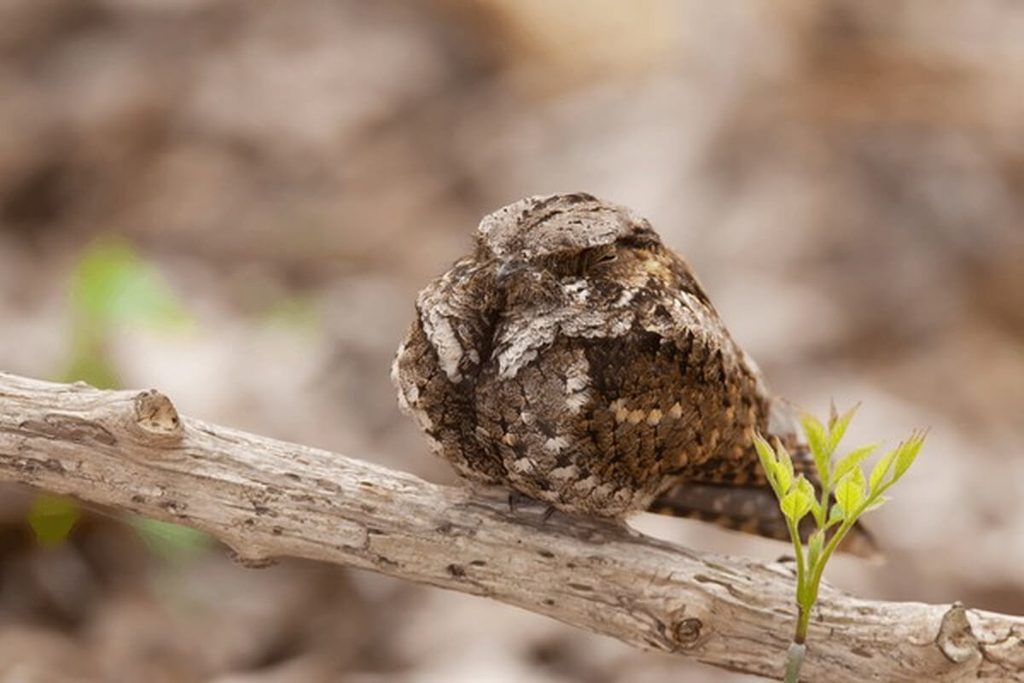
Whippoorwills are masters of camouflage. Their mottled brown, gray, and black plumage mimics dead leaves and bark almost perfectly, and they spend daylight hours motionless on the forest floor or on a low branch, relying entirely on staying still and blending in rather than fleeing from danger. They’re most active — and most vocal — during the twilight hours around dawn and dusk, and on moonlit nights, when their moth and insect prey is easiest to spot in flight.
What Habitat Do Whippoorwills Need?
Whippoorwills prefer a specific kind of habitat: open, young hardwood forest — oak-pine woodland especially — with clearings nearby. This edge habitat, where forest meets open ground, gives them both the daytime cover they need to stay hidden and the open flying space required to hunt flying insects at night. Large, unbroken dense forest without clearings tends to be less suitable, and this specific habitat requirement is a big part of why whippoorwill populations have declined in areas where forest has either been cleared entirely or has matured into dense, closed-canopy woodland without the open edges they depend on.
How to Attract Whippoorwills
Attracting whippoorwills isn’t as simple as putting out a feeder — they don’t eat seed, and their needs are much more about habitat than food supply directly. That said, a few things genuinely help if you’re in their range:
- Maintain a mix of open and wooded space on your property, rather than either fully cleared land or fully closed forest — the edge between the two is exactly what they’re looking for.
- Avoid pesticide use in and around wooded edges. Whippoorwills feed entirely on flying insects — moths, beetles, and even fireflies — caught on the wing at dusk, so reducing insect populations with pesticides directly reduces their food supply and makes an area less attractive.
- Leave leaf litter and natural ground cover in wooded areas rather than clearing it, since this is exactly the kind of surface whippoorwills rely on for daytime camouflage and, eventually, nesting.
- Be patient and listen at dusk during breeding season (roughly April through July in much of their range) — if the habitat is right, whippoorwills will often find it and call from cover even before you ever see one.
Nesting Habits
Unlike most birds, whippoorwills don’t build a nest at all. The female lays her eggs directly on bare leaf litter on the forest floor, typically choosing a spot near a small shrub or herb layer that offers some overhead cover without full concealment. This ground-nesting strategy relies entirely on camouflage for protection, since there’s no elevated or hidden nest structure shielding the eggs from predators — another reason maintaining natural leaf litter and undisturbed forest floor matters if you’re hoping to support a breeding pair.
Why Whippoorwill Populations Are Declining
Whippoorwill numbers have dropped significantly in parts of their range over recent decades, and habitat change is the leading suspect. As young, open hardwood forest matures into denser, closed-canopy woodland, or is cleared entirely for development or agriculture, the specific edge habitat whippoorwills need becomes scarcer. Declining insect populations, partly linked to pesticide use, are believed to compound the problem by reducing the food supply even where habitat remains otherwise suitable.