
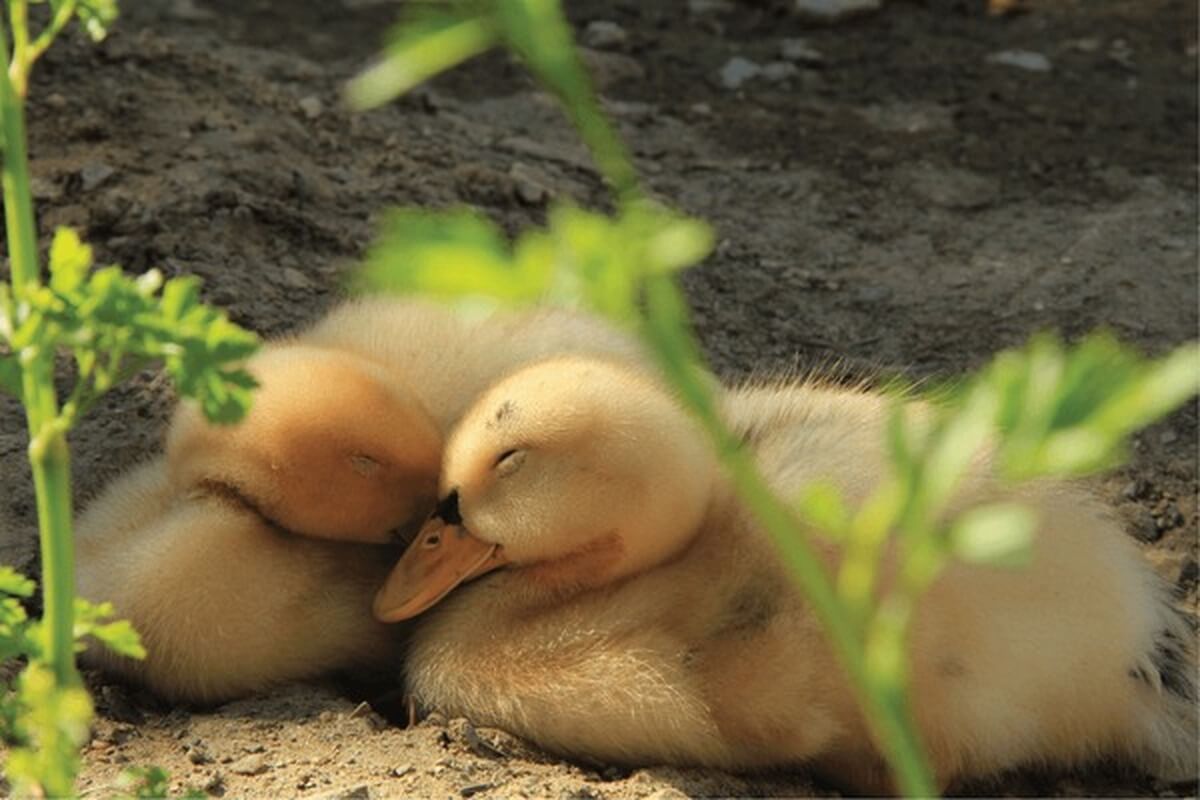
Diet gets most of the attention when people look up ducks, but the day-to-day questions — how they sleep, what they sound like, whether they can see at night — are just as common and a lot less covered. Here’s what’s actually going on. (If you’re looking for feeding info specifically, here’s the full duck diet guide.)
How Do Ducklings Sleep?
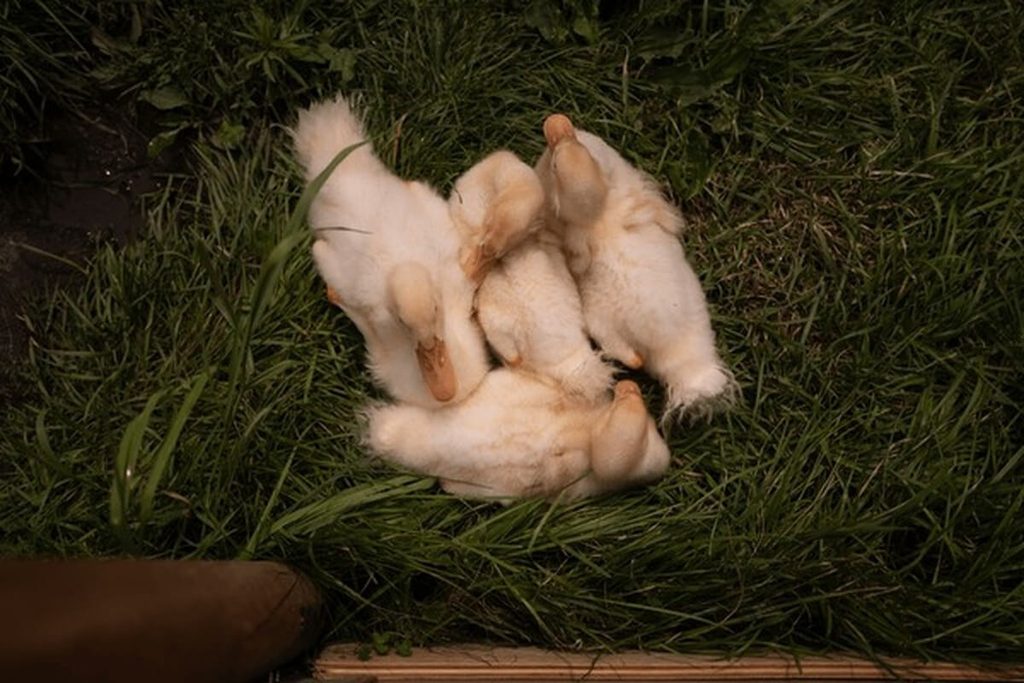
Ducklings sleep in short, frequent bursts rather than one long stretch — typically an hour or two at a time, broken up by periods of activity, feeding, or moving around, even overnight. This pattern is normal and not a sign anything’s wrong; young ducklings simply don’t consolidate sleep the way adult ducks (or humans) do.
One of the more charming, well-documented duckling behaviors is huddling together in a tight group to sleep, which serves a real thermoregulatory purpose — ducklings can’t fully regulate their own body temperature for the first several weeks of life, so group huddling helps conserve shared body heat, especially overnight or in cooler weather. It’s common to see ducklings sleep piled partly on top of each other for exactly this reason.
Can Ducks See at Night?
Ducks have relatively good low-light vision compared to humans, though they’re not truly nocturnal. Their eyes are adapted to detect movement and navigate in dim conditions — useful for a bird that’s sometimes active at dawn, dusk, or even briefly at night, particularly during migration, when many duck species fly at night to avoid daytime predators and take advantage of calmer, cooler air. That said, ducks are still primarily active during daylight hours for feeding and most normal behavior; their night vision is a useful adaptation, not evidence that they’re regularly active after dark the way an owl is.
What Time Do Ducks Wake Up?
Ducks are generally early risers, becoming active around dawn or even slightly before first light, which lines up with when many of their preferred foods (insects, aquatic invertebrates) also become active. Early morning is typically the most active feeding period of the day, tapering off by mid-morning, with a smaller secondary burst of activity again in late afternoon before settling down as evening approaches — a pattern fairly similar to a lot of other bird species, and part of why early morning is usually the best time to observe ducks actively foraging rather than resting.
What Does a Wood Duck Sound Like?
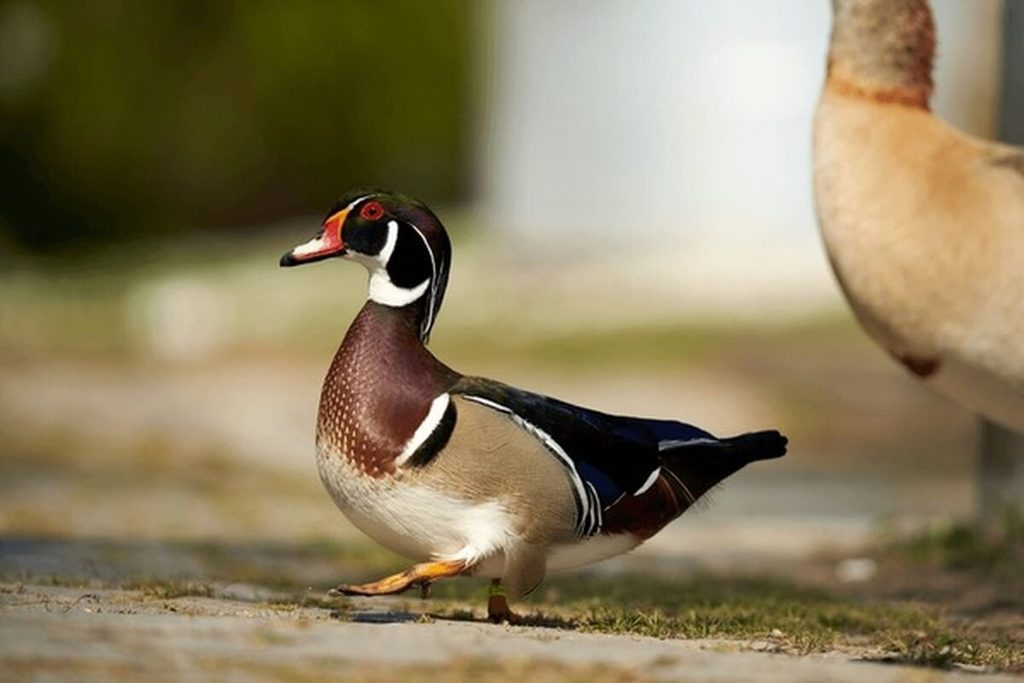
Wood ducks have one of the more distinctive calls among North American ducks — a rising, squealing “oo-EEK” often described as sounding almost alarmed or surprised, quite different from a mallard’s familiar flat quack. This call is used in a few contexts: females in particular give a sharp, rising call when startled or in flight, which is often the first clue that a wood duck is nearby even before it’s spotted, since wood ducks tend to be somewhat shy and quick to flush from cover.
What Sound Does a Duckling Make?
Ducklings make a higher-pitched, softer version of an adult duck’s vocalizations — a series of thin, repeated peeping or chirping notes, quite different from an adult’s fuller quack. This peeping serves a real communication purpose beyond just noise: it helps ducklings stay in contact with their mother and siblings, particularly important for a precocial species like ducks, where chicks are mobile and following the mother within hours of hatching rather than staying in a nest.
What Color Is a Black Duck?
The American Black Duck, despite the name, isn’t solid black — it’s a deep, dark brownish-black overall, with a paler, more grayish-brown head and neck that contrasts against the darker body, plus a violet-blue wing patch (called a speculum) visible in flight, similar in position to a mallard’s. In flight, the pale head against dark body is often the easiest field mark to spot from a distance, before other details are visible. Black Ducks are also known for closely resembling female Mallards at a glance, which occasionally leads to misidentification — the darker overall body color and lack of the mallard’s more mottled brown pattern is the clearest way to tell them apart.
How Long Can Ducks Go Without Food?
Healthy adult ducks can generally survive without food for roughly one to two weeks, depending on body condition, weather, and species, drawing on fat reserves during that period much the way many birds do during migration or periods of scarcity. This isn’t a target to test deliberately, though — extended food deprivation is genuinely stressful and depletes a duck’s energy reserves and body condition, and cold weather significantly shortens how long a duck can safely go without eating, since maintaining body temperature in cold conditions burns through fat reserves faster than in mild weather.
Ducklings, by contrast, have far less fat reserve and a much higher metabolic demand relative to their size, meaning they need much more frequent feeding and can’t tolerate anywhere near the same length of food deprivation as an adult.
A Few Duck Behavior Myths Worth Addressing
Myth: Ducks sleep with one eye open all the time. Partially true, and genuinely interesting — ducks (like many birds) are capable of unihemispheric sleep, resting half the brain at a time with one eye open, particularly useful for ducks on the edge of a group who benefit from staying partly alert to predators while still resting.
Myth: All ducks quack the same way. Not true — quack pitch, rhythm, and pattern vary meaningfully between species and even between males and females of the same species (in mallards, for instance, only females give the classic loud quack; males have a quieter, more nasal call).
Myth: Ducks are only active during the day. Mostly true for feeding and general activity, but migration is a notable exception — many duck species migrate at night, using decent low-light vision and calmer nighttime conditions to their advantage.