

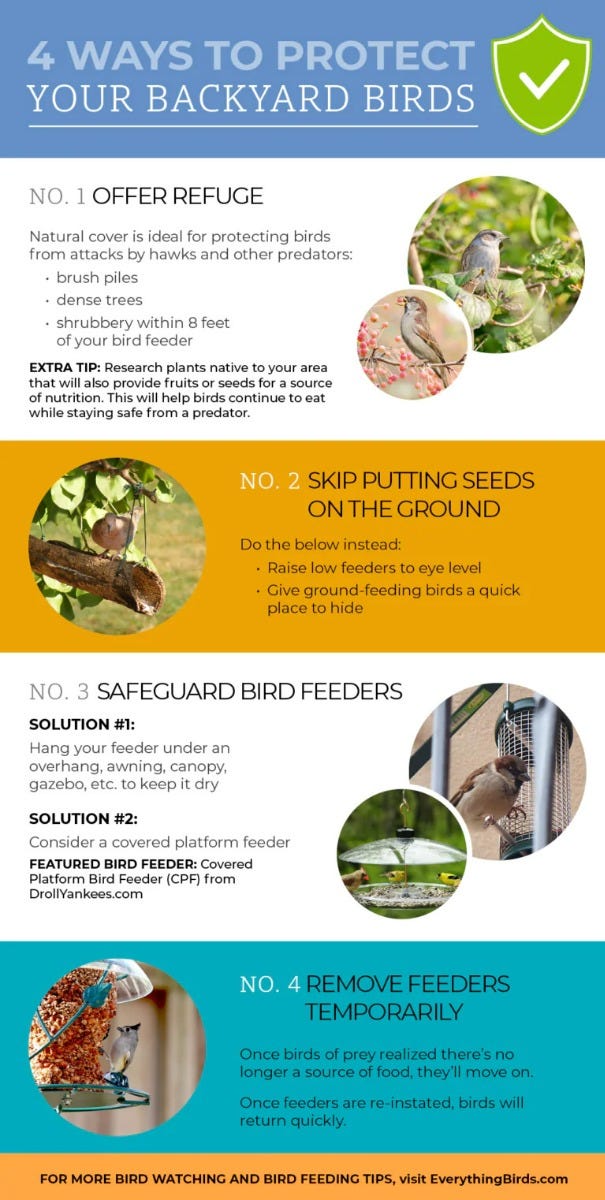
Place bird feeders near dense bushes or trees to provide cover. Use feeders with roofs to obstruct hawks’ view.
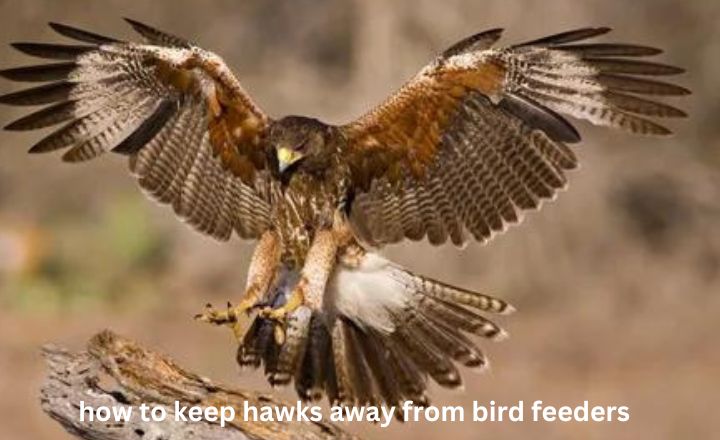
Hawks can pose a significant threat to smaller birds at feeders. To create a safer environment, positioning feeders near dense shrubbery or trees can offer birds quick escape routes. Feeders with roofs or covers help obstruct hawks’ line of sight, making it harder for them to spot potential prey.
Additionally, consider using reflective materials or scare devices to deter hawks. Regularly move feeders to prevent hawks from establishing hunting patterns. By implementing these strategies, you can help protect your feathered friends and enjoy a more vibrant, active bird feeder.
Choose Safe Locations
Placing your bird feeder in a safe location is essential. It keeps hawks away and protects smaller birds. Proper placement ensures birds feel secure while feeding.
Ideal Spots For Feeders
Tree cover is perfect for bird feeders. Trees provide natural shelter. They also give birds a place to hide if hawks approach.
Close to buildings is another good spot. Buildings can act as shields. They make it harder for hawks to spot the feeders.
Near bushes can be very effective. Bushes offer quick hiding places. Birds feel safer with quick escape options.
Consideration Of Surroundings
Avoid open areas when placing your feeder. Hawks have a clear view in open spaces. They can easily target the birds at the feeder.
Keep distance from water sources. Hawks often hunt near water. Placing feeders far from water reduces hawk attacks.
Check for perches. Look for tall structures where hawks might sit. Avoid placing feeders near these spots.
| Location | Advantages |
|---|---|
| Under Trees | Provides cover and escape routes |
| Near Buildings | Acts as a shield from hawks |
| Close to Bushes | Offers quick hiding places |
Credit: nestingnetwork.com
Install Protective Coverings
Protective coverings can help keep hawks away from your bird feeder. By installing the right coverings, you can create a safe haven for your feathered friends. Let’s explore some effective options.
Mesh And Netting Options
Mesh and netting are effective ways to protect your bird feeder. They create a barrier that hawks cannot penetrate.
- Bird Netting: Use bird netting around the feeder. It keeps hawks at a distance while allowing smaller birds to feed safely.
- Wire Mesh: Install wire mesh around the feeder. Ensure the openings are small enough to keep hawks out but large enough for smaller birds to enter.
Using Roofed Feeders
Roofed feeders provide excellent protection from hawks. The roof creates a shield that hawks cannot easily navigate.
- Covered Platform Feeders: These feeders have a roof that prevents hawks from swooping down.
- Gazebo Feeders: Gazebo-style feeders offer full coverage. They have roofs and sides that keep hawks at bay.
Combining both mesh and roofed feeders can offer maximum protection. Your birds will feel safe and continue to visit your feeder.
Use Decoys And Deterrents
Keeping hawks away from your bird feeder is essential to protect small birds. Using decoys and deterrents can effectively safeguard your feathered friends. This section will explain how to use fake owls, hawks, and reflective objects to keep hawks at bay.
Fake Owls And Hawks
Fake owls and hawks can scare away real hawks. Hawks are territorial birds and avoid areas with other predators.
| Decoy Type | Effectiveness | Placement Tips |
|---|---|---|
| Fake Owl | High | Place on a high perch or roof |
| Fake Hawk | Moderate | Mount near the bird feeder |
Ensure to move the decoys periodically. This prevents hawks from getting used to them.
Reflective Objects
Reflective objects can deter hawks by confusing them. Hawks dislike sudden flashes of light.
- Mylar strips
- Old CDs
- Reflective tape
Hang these items around the bird feeder. They will reflect sunlight and scare hawks away.
Changing the position of reflective objects can enhance their effectiveness.
Create Sheltered Areas
Creating sheltered areas around your bird feeder can help keep hawks away. These shelters provide hiding spots for small birds, making it harder for hawks to hunt them. Below, we’ll explore ways to create these sheltered areas.
Dense Shrubbery
Planting dense shrubbery near your bird feeder offers natural protection. Shrubs like holly, juniper, and boxwood are excellent choices. They have thick foliage that birds can easily hide in.
- Holly: Dense, evergreen leaves provide year-round cover.
- Juniper: Offers thick branches for birds to perch and hide.
- Boxwood: Compact growth makes it an ideal shelter.
Arrange these shrubs in a way that creates multiple hiding spots. Ensure they are close enough to the feeder for quick access. This setup will make hawks think twice before attacking.
Artificial Shelters
If planting shrubs isn’t an option, artificial shelters can be just as effective. Use garden decor, such as birdhouses and trellises, to create hiding spots.
- Birdhouses: Place them near the feeder for quick refuge.
- Trellises: Use them to support climbing plants, adding extra cover.
- Garden Statues: Position them strategically to offer additional protection.
Ensure these structures are stable and well-placed. You can also use mesh or netting to create temporary shelters. These artificial shelters provide a quick and effective solution for keeping hawks at bay.
| Natural Shelter | Artificial Shelter |
|---|---|
| Holly Shrubs | Birdhouses |
| Juniper Shrubs | Trellises |
| Boxwood Shrubs | Garden Statues |
Both natural and artificial shelters can help protect your feathered friends from hawks. Choose the option that best fits your garden and enjoy watching birds in peace.
Opt For Smaller Feeders
To keep hawks away from your bird feeder, opt for smaller feeders. Smaller feeders make it difficult for hawks to target their prey. They also offer several other benefits for your backyard birds.
Advantages Of Compact Feeders
Compact feeders provide a safer environment for small birds. They are designed to accommodate only a few birds at a time. This limits the chance of attracting larger predators like hawks. Smaller feeders are also easier to place in secure locations.
| Advantages | Description |
|---|---|
| Reduced Visibility | Smaller feeders are harder for hawks to spot. |
| Enhanced Safety | Fewer birds mean less attention from predators. |
| Easy Placement | Compact size allows versatile placement options. |
Placement Strategies
Place your small feeder near dense shrubs or trees. This provides quick cover for birds. Ensure the feeder is not in an open area. Open spaces make it easier for hawks to swoop in. You can also use multiple smaller feeders. Distribute them in different locations to avoid drawing attention to one spot.
- Near Shrubs: Provides quick hiding spots for birds.
- Avoid Open Areas: Reduces risk of hawk attacks.
- Multiple Feeders: Distributes bird activity, making it less noticeable.
Credit: www.reddit.com
Encourage Natural Predators
Hawks can be a problem at bird feeders. They scare away smaller birds. Encouraging natural predators can help. These predators can keep hawks away.
Attracting Crows
Crows are smart and bold. They do not fear hawks. To attract crows, provide food they like. You can offer peanuts and corn.
- Peanuts: Crows love peanuts. Place them in a dish.
- Corn: Use cracked corn. Scatter it on the ground.
Crows also need water. Put out a birdbath. This will attract crows.
Inviting Jays
Jays are also brave. They can chase hawks away. Jays like nuts and seeds. Offer sunflower seeds and suet.
- Sunflower Seeds: Jays enjoy these seeds. Fill a feeder with them.
- Suet: Jays need energy. Hang a suet feeder nearby.
Jays need cover, too. Plant shrubs and trees. This gives them a place to hide.
| Predator | Food | Extras |
|---|---|---|
| Crows | Peanuts, Corn | Birdbath |
| Jays | Sunflower Seeds, Suet | Shrubs, Trees |
By inviting these birds, you can keep hawks away. Your smaller birds will feel safe. Your feeder will be busy again.
Utilize Noise Makers
Keeping hawks away from your bird feeder can be a challenge. Utilizing noise makers can effectively deter these predators. Noise makers create disturbances that hawks find unsettling. This section explores two popular noise-making options: wind chimes and electronic devices.
Wind Chimes
Wind chimes are an easy way to create noise and motion. Hang wind chimes near your bird feeder. The sound and movement can scare hawks. Choose chimes made from metal or glass. These materials create louder noises. Make sure the chimes are durable and weather-resistant.
Here is a simple table comparing different types of wind chimes:
| Material | Sound Level | Durability |
|---|---|---|
| Metal | High | High |
| Glass | Medium | Medium |
| Wood | Low | Low |
Electronic Devices
Electronic devices are another option to scare away hawks. These devices emit sounds that hawks dislike. Some devices mimic the calls of hawk predators. Others emit ultrasonic sounds. These sounds are inaudible to humans but annoying to hawks.
Here are steps to use electronic devices:
- Place the device near the bird feeder.
- Ensure it is waterproof and weather-resistant.
- Set the sound level according to the instructions.
Combine electronic devices with wind chimes for better results. Noise makers help protect your bird feeder from hawks.
Credit: www.perkypet.com
Maintain Consistent Vigilance
Keeping hawks away from your bird feeder requires consistent vigilance. This means regular checks and monitoring bird activity. By staying alert, you can protect your feathered friends. Below are some tips to help you stay vigilant and keep hawks at bay.
Regular Feeder Checks
Check your bird feeder at least once a day. Look for signs of hawk visits. These signs might include feathers or startled birds. Clean the feeder often to remove any traces of food. This reduces the chances of attracting hawks. Keep the feeder in good condition to ensure it’s safe for smaller birds.
Monitoring Bird Activity
Watch the birds around your feeder closely. Note any changes in their behavior. If birds seem scared or are not visiting, a hawk might be nearby. Use binoculars to get a better view from a distance. This way, you won’t disturb the birds. Record your observations in a notebook. This helps track patterns and identify potential threats.
| Vigilance Tips | Why It’s Important |
|---|---|
| Check feeder daily | Detects hawk presence early |
| Clean feeder regularly | Removes food traces that attract hawks |
| Observe bird behavior | Identifies changes due to hawks |
| Use binoculars | Monitors from a safe distance |
| Record observations | Tracks patterns and potential threats |
Frequently Asked Questions
What Scares Hawks Away But Not Birds?
Decoys like owl statues or reflective tape scare hawks. These methods don’t usually bother smaller birds.
How Do I Protect My Bird Feeder From Hawks?
Place the bird feeder near dense shrubs or trees. Use a covered feeder. Install reflective tape or predator decoys. Keep feeders clean to avoid attracting hawks.
What Are Hawks Afraid Of?
Hawks are afraid of larger birds like eagles and owls. They also fear humans, loud noises, and sudden movements.
How To Stop Hawks From Killing Birds Diy?
Install bird feeders with protective cages. Use reflective tape or shiny objects to scare hawks away. Plant dense shrubs for bird hiding spots. Add decoy owls or hawks to deter real ones. Create an enclosed bird area with netting.
Conclusion
Keeping hawks away from your bird feeder is essential for protecting smaller birds. Use deterrents like reflective objects or noise makers. Place feeders in sheltered locations to provide extra safety. Regularly monitor and adjust your strategies for the best results.
Your feathered friends will appreciate the effort.