

The bird that is black with a yellow beak is the Common Blackbird. This bird is also known as Turdus merula.
The Common Blackbird is a familiar sight in gardens and parks. Males are distinguished by their glossy black feathers and striking yellow beak. This bird is known for its melodious song, often heard at dawn and dusk. It thrives in various habitats, including woodlands and urban areas.
Observers often spot them hopping on the ground in search of insects and worms. The species adapts well to human presence, making it a frequent garden visitor. Understanding its characteristics and habits can enhance bird-watching experiences. The Common Blackbird’s distinct appearance and beautiful song make it a favorite among bird enthusiasts.
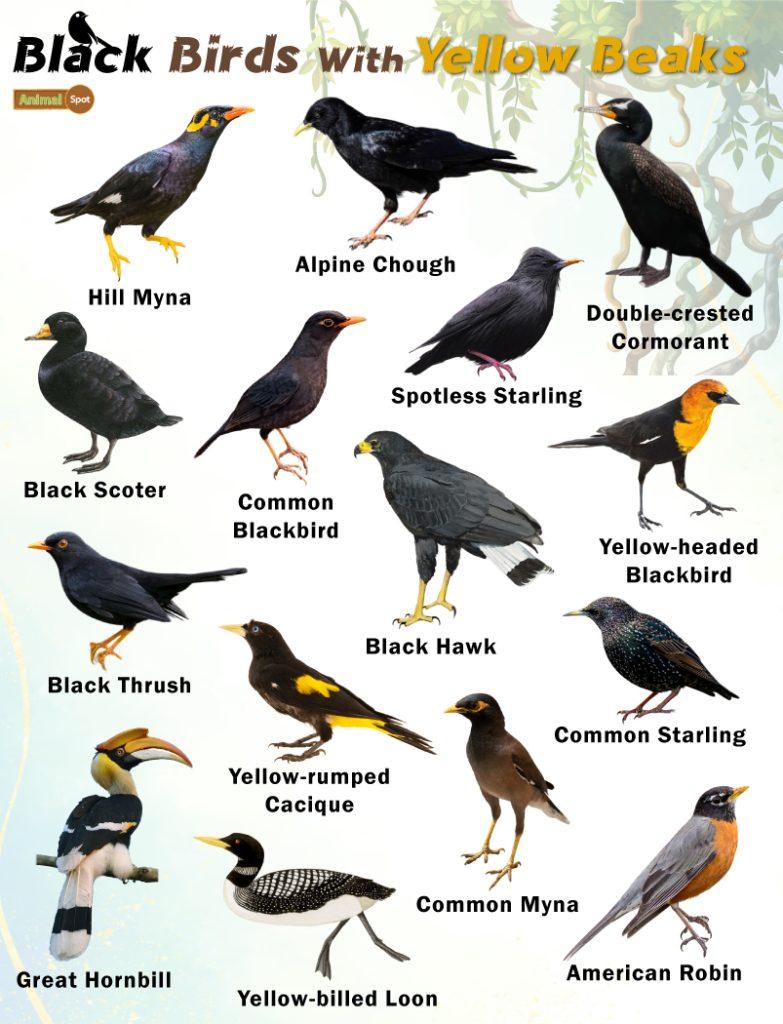
Credit: www.animalspot.net
Common Black Birds
Black birds with yellow beaks are fascinating creatures. They are often seen in parks and gardens. Learn more about these striking birds.
Species Overview
There are several species of black birds with yellow beaks. Some popular ones include the Common Blackbird, Yellow-billed Loon, and European Starling.
| Species | Scientific Name | Region |
|---|---|---|
| Common Blackbird | Turdus merula | Europe, Asia |
| Yellow-billed Loon | Gavia adamsii | North America, Europe |
| European Starling | Sturnus vulgaris | Worldwide |
Habitat And Behavior
Common Blackbirds prefer woodlands, parks, and gardens. They are omnivores, eating insects, fruits, and seeds.
- Yellow-billed Loons live near lakes and rivers.
- They are excellent divers and fishers.
- European Starlings thrive in urban areas.
- They are known for their mimicry skills.
Observing these birds in their natural habitat is a joy. They add life and color to our surroundings.
Identifying Features
Identifying a black bird with a yellow beak can be simple. Certain features make it easy. Let’s focus on two main aspects: coloration and markings, and beak characteristics.
Coloration And Markings
Black birds with yellow beaks have distinct colors. Their feathers are glossy black. This shiny black color helps them stand out. There are no other colors on their body. This makes identification easier.
Some birds may have slight variations. These can include minor white spots. But the primary color remains black.
Beak Characteristics
The yellow beak is the most notable feature. It is bright and stands out against the black feathers. The beak is strong and sturdy.
In some species, the beak is slightly curved. This helps in eating different foods. The yellow color stays vivid throughout the bird’s life.
| Feature | Details |
|---|---|
| Feather Color | Glossy black |
| Beak Color | Bright yellow |
| Beak Shape | Strong, sturdy, sometimes curved |
These features make the bird easy to identify. Look for the black feathers and the yellow beak. This combination is unique and striking.
Yellow-beaked Black Birds
Yellow-beaked black birds are striking creatures. Their bright beaks contrast beautifully with their dark feathers. These birds are found worldwide and come in various species. Learn more about their unique features and habitats.
Prominent Species
Several species of birds have black feathers and yellow beaks. Here are some notable ones:
- Common Blackbird (Turdus merula): Found in Europe, Asia, and North Africa.
- European Starling (Sturnus vulgaris): Native to Europe, but now common in North America.
- Yellow-billed Magpie (Pica nuttalli): Found in California, USA.
Geographical Distribution
The distribution of yellow-beaked black birds varies by species. Here is an overview:
| Species | Regions |
|---|---|
| Common Blackbird | Europe, Asia, North Africa |
| European Starling | Europe, North America |
| Yellow-billed Magpie | California, USA |
These birds inhabit diverse environments. They thrive in forests, urban areas, and open fields. Their adaptability allows them to live in many places.
European Blackbird
The European Blackbird, also known as the Common Blackbird, is a beautiful bird. It is well-known for its striking black feathers and bright yellow beak. This bird is commonly found across Europe and parts of Asia.
Physical Traits
The European Blackbird has distinctive physical traits. Here are some key characteristics:
- Male Blackbirds have jet-black feathers.
- Females are usually dark brown.
- Both have a bright yellow beak and eye-ring.
- They have a sleek, slender body.
- They are about 25 cm in length.
Common Regions
The European Blackbird is widespread. Here are some common regions where you can find them:
| Region | Description |
|---|---|
| Europe | Found in gardens, woodlands, and parks. |
| Asia | Present in western and central parts. |
| Africa | Inhabit the northern regions during winter. |
The European Blackbird is adaptable. They thrive in both urban and rural environments.
Common Myna
The Common Myna, also known as the Indian Myna, is a bird found in many parts of the world. It’s easily recognizable by its black plumage and bright yellow beak. This bird is not only striking in appearance but also fascinating in its habits.
Distinctive Features
The Common Myna has several distinctive features that make it stand out. Its black feathers are sleek and shiny, giving it a polished look. The most noticeable feature is its bright yellow beak, which contrasts sharply with its dark plumage.
The bird also has a yellow patch around its eyes, adding to its unique appearance. Its legs are strong and also yellow, which helps it in walking and perching.
Here is a quick summary of its distinctive features:
- Black plumage
- Bright yellow beak
- Yellow eye patches
- Yellow legs
Habitat Preferences
The Common Myna is quite adaptable and can thrive in various environments. It is often found in urban areas, where it makes its home in buildings and gardens.
In rural settings, the bird prefers open fields and agricultural lands. It is also commonly seen near water bodies like rivers and lakes.
Here are some common habitats where you can find the Common Myna:
| Habitat | Description |
|---|---|
| Urban Areas | Buildings, gardens, parks |
| Rural Areas | Fields, farms, open lands |
| Water Bodies | Rivers, lakes, ponds |
The bird’s adaptability to different habitats makes it a common sight in many regions.
Credit: www.quora.com
American Crow
The American Crow is a common bird in North America. This bird has a distinctive appearance and fascinating behaviors. Understanding the American Crow can be both fun and educational.
Identification Tips
Identifying an American Crow is straightforward if you know what to look for.
- Color: Black feathers cover the entire body.
- Beak: The beak is long, black, and slightly curved.
- Size: They are medium-sized, about 17-21 inches long.
- Wingspan: The wingspan ranges from 33 to 39 inches.
Behavioral Patterns
The American Crow has unique behaviors that make it interesting to watch.
- Social Birds: They often gather in large groups.
- Vocal: They communicate with a variety of calls.
- Intelligent: They use tools and solve problems.
- Foraging: They eat insects, fruits, and small animals.
These tips and patterns help you better understand the American Crow. Observing them can be a delightful experience.
Conservation Efforts
Conserving birds with black feathers and yellow beaks is essential. These birds are vital for ecosystems. They face many threats, but protection strategies are in place. Understanding these efforts helps ensure their survival.
Threats To Species
Black birds with yellow beaks face several dangers. Habitat loss is a significant threat. Logging and urban development reduce their living spaces. Climate change also impacts their food sources.
Another threat is pollution. Pesticides and chemicals poison their environment. These substances can kill the birds directly. They also harm insects and plants they rely on. Hunting and trapping also pose risks. Many birds are caught for trade or sport.
Protection Strategies
Several strategies help protect these birds. Creating protected areas is crucial. These areas provide safe habitats. They are free from human interference. Forest reserves and wildlife sanctuaries are examples.
Another strategy is legal protection. Laws and regulations prevent hunting and trapping. These laws also control pollution levels. Conservation organizations play a key role. They run awareness campaigns and fund research. These organizations also work with local communities.
Reforestation efforts are also important. Planting trees restores habitats. It provides more food and nesting sites. Community involvement is vital. Educating people about these birds helps. It encourages sustainable practices.
| Threats | Protection Strategies |
|---|---|
| Habitat loss | Creating protected areas |
| Pollution | Legal protection |
| Hunting and trapping | Reforestation efforts |

Credit: www.quora.com
Frequently Asked Questions
What Kind Of Bird Is Black And Has A Yellow Beak?
A common bird that is black with a yellow beak is the Eurasian blackbird. It is often found in Europe.
Is A Yellow Beak A Crow Or Raven?
Neither crows nor ravens have yellow beaks. Both typically have black beaks. A yellow beak suggests a different bird species.
Are Blackbirds Good To Have Around?
Yes, blackbirds are beneficial to have around. They help control insect populations and their songs are pleasant.
What Is A Black Bird With Yellow Beak And White Around Eyes?
The black bird with a yellow beak and white around its eyes is the Common Myna. This bird is often found in urban areas and gardens.
Conclusion
Identifying a black bird with a yellow beak can be fascinating. These birds often stand out in nature. Knowing their traits enriches your birdwatching experience. Use this guide to spot and appreciate these unique birds. Happy birdwatching!