

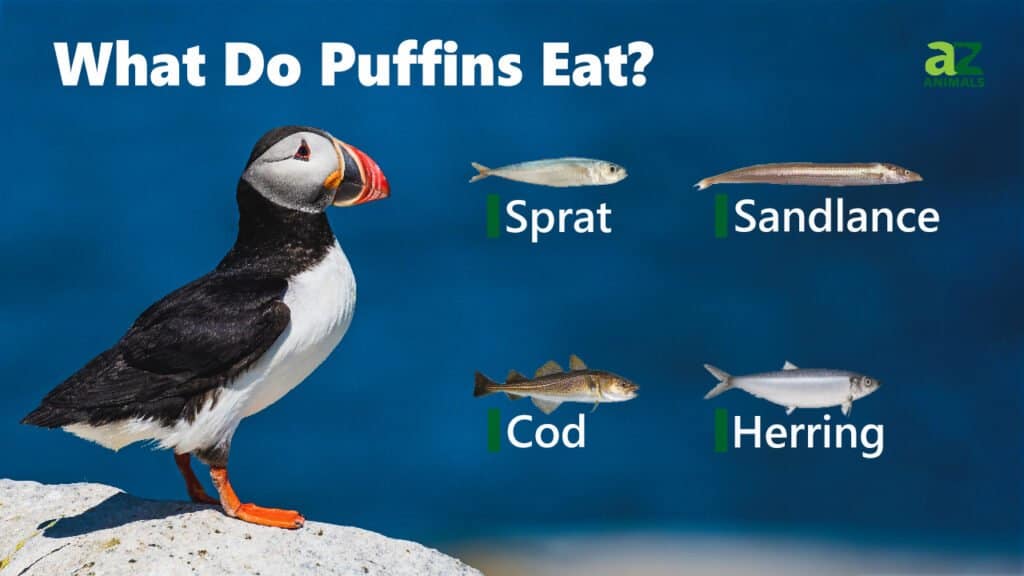
Puffins primarily eat small fish such as herring, sand eels, and capelin. They also consume crustaceans and zooplankton.
Puffins are seabirds known for their vibrant beaks and charming appearance. These birds are excellent divers and hunters, often catching multiple fish in one dive. Their diet mainly consists of small fish like herring and sand eels, which provide essential nutrients.
Puffins also eat crustaceans and zooplankton to supplement their diet. Their hunting technique involves diving deep into the ocean and using their wings to swim underwater. Puffins’ eating habits are crucial for their survival and play a vital role in marine ecosystems. Understanding their diet helps in conservation efforts to protect these fascinating birds.
Puffins’ Natural Habitat
Puffins are charming seabirds known for their colorful beaks. They thrive in specific habitats that support their lifestyle and diet. Understanding their natural habitat can help us appreciate these remarkable birds more.
Coastal Cliffs
Puffins often nest on coastal cliffs. These cliffs provide safety from predators. The steep, rocky surfaces make it hard for land-based threats to reach them.
Coastal cliffs also offer easy access to the ocean. Puffins dive into the water to catch their food. Fish like sand eels, herring, and capelin make up most of their diet.
Here’s a quick overview of why coastal cliffs are ideal for puffins:
- High elevation for safety
- Proximity to feeding grounds
- Natural nesting crevices
Breeding Grounds
Puffins return to the same breeding grounds every year. These areas are usually on islands with soft, grassy soil. Puffins dig burrows in the ground to lay their eggs.
The breeding season is crucial for puffin populations. Both parents share the responsibility of feeding their chicks. They bring back fish, often holding several in their beaks at once.
Key features of puffin breeding grounds include:
- Soft soil for burrow digging
- Isolation from human activities
- Abundant fish supply nearby
Understanding the specific needs of puffins’ natural habitats helps in their conservation. Protecting these areas ensures puffins can thrive and continue their unique way of life.
Credit: a-z-animals.com
Primary Food Sources
Puffins are fascinating seabirds known for their colorful beaks and charming behavior. Understanding their diet helps us learn more about their habits and habitats. Puffins primarily feed on marine life found in the ocean. Below, we explore two major food sources for puffins: small fish and crustaceans.
Small Fish
Puffins love to eat small fish. These fish are rich in nutrients and are easy for puffins to catch. Some of the common fish puffins eat include:
- Herring
- Capelin
- Sand eels
Puffins can carry many fish at once. They use their beaks to hold the fish. This allows them to feed their chicks efficiently. Puffins dive into the water to catch these fish. They can dive up to 60 meters deep.
Crustaceans
Besides fish, puffins also enjoy eating crustaceans. These are small, shelled sea creatures. Common crustaceans in a puffin’s diet include:
- Shrimp
- Crabs
- Krill
Crustaceans provide a good source of protein. Puffins use their sharp beaks to break the shells. They often find crustaceans near the ocean floor. Puffins are excellent swimmers, making it easy for them to catch these creatures.
| Food Type | Examples | Benefits |
|---|---|---|
| Small Fish | Herring, Capelin, Sand eels | Rich in nutrients, easy to catch |
| Crustaceans | Shrimp, Crabs, Krill | High in protein, diverse diet |
Hunting Techniques
Puffins are fascinating seabirds known for their colorful beaks and charming looks. They use unique hunting techniques to catch their food. Their diet mainly consists of small fish, crustaceans, and zooplankton. Let’s explore their impressive diving skills and beak adaptations.
Diving Skills
Puffins are excellent divers. They can dive up to 200 feet deep. Their wings act like flippers underwater. This helps them swim swiftly. Puffins use their feet to steer. Their strong legs give them power to chase prey. They can stay underwater for about a minute. Puffins have special muscles to close their nostrils. This prevents water from entering their lungs.
Beak Adaptations
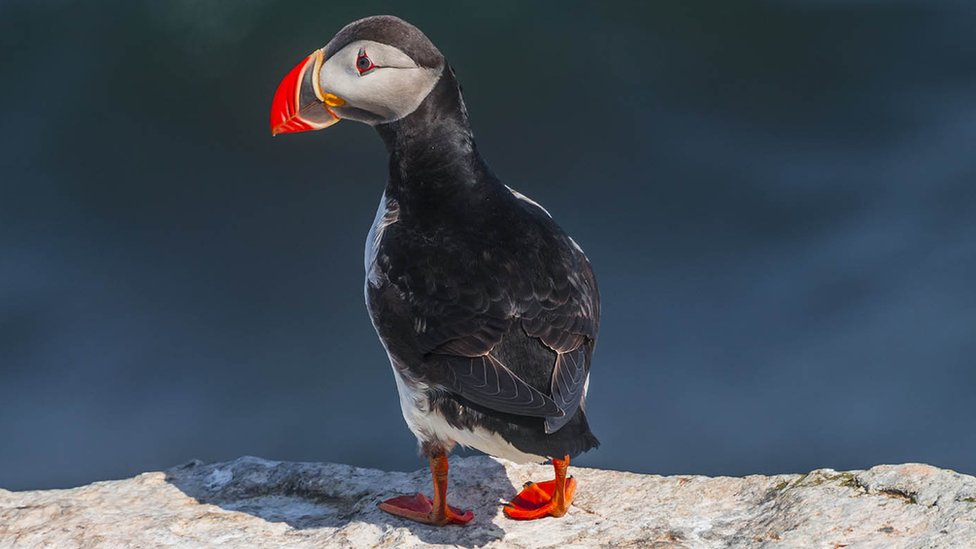
Puffins have unique beak adaptations. Their beaks are colorful and strong. The beak has special grooves. These grooves help puffins catch multiple fish at once. Puffins can hold up to 12 fish in their beaks. Their tongue presses fish against the beak. This prevents the fish from slipping out. The beak also has spines. These spines help grip the slippery fish.
Here is a table summarizing their beak adaptations:
| Feature | Function |
|---|---|
| Grooves | Hold multiple fish |
| Spines | Grip slippery fish |
| Strong Beak | Catch and hold prey |
Puffins’ beaks are not just tools. They also play a role in mating. Brightly colored beaks attract mates. This shows their health and strength.
Credit: www.bbc.com
Seasonal Diet Changes
Puffins are fascinating seabirds with unique feeding habits. Their diet changes with the seasons. This helps them adapt to varying food availability. Let’s explore how their diet shifts between summer and winter.
Summer Feeding
During summer, puffins have a rich diet. They mainly eat small fish. Examples include:
- Sand eels
- Herring
- Capelin
Puffins catch these fish by diving into the ocean. They can hold many fish in their beaks at once. This helps them feed their chicks effectively.
Here is a quick overview of their summer diet:
| Type of Food | Examples |
|---|---|
| Fish | Sand eels, Herring, Capelin |
| Crustaceans | Crabs, Shrimp |
| Other Marine Life | Squid, Mollusks |
Winter Adjustments
In winter, the puffin’s diet changes. They rely less on fish. Instead, they eat more crustaceans. These include:
- Crabs
- Shrimp
They also consume other marine life. Squid and mollusks become part of their diet. This seasonal diet change helps puffins survive the harsh winter months.
Impact Of Climate Change
Climate change affects many animals, including puffins. These cute seabirds face new challenges. Changing sea temperatures and food availability are major concerns. Let’s explore how these factors impact puffins.
Changing Sea Temperatures
Sea temperatures are rising due to climate change. This affects marine life, including puffins. Puffins depend on cold water fish for food. Warmer seas can push these fish to cooler areas. Puffins then have to travel further to find food.
Longer trips mean more energy spent. Puffins may become tired and weak. This impacts their ability to feed their chicks. Chicks may not get enough food and could struggle to grow.
Food Availability
Food availability is crucial for puffin survival. Puffins mainly eat fish like herring and sand eels. Climate change impacts these fish populations. Warmer seas can lead to fewer fish. This makes it harder for puffins to find enough food.
Table showing puffin food sources and their availability:
| Food Source | Availability |
|---|---|
| Herring | Decreasing |
| Sand Eels | Decreasing |
With fewer fish, puffins face more competition. They must work harder to find food. This can lead to starvation and lower chick survival rates.
To summarize:
- Rising sea temperatures affect fish locations.
- Puffins travel further for food, using more energy.
- Food sources like herring and sand eels are decreasing.
- Less food leads to higher competition and weaker chicks.
Climate change poses a real threat to puffins. Understanding these impacts helps protect these charming birds.
Nutritional Needs
Puffins have unique nutritional needs that keep them healthy and active. Their diet must provide the right balance of protein and fat reserves. Understanding these needs is essential for their survival.
Protein Requirements
Protein is crucial for puffins. It helps them grow and maintain strong muscles. Puffins mainly eat fish, which are rich in protein. The most common fish in their diet include:
- Herring
- Sand eels
- Capelin
These fish provide the necessary protein for puffins. They also eat small crustaceans and mollusks, adding variety to their diet. This variety ensures they get all essential amino acids.
Fat Reserves
Fat reserves are vital for puffins, especially during the winter. Puffins need fat to stay warm and have energy. Fish like herring and capelin are high in fat, meeting this need. Puffins also store fat to prepare for breeding season.
The following table shows the fat content in common fish:
| Fish Type | Fat Content |
|---|---|
| Herring | 18% |
| Capelin | 15% |
| Sand eels | 10% |
These fish help puffins build and maintain their fat reserves. This balance of protein and fat ensures puffins thrive in their harsh environments.
Human Influence
Human activities have a significant impact on what puffins eat. Two major factors include the fishing industry and pollution effects.
Fishing Industry
The fishing industry can affect puffin diets in many ways. Commercial fishing removes large amounts of fish from the oceans. Puffins depend on these fish to feed themselves and their chicks.
Important fish for puffins include:
- Sand eels
- Herring
- Capelin
Reduced fish populations force puffins to find new food sources. This can lead to poor nutrition and declining puffin numbers.
Pollution Effects
Pollution also impacts the food puffins eat. Oil spills and plastic waste are major threats. Oil spills can poison fish and other marine life, making them unsafe for puffins.
Plastic waste can be mistaken for food by puffins. Ingesting plastic can cause health problems and even death. Microplastics in the ocean also enter the food chain, affecting the quality of fish puffins eat.
Here are some common pollutants:
| Pollutant | Effect on Puffins |
|---|---|
| Oil Spills | Poison fish, reduce food quality |
| Plastic Waste | Health problems, ingestion issues |
| Microplastics | Enter food chain, affect fish quality |
Both fishing and pollution are significant human influences on puffin diets. Protecting puffins requires addressing these human activities.
Credit: www.quora.com
Conservation Efforts
Conserving puffins and their habitats is vital. These colorful birds face many threats. Conservation efforts help protect their food sources and nesting areas. Let’s explore the methods used to safeguard puffins.
Protected Areas
Protected areas are crucial for puffin survival. Many countries have established wildlife reserves. These reserves provide safe nesting sites. They also ensure a steady food supply. This helps puffins thrive without human interference.
Some well-known protected areas include:
- Skomer Island in Wales
- Farne Islands in England
- Vestmannaeyjar in Iceland
In these areas, human activities are limited. This reduces the risk of habitat destruction. It also minimizes disturbances to nesting puffins.
Research Programs
Research programs play a key role in puffin conservation. Scientists study puffin diets and behaviors. They monitor population trends and health. This data guides effective conservation strategies.
Some important research programs include:
| Program Name | Focus Area |
|---|---|
| Project Puffin | Puffin diet and breeding success |
| Puffin Patrol | Rescue and rehabilitation of stranded puffins |
| Puffin Watch | Monitoring puffin colonies |
Project Puffin is one example. It focuses on puffin diet and breeding success. Puffin Patrol rescues stranded puffins. Puffin Watch monitors colonies and their health. These programs provide valuable insights. They help shape future conservation efforts.
Frequently Asked Questions
What Is A Puffin’s Favorite Food?
A puffin’s favorite food is small fish, especially herring and sand eels. They also eat crustaceans and mollusks.
What Are Two Fun Facts About Puffins?
Puffins can carry up to 10 fish in their beaks at once. They are also excellent swimmers, using their wings to “fly” underwater.
Do Puffins Mate For Life?
Yes, puffins often mate for life. They return to the same nesting site each year. This strong pair bond helps in raising their young.
Are Puffins Friendly?
Puffins are generally not considered friendly towards humans. They are wild birds and prefer to keep their distance.
Conclusion
Puffins have a varied diet that includes fish, crustaceans, and marine worms. These seabirds are skilled hunters. Understanding their eating habits helps in conservation efforts. Protecting their food sources ensures puffin populations thrive. So, next time you see a puffin, you’ll know what keeps them energized and healthy.