
The scientific name for a bird is Aves. This classification includes all bird species.
Birds, or Aves, are fascinating creatures found worldwide. They come in diverse shapes, sizes, and colors, each adapted to their environment. Birds possess unique characteristics like feathers, beaks, and the ability to lay eggs. Their evolutionary history traces back to dinosaurs, making them a link to ancient times.
Birds play crucial roles in ecosystems by pollinating plants, dispersing seeds, and controlling pests. Many people also enjoy birdwatching as a hobby, appreciating their beauty and behaviors. Conservation efforts are vital to protect bird species facing threats from habitat loss, pollution, and climate change. Understanding birds helps us appreciate their role in nature and the importance of preserving biodiversity.

Credit: www.researchgate.net
Introduction To Avian Taxonomy
Avian taxonomy is the science of classifying birds. Scientists use a system to organize birds. This system helps in understanding bird relationships and characteristics.
Importance Of Scientific Names
Scientific names are crucial in bird classification. They provide a universal way to identify birds. These names help avoid confusion caused by local names.
- Clarity: Scientific names are clear and precise.
- Consistency: They stay the same worldwide.
- Communication: Scientists can discuss birds without misunderstanding.
Historical Background
Bird classification has a rich history. Carl Linnaeus, a Swedish botanist, created the system. He introduced the binomial nomenclature in the 18th century.
| Scientist | Contribution | Time Period |
|---|---|---|
| Carl Linnaeus | Introduced binomial nomenclature | 18th century |
| John Ray | Early bird classification | 17th century |
Modern taxonomy builds on these early works. New technologies help in refining bird classifications. DNA analysis is a key tool today.
Basics Of Bird Classification
Understanding bird classification helps us identify and study various bird species. Scientists use a system called taxonomy to classify birds. This system groups birds based on shared characteristics. Let’s dive into the basics.
Taxonomic Hierarchy
Birds are classified using a taxonomic hierarchy. This hierarchy includes several levels:
- Kingdom: Animalia
- Phylum: Chordata
- Class: Aves
- Order
- Family
- Genus
- Species
Each level groups birds with similar features. For example, all birds belong to the class Aves. This class includes all feathered animals that lay eggs.
Key Bird Characteristics
Birds share certain key characteristics:
- Feathers
- Wings
- Beaks
- Lay eggs
- Warm-blooded
These features help scientists place birds into the right taxonomic group. Birds also have unique songs and calls. These help in identifying their species.
Birds’ bones are light and hollow. This helps them fly. Their keen eyesight and strong muscles also aid in flight.
Understanding these traits helps in identifying and classifying birds correctly. This makes it easier to study their behavior and habitat.
Latin Nomenclature Explained
Every bird has a unique scientific name. These names help scientists identify and classify birds. The names use Latin words, which is called Latin Nomenclature. This system makes it easy to understand each bird’s place in the animal world.
Structure Of Scientific Names
Scientific names have two parts. The first part is the genus name. The second part is the species name. For example, the scientific name of the Bald Eagle is Haliaeetus leucocephalus.
- Genus Name: Always capitalized, e.g., Haliaeetus.
- Species Name: Always lowercase, e.g., leucocephalus.
These names are always written in italics or underlined. This helps to distinguish them from common names.
Rules Of Naming Birds
Scientists follow specific rules to name birds. These rules are set by the International Code of Zoological Nomenclature (ICZN).
- Uniqueness: Each species must have a unique name.
- Latin or Latinized Words: Names must be in Latin or Latinized.
- Published Description: The name must be published with a description.
- Priority: The first valid name published is used.
Following these rules ensures that every bird’s name is unique and recognized worldwide. This system helps scientists communicate clearly.
Common Bird Families And Their Names
Birds are fascinating creatures. They belong to many different families. Each family has unique characteristics. Knowing their scientific names helps understand their diversity. Let’s explore two major bird families: Passerines and Raptors.
Passerines
Passerines are also known as perching birds. They make up more than half of all bird species. Their scientific name is Passeriformes. This family includes small to medium-sized birds. Examples include sparrows, finches, and robins.
- Sparrows: Often found in urban areas. Scientific name: Passeridae.
- Finches: Known for their colorful plumage. Scientific name: Fringillidae.
- Robins: Common in gardens. Scientific name: Turdidae.
| Common Name | Scientific Name |
|---|---|
| Sparrow | Passeridae |
| Finch | Fringillidae |
| Robin | Turdidae |
Raptors
Raptors are birds of prey. They are known for their hunting skills. The scientific name for raptors is Accipitriformes. This family includes eagles, hawks, and falcons.
- Eagles: Large and powerful. Scientific name: Accipitridae.
- Hawks: Excellent hunters. Scientific name: Accipitridae.
- Falcons: Fast and agile. Scientific name: Falconidae.
| Common Name | Scientific Name |
|---|---|
| Eagle | Accipitridae |
| Hawk | Accipitridae |
| Falcon | Falconidae |
How New Bird Species Are Named
How are new bird species named? The naming process is fascinating. This process ensures each bird’s unique identity. Let’s explore how scientists name new bird species.
Discovery Process
The discovery process of new bird species is meticulous. Scientists explore diverse habitats. They observe birds in forests, mountains, and wetlands. Detailed field notes are taken. Scientists record birds’ behaviors, songs, and appearances. They collect samples carefully. These samples include feathers, blood, or even whole birds.
Back in the lab, scientists analyze these samples. DNA analysis plays a key role. Comparing DNA helps identify new species. Sometimes, unique behaviors also highlight new species. This discovery process is thorough and exciting.
Role Of Ornithologists
Ornithologists are bird experts. They lead the way in naming new species. They study birds all over the world. Ornithologists often work in teams. They share their findings with other scientists.
Ornithologists follow strict naming rules. These rules ensure consistency. The International Code of Zoological Nomenclature guides them. This code provides the naming framework. Naming a new bird species is a detailed task. It involves describing the bird in detail. The description includes size, color, and habitat.
Here is a simplified table of the naming process:
| Step | Description |
|---|---|
| Exploration | Scientists explore habitats and observe birds. |
| Sample Collection | Collect feathers, blood, or whole birds. |
| Lab Analysis | Analyze samples, especially DNA. |
| Comparison | Compare DNA and behaviors with known species. |
| Naming | Describe the bird and follow naming rules. |
Ornithologists publish their findings. Scientific journals share new bird species names. This makes the new species known to the world.
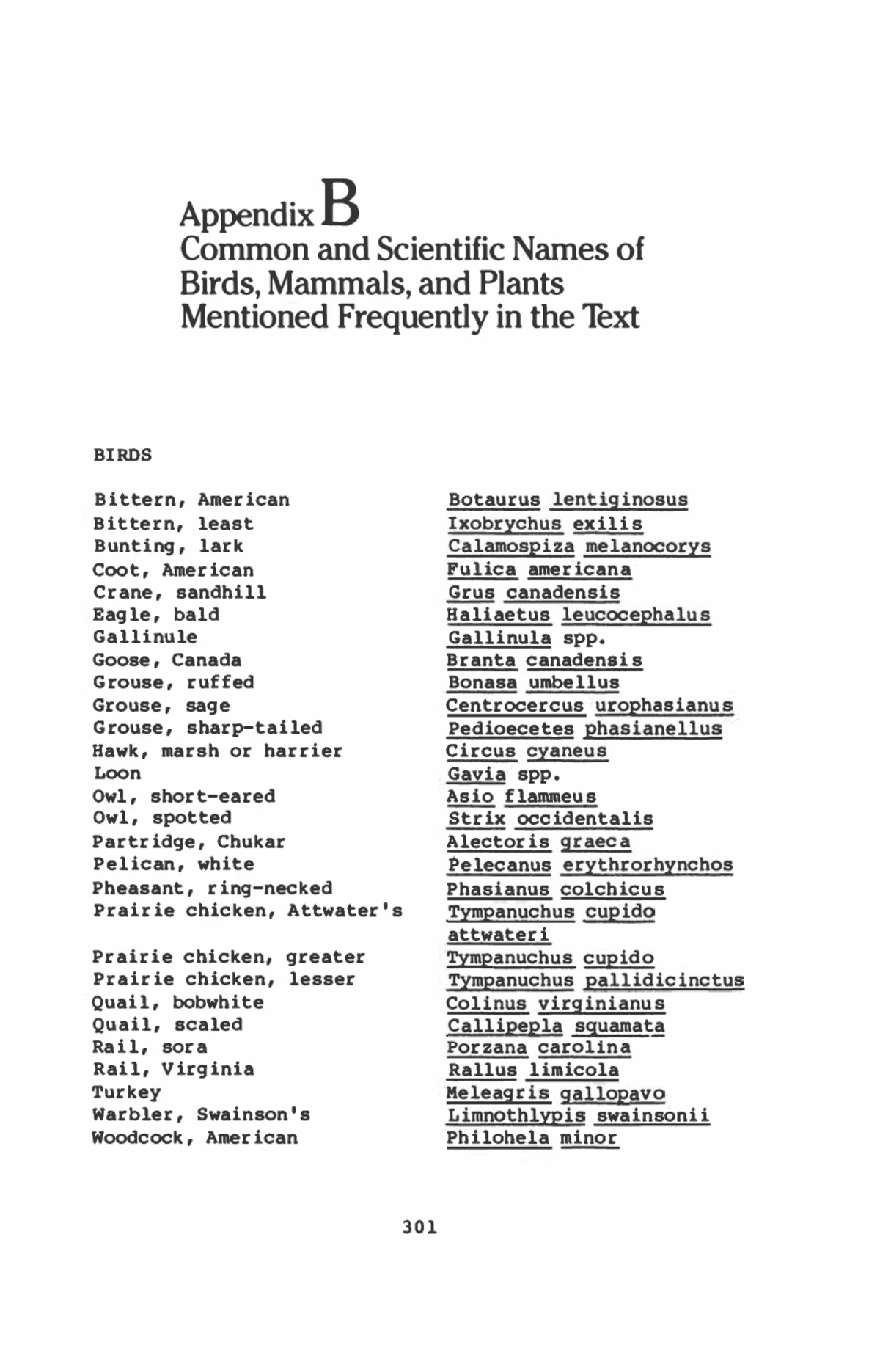
Credit: nap.nationalacademies.org
Scientific Naming Controversies
The scientific names of birds can be confusing. Experts sometimes disagree on what names to use. These disagreements often lead to changes and debates. Let’s explore some of these controversies.
Name Changes
Bird names often change due to new discoveries. Scientists study bird DNA to learn more. This can lead to new classifications. For example, the bird once known as the Rock Dove is now called the Common Pigeon. These changes help us understand birds better.
| Old Name | New Name |
|---|---|
| Rock Dove | Common Pigeon |
| Marsh Hawk | Northern Harrier |
Taxonomic Debates
Taxonomy is the science of naming and classifying organisms. Scientists sometimes argue about bird classifications. These debates can be intense. For instance, some scientists think the Red Crossbill should be many species. Others believe it is just one species.
- Arguments about bird DNA
- Disagreements on bird behavior
- Differences in bird habitats
These debates help improve our understanding of birds. They make science more exciting. Keep an eye out for new bird names and classifications. Science is always changing!
Impact Of Scientific Names On Conservation
The scientific names of birds play a crucial role in conservation efforts. These names provide a universal language for scientists and conservationists worldwide. This helps in identifying and protecting various bird species effectively. The accurate classification helps in various areas, including biodiversity studies and protection policies.
Biodiversity Studies
Scientific names help in understanding the diversity of bird species. They allow researchers to study birds in different regions. This helps in tracking the population and health of species. Consistent naming avoids confusion in research papers and databases.
For example, the scientific name for the Bald Eagle is Haliaeetus leucocephalus. This name is recognized worldwide. It ensures that everyone talks about the same bird. This is important for accurate data collection and analysis.
Protection Policies
Scientific names are essential for creating effective protection policies. Governments and organizations use these names to list endangered species. This helps in forming laws and regulations to protect these birds.
For instance, the Endangered Species Act lists birds by their scientific names. This ensures there is no ambiguity about which species need protection. The act includes birds like the Grus americana (Whooping Crane). This helps in targeted conservation efforts.
A table can help illustrate the importance of scientific names in policy-making:
| Common Name | Scientific Name | Protection Status |
|---|---|---|
| Bald Eagle | Haliaeetus leucocephalus | Protected |
| Whooping Crane | Grus americana | Endangered |
Understanding and using scientific names is vital. It helps in studying, protecting, and conserving birds globally.
Conclusion And Future Of Avian Taxonomy
The scientific naming of birds, known as avian taxonomy, is essential for organizing and understanding bird species. This field is dynamic and ever-evolving, influenced by new discoveries and technologies. As we look to the future, several key trends and advancements promise to shape avian taxonomy.
Evolving Practices
Traditionally, avian taxonomy relied heavily on physical traits. These included beak shape, feather patterns, and size. Modern practices now incorporate genetic analysis. This shift allows for more accurate classifications.
Field observations also play a crucial role. Birdwatchers and scientists document behaviors and habitats. These observations help refine taxonomic categories. Collaborations between amateur birdwatchers and professional ornithologists have become common. This partnership enriches the data pool for avian studies.
Technological Advances
Technology has revolutionized avian taxonomy. DNA sequencing is one of the biggest advancements. It allows scientists to study genetic differences with precision. This method often reveals hidden species and clarifies relationships between birds.
Another significant tool is bioacoustics. Researchers use specialized equipment to record bird calls and songs. Analyzing these sounds helps identify species that look similar but sound different. Additionally, satellite tracking provides insights into migration patterns and behavior.
| Technology | Impact on Avian Taxonomy |
|---|---|
| DNA Sequencing | Reveals hidden species, clarifies relationships |
| Bioacoustics | Identifies species through calls and songs |
| Satellite Tracking | Provides data on migration patterns |
Machine learning and artificial intelligence are also becoming valuable. These technologies analyze large datasets quickly. They help identify patterns that humans might miss. This speeds up the classification process and improves accuracy.
As these technologies continue to develop, the future of avian taxonomy looks promising. The integration of traditional methods with modern technology ensures a comprehensive understanding of bird species. This will aid conservation efforts and deepen our connection with the avian world.

Credit: www.youtube.com
Frequently Asked Questions
What Is The Scientific Word For Bird?
The scientific word for bird is “Aves. ” This term refers to the class of all bird species.
What Is The General Name For Birds?
The general name for birds is “avian species. ” Birds belong to the class Aves, known for feathers and beaks.
What Is Another Name For A Bird In Biology?
In biology, another name for a bird is “avian. “
What Is The Medical Term For A Bird?
The medical term for a bird is “avian. ” Avian refers to anything related to birds.
Conclusion
Understanding the scientific name for a bird enriches your knowledge of avian species. It provides insight into their classification. This can enhance bird watching and conservation efforts. So, next time you spot a bird, remember its scientific name tells a fascinating story.
Keep exploring and learning about these amazing creatures.