
The bird most commonly known for chirping at night is the Northern Mockingbird. Another frequent nighttime singer is the Eastern Whip-poor-will.
Birds chirping at night is a fascinating phenomenon. These nocturnal sounds often puzzle many people. Unlike the usual daytime chirping, nighttime bird songs serve specific purposes. For instance, the Northern Mockingbird sings to establish territory and attract mates. The Eastern Whip-poor-will, on the other hand, uses its call to communicate with others of its species.
These nighttime singers add a unique melody to the night, creating an enchanting atmosphere. Understanding which birds chirp at night can deepen our appreciation for nature’s diverse symphony. So, next time you hear a nighttime chirp, you might just be listening to a Mockingbird or a Whip-poor-will.
Introduction To Nocturnal Songbirds
Birds usually sing during the day. But some birds sing at night. These birds are called nocturnal songbirds. They chirp when most other birds are silent.
Importance Of Night Chirping
Night chirping helps birds find mates. It also helps them mark their territory. This is crucial for their survival. Night chirping can also warn other birds of danger.
Common Misconceptions
Many people think only owls chirp at night. This is not true. Several types of birds sing at night. For example, the Nightingale and the Mockingbird are known for their night songs.
| Bird | Characteristics |
|---|---|
| Nightingale | Known for its powerful and beautiful song. |
| Mockingbird | Can mimic the sounds of other birds. |
- Whip-poor-will: Repeats its name at night.
- Common Loon: Makes eerie calls over lakes.
Why Birds Chirp At Night
Many people wonder why birds chirp at night. The reasons vary based on species and circumstances. This section explores the fascinating reasons behind this nocturnal behavior.
Mating Calls
Some birds chirp at night to attract mates. The night is quiet, making their calls more noticeable. This increases their chances of finding a partner.
Nighttime chirping often indicates a bird is ready to mate. Males usually sing to impress females. Their songs can be complex and beautiful.
Here are some birds known for nighttime mating calls:
- Northern Mockingbird
- Eastern Whip-poor-will
- Common Nightingale
Territorial Signals
Birds also chirp at night to mark their territory. This sends a message to other birds to stay away. Territorial calls are often loud and repetitive.
Nighttime chirping can help birds defend their area. It warns intruders and keeps the bird’s space safe. This behavior is crucial for their survival.
Here are some birds known for territorial calls:
- American Robin
- Song Thrush
- Blackbird
Understanding why birds chirp at night helps us appreciate their behaviors. Mating calls and territorial signals are essential for their survival and reproduction.
Types Of Nocturnal Songbirds
Have you ever wondered what bird chirps at night? Many birds sing at night, and these nocturnal songbirds are fascinating. Let’s explore the types of nocturnal songbirds that fill the night air with music.
Nightjars
Nightjars are mysterious birds that sing at night. Their calls are soft and rhythmic. Nightjars have excellent camouflage, blending into their surroundings. They feed on insects, catching them in flight. You can often hear them in open woodlands.
Owls
Owls are well-known nocturnal birds. They have a distinctive hoot. Owls have large eyes adapted for night vision. They are skilled hunters, feeding on small mammals and insects. Different owl species have unique calls, making it easy to identify them.
Mockingbirds
Mockingbirds are active at night, especially during mating season. They mimic other birds’ songs, creating a unique medley. Mockingbirds are known for their versatility and range. Their songs can last for hours, providing a night-time concert.
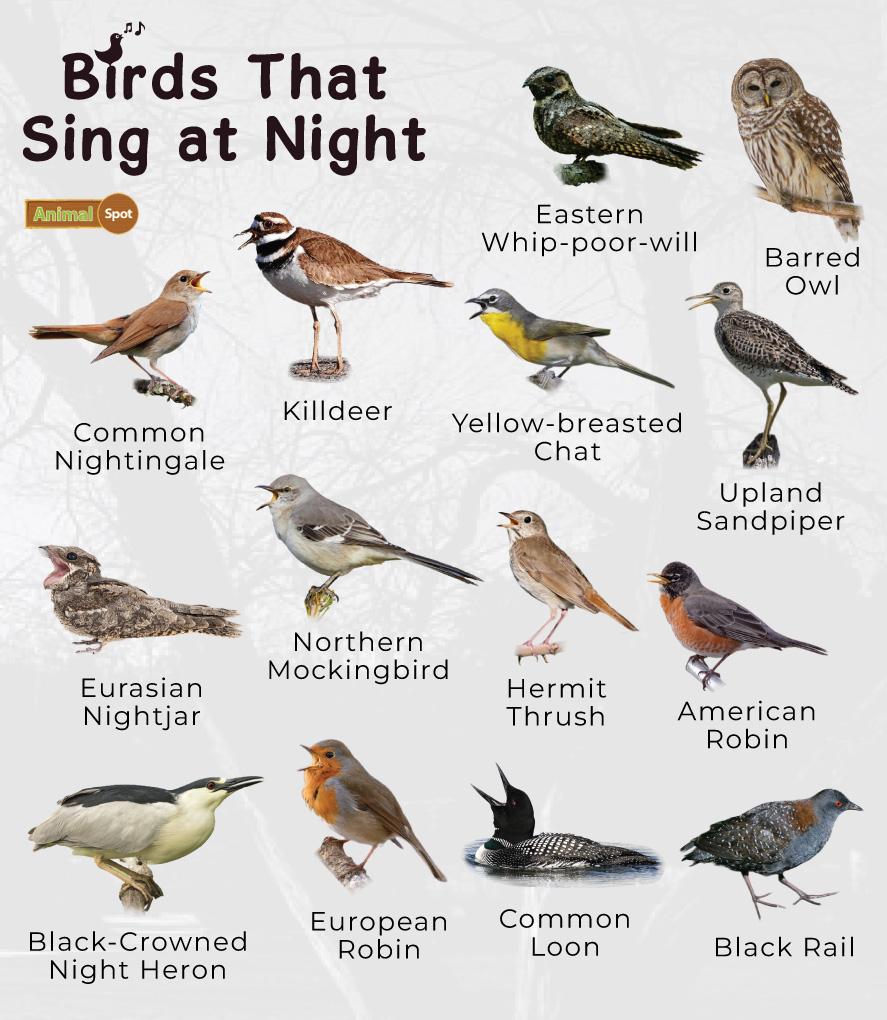
Credit: www.animalspot.net
Identifying Night Chirps
Many birds chirp at night, creating a unique soundscape. Identifying these night chirps can be challenging. Different species have distinct vocal patterns. Seasonal variations also play a role. Understanding these aspects can help you identify night-time bird calls.
Unique Vocal Patterns
Each bird species has a unique vocal pattern. These patterns help in identification. For example, the Eastern Whip-poor-will has a repetitive and loud call. The Common Nightingale sings with a rich, melodic tone. These unique patterns make night-time identification easier.
| Bird Species | Vocal Pattern |
|---|---|
| Eastern Whip-poor-will | Repetitive, loud call |
| Common Nightingale | Rich, melodic tone |
| Northern Mockingbird | Mimics other birds |
Seasonal Variations
Bird chirps vary with seasons. In spring, many birds sing more actively. This is due to mating calls. The Common Loon is known for its eerie calls in summer. In winter, fewer birds chirp at night. Understanding these variations helps in better identification.
- Spring: High activity, mating calls
- Summer: Species like Common Loon active
- Winter: Low activity, fewer chirps
Habitats Of Nocturnal Songbirds
Nocturnal songbirds are fascinating creatures. They sing beautifully under the night sky. Their habitats vary widely. Some thrive in bustling cities, while others live in serene forests or lush wetlands. Understanding their habitats helps us appreciate their unique lifestyles.
Urban Areas
Many nocturnal birds have adapted to urban areas. Cities offer food and shelter. Common urban nocturnal birds include the Eastern Whip-poor-will and Common Nighthawk. They nest in parks, gardens, and even rooftops.
Urban lights attract insects, providing a food source. These birds help control insect populations. Despite noise and pollution, they sing melodiously at night.
Forests
Forests are home to a variety of nocturnal songbirds. Dense foliage offers protection and nesting sites. The Eastern Screech-Owl and Nightjar are common forest dwellers.
Forests provide abundant food sources. Insects, small mammals, and fruits are plentiful. These birds’ songs echo through the trees, creating a magical nighttime symphony.
Wetlands
Wetlands support unique nocturnal songbirds. These areas are rich in biodiversity. The Marsh Warbler and Black-crowned Night-Heron are typical wetland residents.
Wetlands offer a mix of water and vegetation. This provides ample feeding and nesting opportunities. At night, their songs blend with the sounds of water and rustling reeds.
| Habitat | Common Birds | Features |
|---|---|---|
| Urban Areas | Eastern Whip-poor-will, Common Nighthawk | Abundant food, nesting sites in parks and rooftops |
| Forests | Eastern Screech-Owl, Nightjar | Dense foliage, abundant food sources |
| Wetlands | Marsh Warbler, Black-crowned Night-Heron | Rich biodiversity, mix of water and vegetation |

Credit: www.wikihow.com
Challenges Faced By Nocturnal Songbirds
Nocturnal songbirds face many challenges during the night. They must navigate through darkness and avoid threats. These birds use their songs to communicate, but it can attract dangers.
Light Pollution
Light pollution is a major issue for nocturnal songbirds. Street lights and city lights confuse them. Birds get disoriented and cannot find their way.
Light pollution also disrupts their natural rhythms. Birds sing at wrong times and miss important signals. This affects their feeding and breeding.
| Effects of Light Pollution | Impact on Birds |
|---|---|
| Disorientation | Birds cannot navigate properly |
| Disrupted rhythms | Birds sing at incorrect times |
| Feeding issues | Birds miss feeding signals |
Predation Risks
Predation risks increase for nocturnal songbirds at night. Owls, cats, and other predators hunt them. Birds must stay alert to avoid getting caught.
Predators use the cover of night to surprise birds. Birds singing at night risk revealing their location. This makes them easy targets for hungry predators.
- Owls hunt using sound and sight.
- Cats stalk quietly in the dark.
- Other predators use the darkness for ambush.
Conservation Efforts
Nocturnal birds are fascinating creatures that chirp at night. They face unique challenges. Conservation efforts are critical to protect these night singers. This section will highlight key initiatives.
Protecting Habitats
Protecting natural habitats is vital for nocturnal birds. They need safe places to live. Conservationists work to preserve forests and wetlands. These areas are essential for their survival.
Here are some key actions taken:
- Setting up protected areas.
- Restoring damaged ecosystems.
- Monitoring bird populations.
Raising Awareness
Raising awareness helps people understand the importance of nocturnal birds. Educational programs teach communities about these birds. Schools and local groups get involved.
Effective methods include:
- Creating informative websites.
- Hosting community events.
- Using social media campaigns.
By protecting habitats and raising awareness, we can help nocturnal birds thrive.

Credit: www.pinterest.com
How To Attract Nocturnal Songbirds
Attracting nocturnal songbirds to your garden can be a magical experience. Their unique melodies can provide a serene nighttime ambiance. Learn how to create an inviting habitat for these nocturnal wonders.
Creating Suitable Environments
To attract nocturnal songbirds, you need to create a suitable environment. Birds prefer areas with dense foliage and shelter. Plant native shrubs and trees to provide natural cover. This helps them feel safe and secure.
Ensure you have a variety of plant heights. This mimics their natural habitat. Also, install birdhouses and nesting boxes. These offer additional shelter and breeding spots.
Consider the placement of your lights. Nocturnal birds are sensitive to bright lights. Use dim, warm lighting to avoid disturbing their natural behavior. Solar-powered garden lights can be a good choice. They provide soft illumination without harsh glare.
Providing Food Sources
Food sources are crucial for attracting nocturnal songbirds. Offer a variety of food types to cater to different species. Use bird feeders that are suitable for nighttime use. Select feeders with perches and covers to protect the food.
Include a mix of seeds, nuts, and fruits. Mealworms and suet are also excellent choices. They provide high energy and protein. Create a feeding schedule to ensure food availability at dusk.
Maintain a clean feeding area. Regularly clean the feeders to prevent mold and bacteria. This keeps the birds healthy and encourages them to return.
| Food Type | Benefits |
|---|---|
| Seeds | Provides essential nutrients |
| Nuts | High energy source |
| Fruits | Rich in vitamins |
| Mealworms | High in protein |
| Suet | Excellent for winter months |
By creating a suitable environment and providing ample food sources, you can attract nocturnal songbirds to your garden. Enjoy the tranquil melodies and the beauty they bring to your nighttime landscape.
Frequently Asked Questions
What Does It Mean When You Hear Birds Chirping At Night?
Birds chirping at night usually indicate disturbance or disorientation. They may be responding to artificial lights or feeling threatened.
What Bird Makes Chirping Sounds At Night?
The Northern Mockingbird often chirps at night. Other nocturnal chirpers include the Eastern Whip-poor-will and the Common Nightingale.
What Birds Start Chirping At 3am?
Birds that start chirping at 3am often include robins, blackbirds, and nightingales. These birds are early risers. Their chirping can be influenced by artificial lights and longer daylight hours.
What Bird Sounds Like A Squeaky Toy At Night?
The Eastern Screech-Owl often sounds like a squeaky toy at night. This small owl makes a trilling or whinnying sound.
Conclusion
Nighttime bird chirping adds a magical touch to the evening. Understanding these nocturnal singers enriches our connection with nature. Keep an ear out for nightingales, owls, and other nighttime chirpers. Their songs create a unique nighttime symphony. Enjoy the peaceful and melodic sounds as you unwind after a long day.