
Little birds chase hawks to protect their nests and young. They see hawks as threats and act defensively.
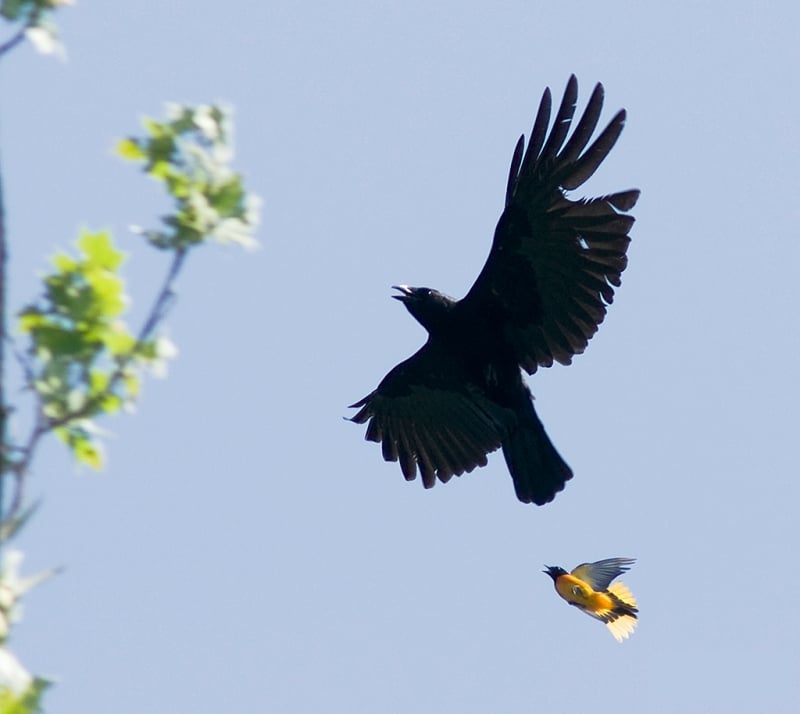
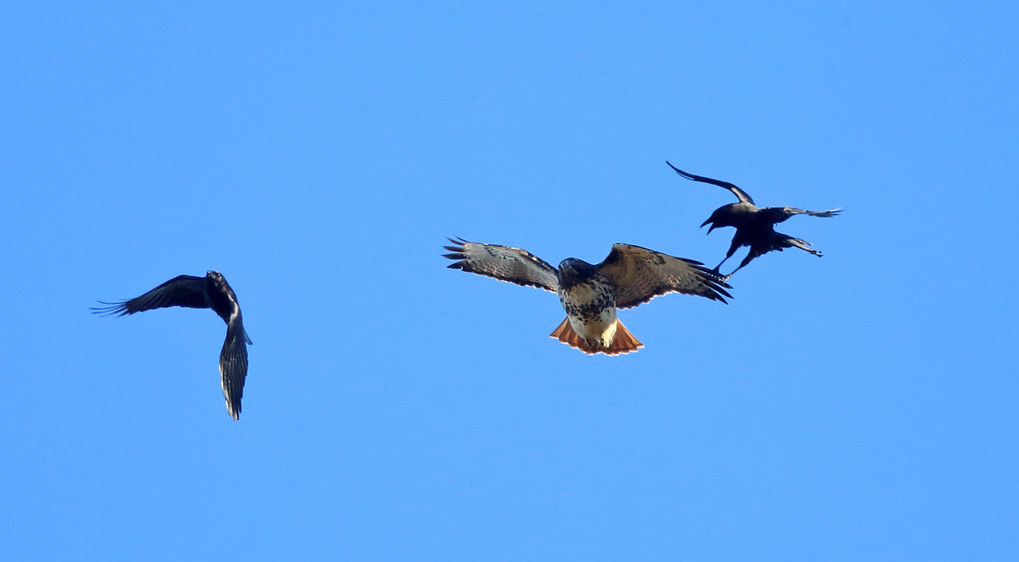
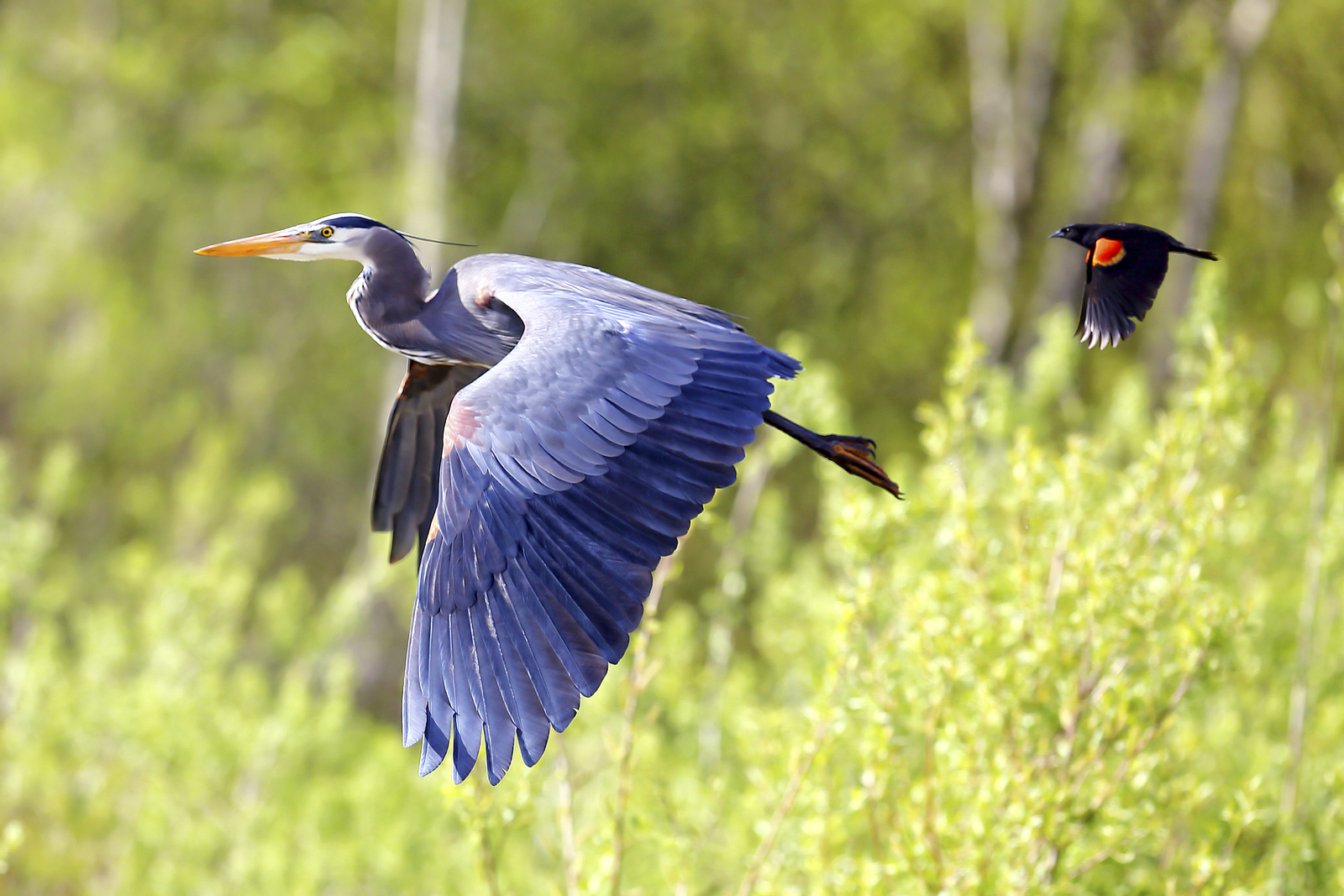
Birds exhibit fascinating behaviors to ensure their survival. One such behavior is mobbing, where smaller birds aggressively chase larger predators like hawks. This seemingly bold act is a defense mechanism to protect their nests and young from potential threats. Hawks pose a significant danger to eggs and fledglings, so smaller birds band together to drive them away.
This coordinated effort not only deters the predator but also serves as a loud warning to others in the area. Understanding this behavior sheds light on the remarkable strategies birds use to thrive in their environments.
Credit: centerofthewest.org
The Players
Understanding why little birds chase hawks requires knowing the players involved. We will dive into the characteristics of little birds and hawks to get a clearer picture.
Little Birds Overview
Little birds, often called songbirds, are small and agile. They include sparrows, finches, and robins. These birds are known for their bright colors and beautiful songs.
- Size: Small, usually under 10 inches
- Diet: Seeds, insects, and fruits
- Habitat: Forests, gardens, and urban areas
- Behavior: Highly social and territorial
Little birds are very protective of their nests. They often live in groups, which helps them defend their territory.
Hawks Overview
Hawks are large birds of prey known for their powerful build. They belong to the raptor family and are skilled hunters.
- Size: Medium to large, 18-26 inches
- Diet: Small mammals, other birds, and reptiles
- Habitat: Open fields, forests, and mountains
- Behavior: Solitary and territorial
Hawks have sharp talons and beaks, making them fearsome predators. They can spot their prey from great distances.
Despite their size, hawks are often chased away by smaller birds. This behavior is known as mobbing and is a defense mechanism.
Behavioral Traits
Little birds often chase hawks despite their size difference. Understanding these behavioral traits helps us see why this happens. Here, we explore the aggression in little birds and the predatory instincts of hawks.
Aggression In Little Birds
Little birds show surprising aggression towards hawks. This behavior is known as mobbing. They gather in groups to chase away larger predators. This helps protect their nests and young ones.
Several factors contribute to this aggression:
- Protecting their territory
- Defending their offspring
- Instinctive behavior
Mobbing is a collective effort. Many birds join in to increase their chances of success. They use loud calls and quick movements to confuse the hawk.
Predatory Instincts Of Hawks
Hawks have strong predatory instincts. They hunt smaller birds and animals for food. This makes them a threat to the little birds.
Hawks have several hunting advantages:
- Keen eyesight
- Sharp talons
- Powerful flight
Despite their size, little birds bravely face these predators. Their aggression helps them survive in the wild.
| Behavior | Description |
|---|---|
| Mobbing | Group behavior to chase away predators |
| Aggression | Protecting territory and offspring |
| Predatory Instincts | Hunting and feeding behavior of hawks |
Reasons Behind Chasing
Many people wonder why little birds chase hawks. The answer lies in their natural instincts and survival tactics. Let’s explore the reasons behind this intriguing behavior.
Territorial Defense
Small birds are very protective of their territory. They see hawks as a threat to their home. By chasing the hawk away, they try to keep their area safe. This behavior is common during nesting season. The birds want to make sure their nests are not disturbed.
| Reason | Explanation |
|---|---|
| Territorial Instinct | Small birds protect their space from predators. |
| Nesting Season | More aggressive behavior to safeguard nests. |
Protecting Offspring
One of the strongest reasons is the need to protect their young. Hawks are known predators of bird eggs and chicks. By chasing the hawk, the small birds aim to deter potential danger. Their brave actions can save their offspring from becoming prey.
- Parental Instinct: Birds will do anything to protect their young.
- Reducing Threat: Chasing hawks reduces the risk to their chicks.
This protective behavior ensures the survival of the next generation. It shows the fierce determination of these small but mighty birds.
Credit: blog.nature.org
Survival Strategies
Little birds chasing hawks may seem strange, but it’s a survival strategy. These smaller birds use clever tactics to protect themselves and their nests. Understanding these behaviors can help us appreciate nature’s complexity.
Mobbing Behavior
Mobbing behavior is a common survival tactic among small birds. When a hawk appears, many small birds gather together. They fly close to the predator, making loud noises. This confuses and scares the hawk. The hawk feels threatened and often flies away.
This behavior is effective because it shows the hawk that the little birds are not easy prey. It also alerts other birds in the area. The loud calls act as a warning signal, telling other birds to be on alert.
Safety In Numbers
Safety in numbers is another key survival strategy. Small birds know they are safer in groups. A lone bird is an easy target for a hawk. But a group of birds can defend themselves better.
In a group, the birds can watch the hawk from all directions. They can take turns chasing and confusing the predator. This teamwork makes it harder for the hawk to catch any one bird.
Birds also use group behavior to protect their nests. When hawks come near, the group will chase them away. This protects their eggs and chicks from becoming a meal.
Scientific Observations
Understanding why little birds chase hawks requires a look at scientific observations. Researchers have conducted various studies to uncover the reasons behind this behavior.
Field Studies
Many field studies have focused on the interactions between small birds and hawks. Observations show that small birds often mob hawks. This involves flying at them aggressively. The purpose is to protect their nests and young ones.
Experts have noted that this mobbing behavior is common during the breeding season. It helps ensure the safety of their offspring. Field studies reveal that small birds are very brave. They often chase away much larger predators.
Experimental Data
Experimental data provides deeper insights into this behavior. Researchers have set up controlled environments to observe these interactions. Experiments show that the size of the bird group matters. Larger groups are more successful in chasing hawks away.
Data also reveals that the distance to the nest affects mobbing intensity. The closer the hawk is to the nest, the more aggressive the small birds become. This aggressive behavior is a survival tactic.
Below is a table summarizing key findings:
| Factor | Observation |
|---|---|
| Group Size | Larger groups are more effective in mobbing. |
| Distance to Nest | Closer hawks face more aggressive attacks. |
| Season | More common during breeding season. |
These observations and data points help scientists understand the behavior better. They illustrate the small birds’ protective instincts. This behavior ensures the survival of their species.
Implications For Ecology
Why do little birds chase hawks? The reasons are fascinating and important. Understanding this behavior helps us learn about the balance in nature. It also reveals how different species interact. This section delves into the ecological implications.
Ecosystem Balance
Little birds chasing hawks play a crucial role in maintaining ecosystem balance. These small birds protect their nests and young. By chasing hawks away, they prevent predators from becoming too dominant.
This behavior ensures that hawks do not overhunt. As a result, prey populations stay stable. This stability is vital for a balanced ecosystem.
Below is a table showing the effects on different species:
| Species | Impact |
|---|---|
| Little Birds | Protect their young |
| Hawks | Controlled hunting |
| Prey Animals | Stable population |
Predator-prey Relationships
Chasing hawks affects predator-prey relationships. Small birds are often prey for hawks. By mobbing, they reduce their own risk of predation.
This behavior teaches young birds to be vigilant. It also warns other species of danger. Here are some key points:
- Promotes survival skills in young birds
- Reduces hawk hunting success
- Encourages alertness in the ecosystem
These interactions show the intricate dance of nature. Each action has a ripple effect, impacting the whole ecosystem.
Credit: blog.nature.org
Frequently Asked Questions
Why Do Small Birds Fly Around Bald Eagles?
Small birds fly around bald eagles to protect their nests. They distract and deter the larger predator from attacking.
Why Do Small Birds Chase Crows Away?
Small birds chase crows away to protect their nests and young from potential threats. Crows often prey on eggs and chicks. By chasing crows, small birds ensure the safety of their offspring. This behavior is known as mobbing and is common in many bird species.
How Do Small Birds Know When A Hawk Is Around?
Small birds detect hawks through sharp eyesight and alarm calls from other birds. They often spot hawks’ shadows.
Why Do Birds Dive Bombs?
Birds dive bomb to protect their nests and young from predators. They also dive bomb to hunt prey efficiently. This behavior is common in species like hawks, swallows, and seagulls.
Conclusion
Little birds chase hawks to protect their nests and young. This behavior is called mobbing. It showcases their bravery and teamwork. Understanding this helps appreciate the dynamics of predator-prey relationships. Next time you see this, remember the determination of these tiny defenders.
Bird behavior is fascinating and full of surprises.